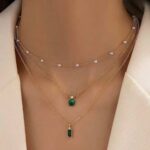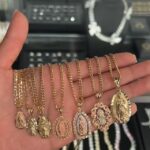
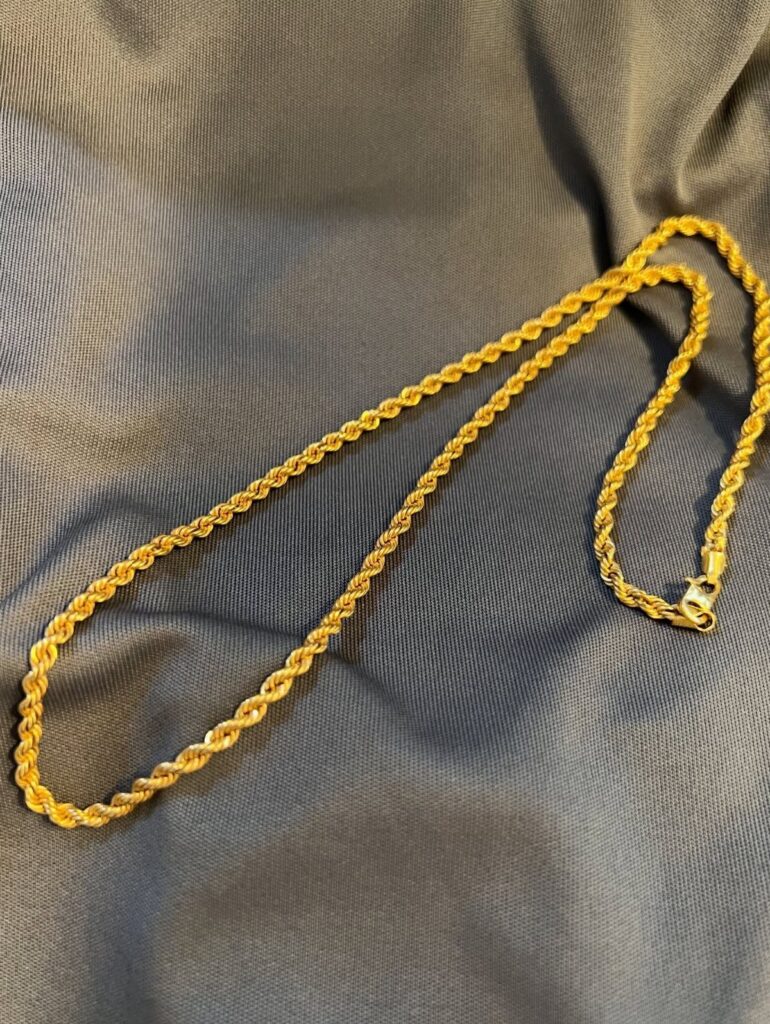
The chains below run from a delicate diamond cut to a hollow Byzantine, with prices that shift more by construction than by gram weight.
What decides between them is whether you need the chain to speak or to stay quiet against whatever else the outfit is doing.
The lobster clasp on the heavy rope chain is the right pairing, while a spring ring would be asking for trouble; that same clasp logic repeats across the Figaro, Cuban link, curb, and several other styles below.
1. Figaro Chain
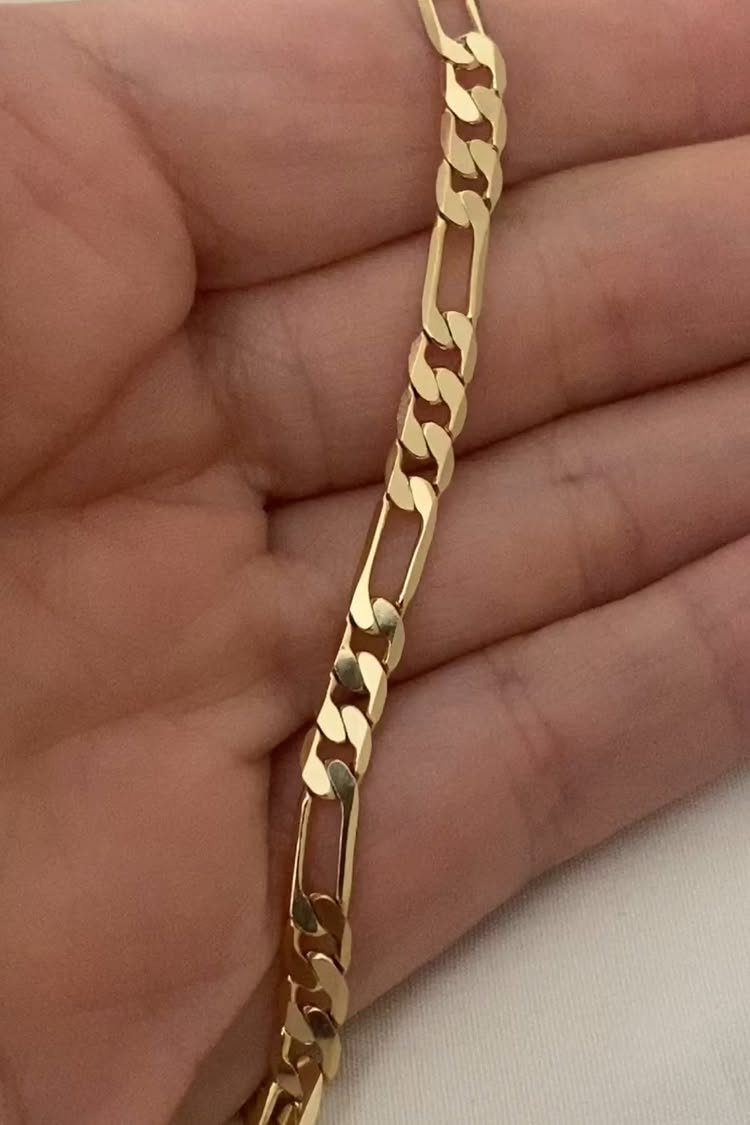
Italian goldsmiths built this rhythm of three short links and one long one into something you recognize across a room. I like it for the way it reads as finished without shouting; the pattern does the work.
A thinner chain, maybe 2–3 mm, sits quietly under a collar or beside a watch. Go thicker and it holds its own against a blazer or a black tee.
The alternating lengths catch light differently than uniform links, which is why it photographs well at a wedding when you want something glinting in candids without stealing from the couple.
Most Figaro chains I have seen wear best alone; a pendant throws off the rhythm.

Kindly check the necklace size prior to purchase. Please refer to the size chart. The 16-inch necklace is not recommended if your neck circumference is 14 inches or above

Timeless Classic Design:Our sterling silver gold-plated necklace suits both men and women. This eternally stylish Figaro chain serves as a perfect addition to your jewelry collection.
2. Rope Chain
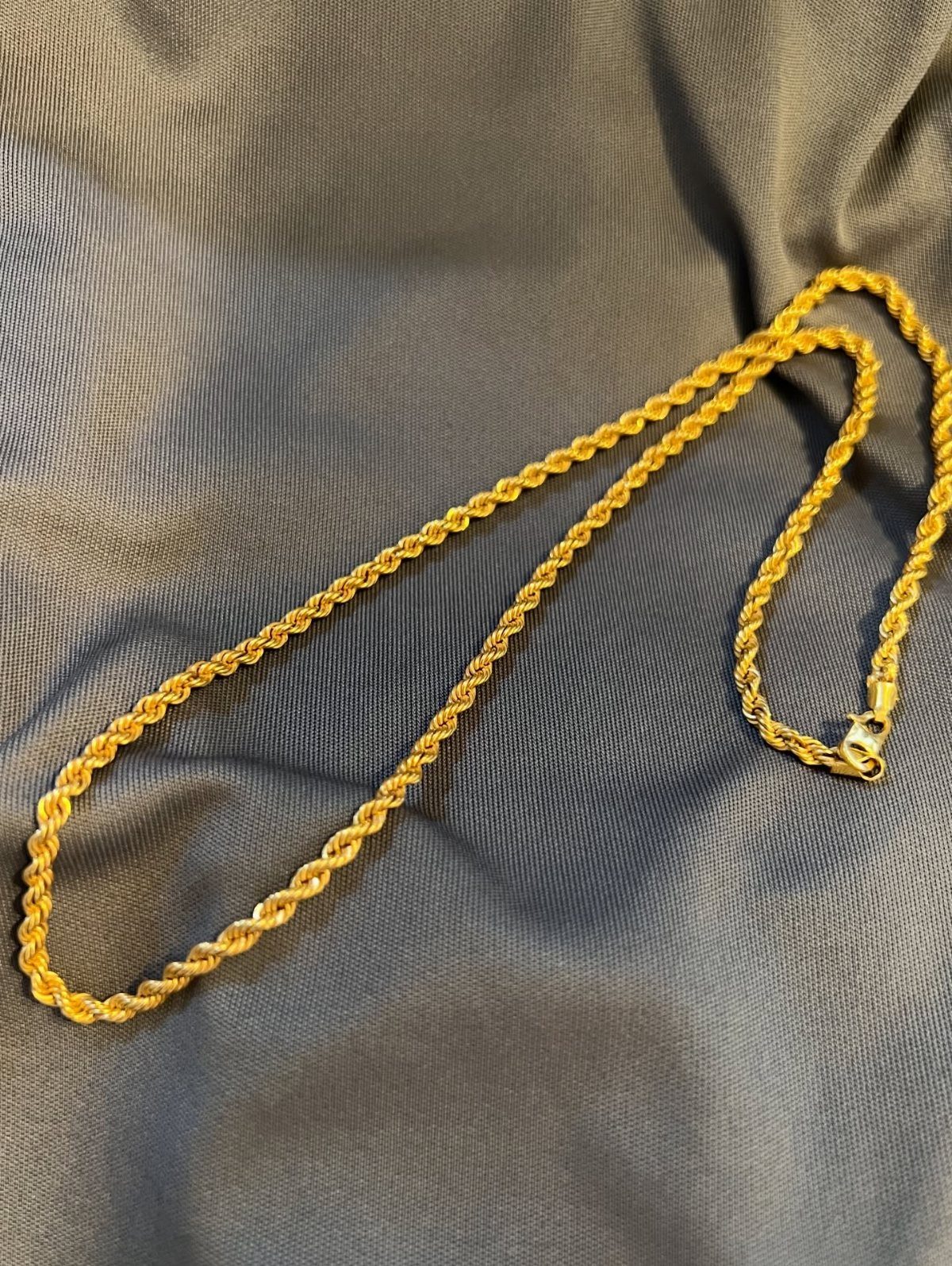
Twisted links spiral into a braid that throws light from every angle, so this chain reads richer than its weight. That is the practical reason it has stayed popular for decades.
Rope chains run from whisper-thin to substantial, and the thicker ones carry pendants without sagging.
I would check the clasp before buying; a spring ring on a heavy rope chain is a mismatch, and a lobster claw or box clasp holds better.
The twisted structure adds strength, though the same ridges that catch light can trap skin oils, so occasional cleaning with mild soap keeps the brightness.
For daily wear, a mid-width rope chain hits the useful middle: visible, not showy.

Fashion Tide Single Product: Featuring retro and beautiful twisted rope design, forging process, selecting 925 sterling silver, exquisite polishing, smooth and sleek surface, comfortable to wear, bright color, refused to be dull. Simple and fashionable style, it is a definite great item for trendy men and women.

[A Subtle Moving Shine] The 14k white gold plated chain for women features tightly twisted links that create a delicate texture. Under the light, the white gold chain for men reveals soft highlights along every curve. The silver chain for women adds refined texture, and stays effortlessly elegant

Trendy Classic Designed for Daily Use-This chain necklace features a chic twist chain that's perfect for daily wear. Complement your outfit with a stylish, classic 24K Gold-Plated chain necklace.
3. Cuban Link Chain
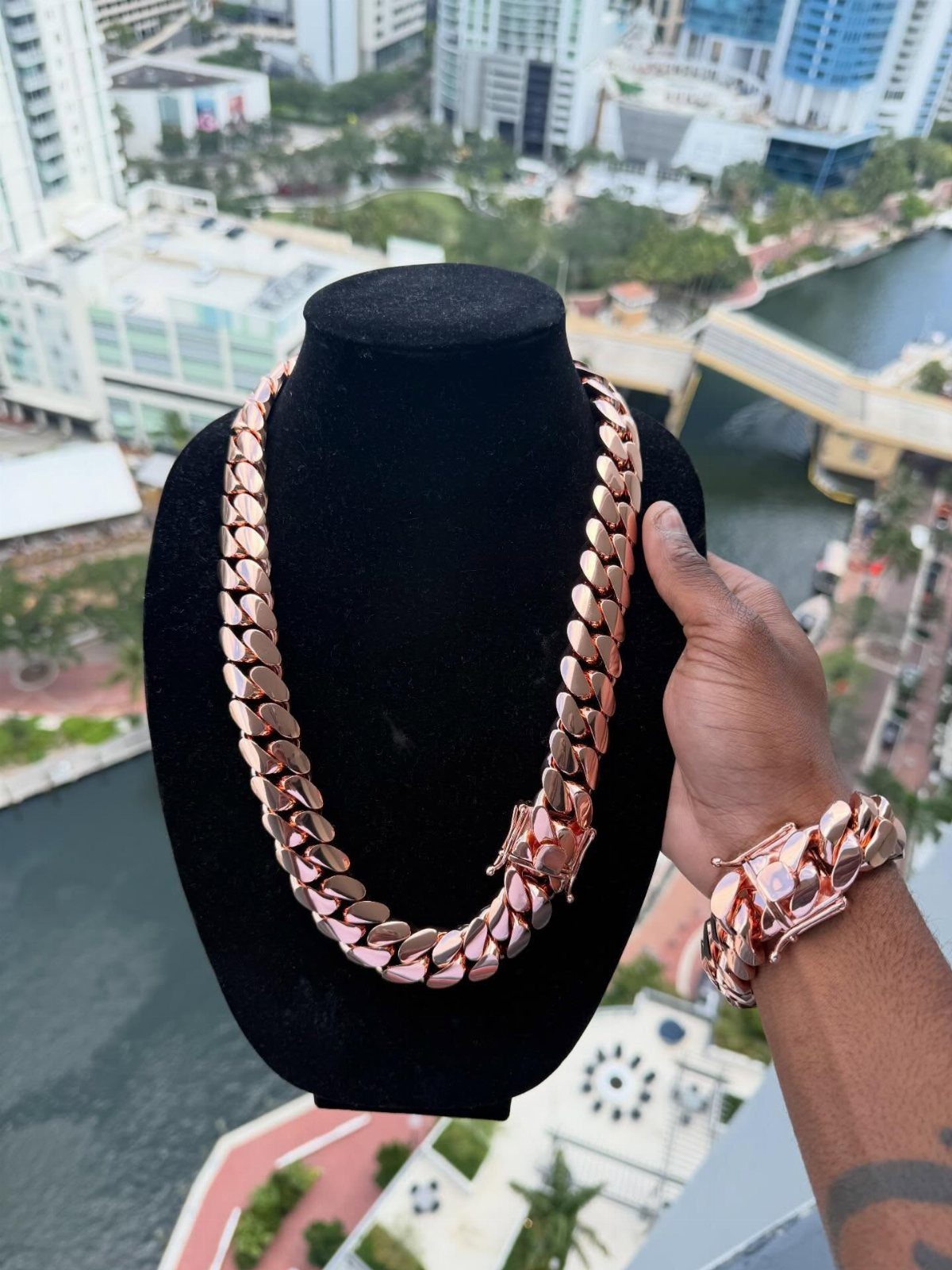
Miami made this style famous, and the name stuck: thick oval links interlock so tightly the chain looks almost like a solid band of gold.
The weight is part of the point. A chunky Cuban link in 14K gold runs heavy on the chest, which some men want and others find they tire of by afternoon.
Rose gold softens the aggression; yellow gold reads classic, white gold reads cold and deliberate.
Layering Cuban links is tricky; 2 heavy chains fight each other. I would wear one, or pair a thinner Cuban with a pendant on a longer rope chain if I wanted variation.
The push-lock clasp common on these needs checking for wear; a failed clasp sends a lot of money to the pavement.

High Quality & Comfortable Material - The Cuban necklace are made of high quality alloy and more than 300 clear and brilliant shine AAAAA+ rhinestones. We paved by hand with 5A+ round well cut cubic zirconia to get a fabulous and glistened Iced Out diamond chain necklace.

Most men find the 22-inch length offers the perfect balance – comfortable yet visible above most shirt necklines. If you're planning to layer multiple chains or wear pendants, consider sizing up to 24 inches for added versatility

Gold Necklace for Women: 1Pc chunky gold necklace. This gold link chain is dainty, great for everyday wear, which can be worn on its own or layered with other chains or necklaces.
4. Curb Chain
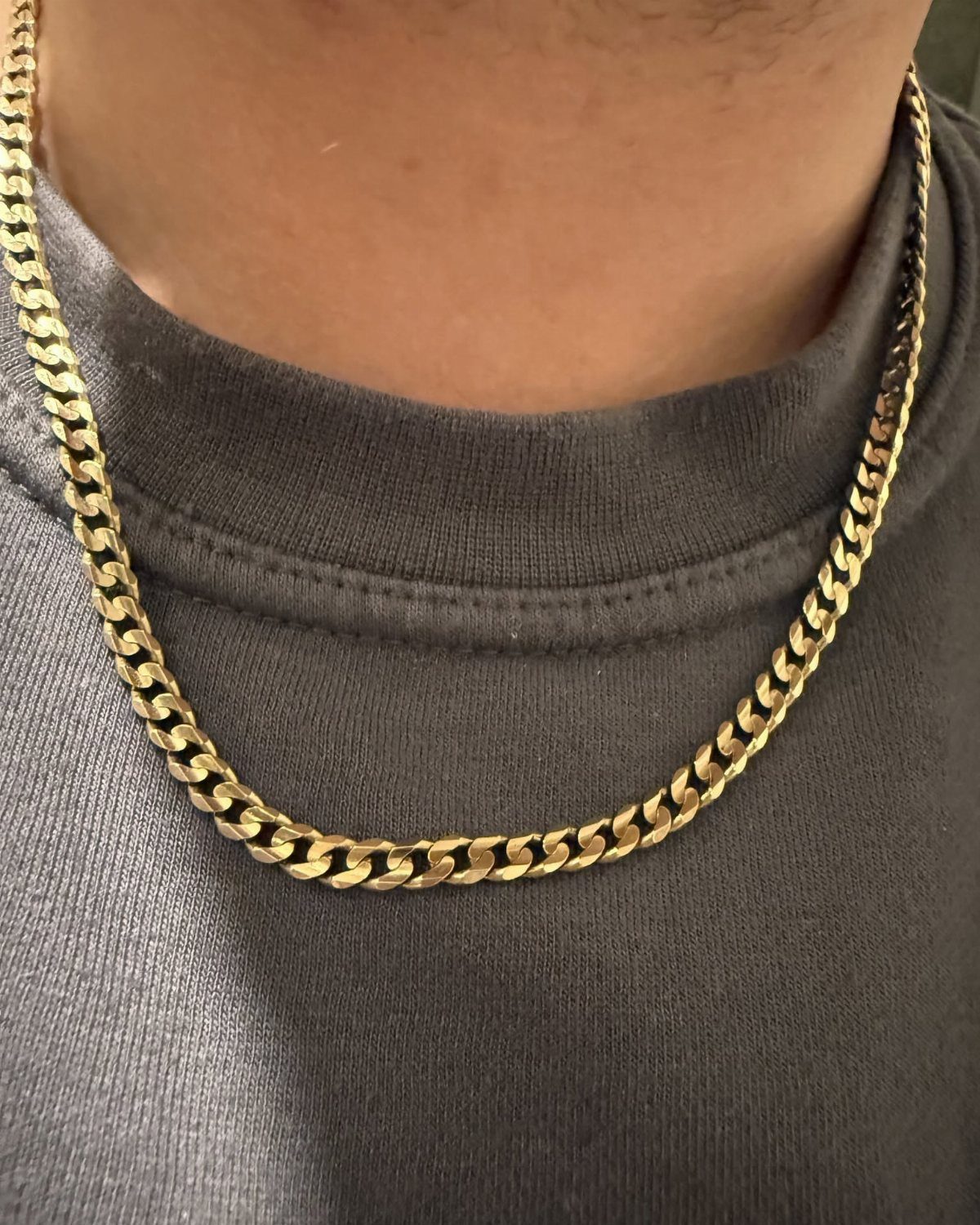
Flattened links, each one interlocked and lying flush against the next, create a surface that feels almost like a ribbon of metal.
This is the chain that started as horse tack and ended up on every third person in music videos.
The flat profile means it layers without tangling; 2 curb chains at different lengths read as intentional, not accidental.
Against a grey tee, as above, the warmth of yellow gold does the work a necklace is supposed to do: it draws the eye to the face without requiring thought.
For women, the same flat links in a lighter weight hold charms without flipping, and the smooth surface does not catch on fine knits the way rope or Figaro links can.
I would choose this for a piece I plan to sleep in or wear daily; comfort is its quiet strength.

Three Chains with a Bold Detail: This set combines a chunky curb-link necklace, a finer chain with flat accents and a round disc pendant necklace. Different chain widths give the three-piece stack a distinct layered outline.

【Herringbone Necklace Material 】:Made of handpicked brass, and plated in 14k gold to ensure a long lasting finish that is tarnish-resistant,nickle free, lead free, and hypoallergenic, Reduces concerns about sensitive skin and product quality issues

🎁【GOLD PLATED, ADJUSTABLE LENGTH, LIGHTWEIGHT】:RWQIAN paper clip initial necklace set is made from stainless steel and plated in gold, non tarnish, nickle free, and hypoallergenic. It will not turn your skin green and is shower friendly. The paperclip chain length is adjustable with lobster clasp for easy wearing.
5. Snake Chain
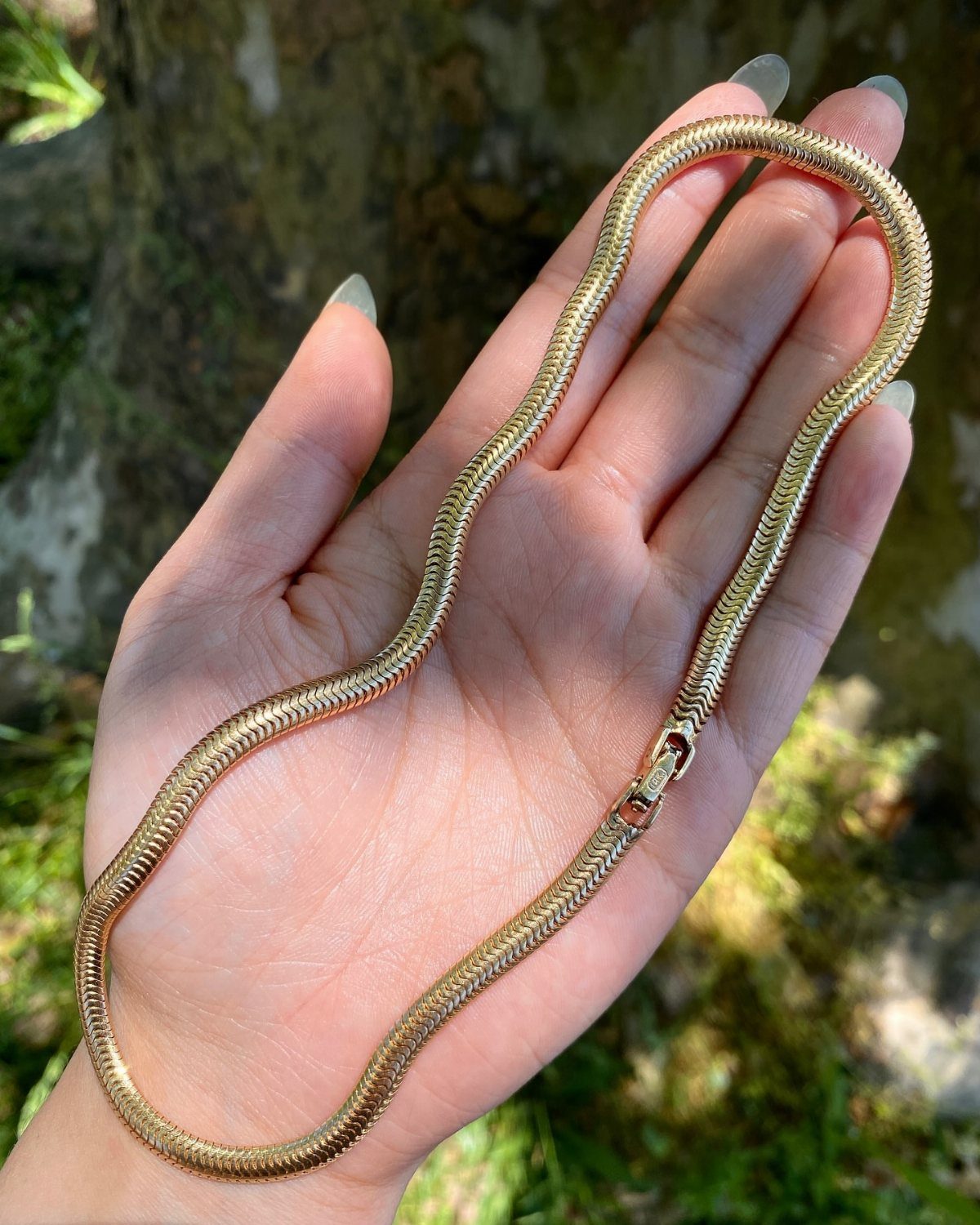
A solid tube of gold that bends like a jointed finger: that is the illusion, and the trick is hundreds of thin plates locked edge-to-edge so nothing shows.
The result catches light softly, almost privately, which makes it a favorite for pendants you want to feature rather than compete with.
The weakness is in the name. Bend it sharply and it kinks, and a kinked snake chain is rarely repairable; the plates separate internally where you cannot reach.
I store mine flat or hanging, never coiled tight in a drawer, and I would not wear one during anything active.
For a wedding, this is the chain that lets a locket or small pendant speak. The smooth surface also slides against skin without catching, which matters in summer heat or under thin fabrics.

Package Include: you will received 4 pieces 14k gold spring ring clasps with 6*4mm round jump rings in one bag, and a gray wipe silver cloth . Gold clasps for jewelry making.

2.Durable Carbon Steel Construction – Made from strong carbon steel with a gold coated surface. These keychain clips for crafts are resistant to rust and corrosion for long‑term daily use. 1.10 Pieces Gold Finish – This set includes ten 25mm (1 inch) lobster claw clasps in a warm gold color. Enough for multiple DIY projects, keychains, bag repairs, or jewelry making.

6. Cable Chain
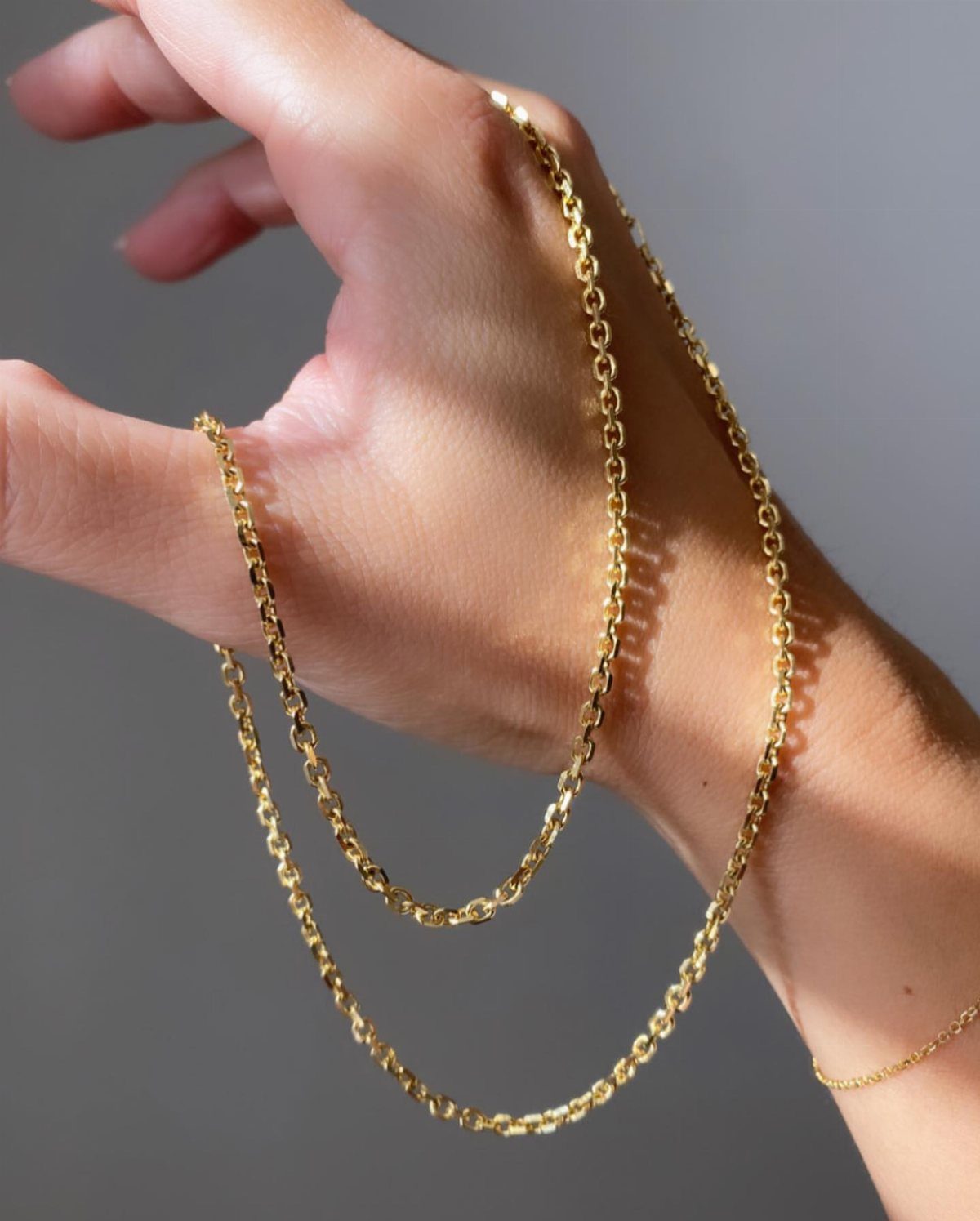
The simplest honest chain: round or oval links, each through the next, the pattern your eye fills in automatically when you picture a necklace.
That simplicity is why jewelers reach for it first, and why it costs less than twisted or woven styles at the same gold weight.
A 3–5 mm cable chain in yellow or white gold is the piece I would buy if I needed one chain to do everything.
It holds pendants without drama, layers without tangling, and resists the kinking that ruins flat chains. The Juno & Fern version runs adjustable 16–18 inches, which covers most necklines; I would want that flexibility rather than a fixed length.
The weakness is plainness. A cable chain does not announce itself, which makes it either the perfect background or too quiet, depending on what you need that day.
Timeless Classic Design:Our sterling silver gold-plated necklace suits both men and women. This eternally stylish Figaro chain serves as a perfect addition to your jewelry collection.

Modern classic: Add style to a basic look with this solid and versatile 925 sterling silver 3mm Figaro chain. The flat polished chain is diamond cut to give the beveled links a reflective finish and a rich, perfect shine. Strong, durable and thick, it is meant to endure daily wear yet it is not too thick for a comfortable fit. Wear alone with casual or formal attire for everyday modern elegance, with your favorite pendant or charm for a personal statement or as a great layering chain.

✦Elegant Design✦: Classic Figaro Chain Design – Features the timeless 3+1 link pattern for a bold, structured look.
7. Herringbone Chain
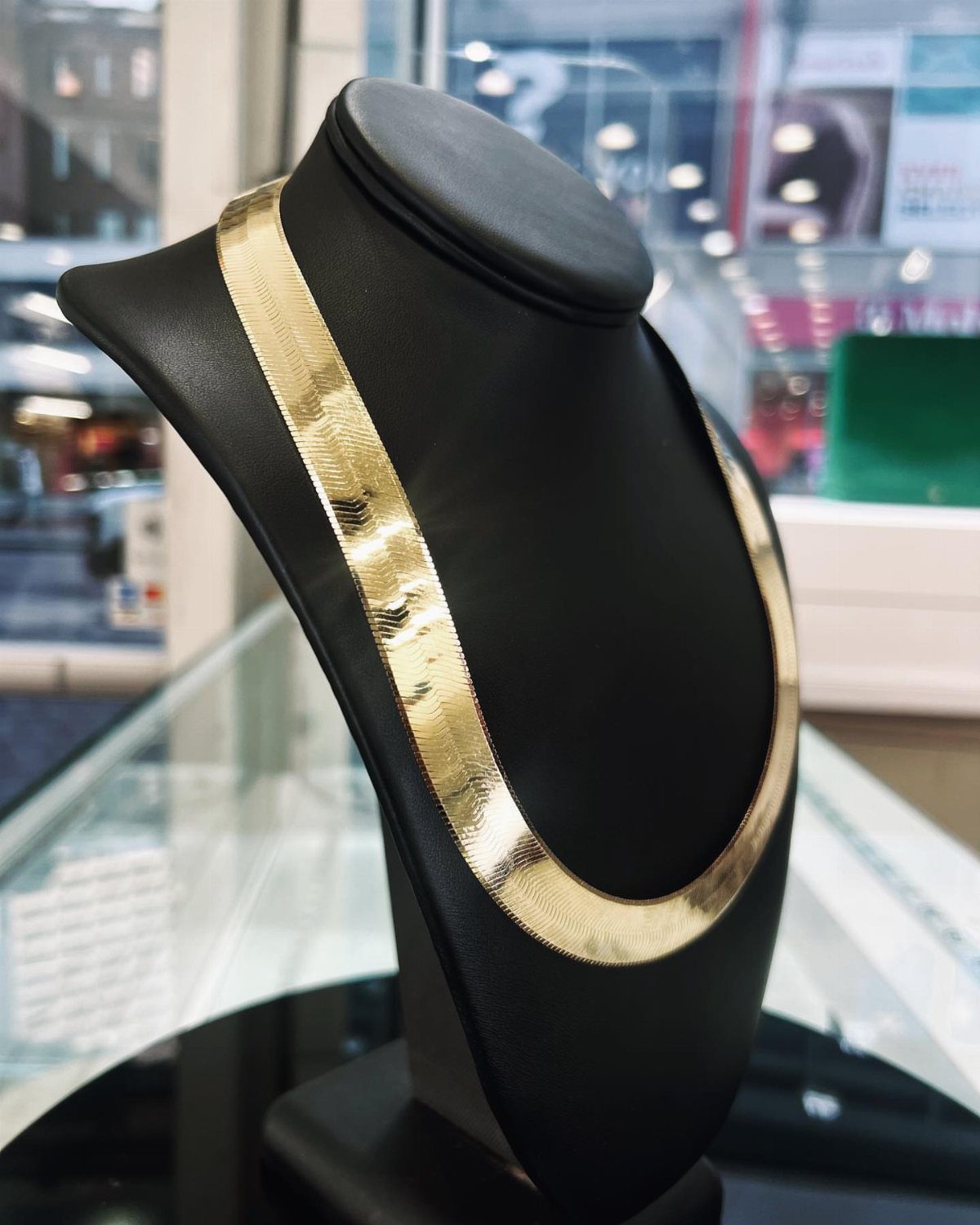
Liquid gold flattened into a ribbon that pools against skin: that is the effect, and the V-shaped links woven flat create a mirror surface that catches anything nearby.
I like it best at 4–6 mm wide, where it reads as intentional jewelry rather than hardware.
The flat profile means it does not flip or twist, which is rare, but bend it sharply and the internal plates kink where you cannot repair them. Hanging or flat keeps the links straight; a drawer tangles them fast.
This chain wants to work alone.
A pendant interrupts the line, and layering creates tangles that the flat surface cannot slide out of. For a wedding, this is the chain that fills a simple neckline when the dress does the talking.

Rope Chain for Men: Sturdy construction, well-made twisted chain necklace, after constant testing, our rope chain is not easy to rip. Stainless steel chain is extremely durable and capable of standing daily wear and tear. It won't bend, break or scratch easily

【 14K Yellow Gold Craftsmanship】 Made of premium 14K yellow gold, the twisted rope chain showcases luxurious golden luster and classic elegant charm, bringing upscale gold texture with a cost-effective price for daily wearing collection.

MADE WITH 14K GOLD MATERIAL Crafted from 14K gold material, this necklace offers both beauty and durability.
8. Byzantine Chain
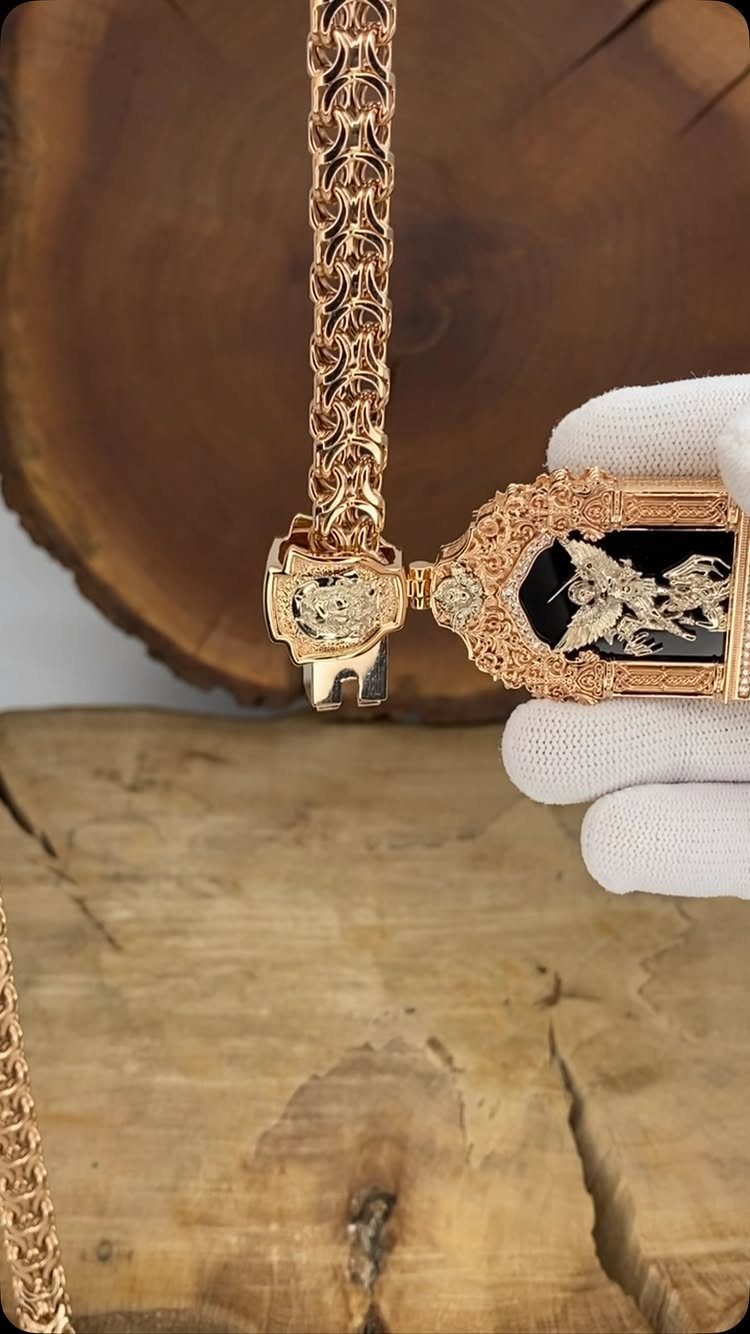
Hollow links interlock in a pattern that looks hand-woven from a distance and engineered up close; the complexity is the point.
A Byzantine chain in 14K gold, hollow at 6.20–10.0 mm, gives the presence of something far heavier without the neck strain.
The lobster clasp is the right choice here; a spring ring on this much chain is asking for trouble.
I would wear this as a single piece, maybe with a small pendant on the ring if the chain is thin enough, but the links themselves are the decoration.
For men, the wider hollow links read as deliberate without crossing into showy. For women, the same structure in rose gold softens the medieval weight into something that works against bare skin.
The hollow build means you are paying for appearance, not metal weight, so check the stamp and buy from a source that tests its gold.

【HEAVY & STRONG CHAIN】- 2 Pieces Cuban Necklace and Bracelet is a solid chain.The cuban link chain for men and women is 14mm in width.High Quality AAA+ Rhinestones Reveals Brilliant Shine.

Gold Necklace for Women--This chunky gold chain necklace is made of high quality alloy,great 80s 90s outfits jewelry accessories

This Chain has an amazing look,in fact this Cuban link chain like no others.Thanks to the high quality stones,this piece has just the right weight to make it both eye-catching comfortable to wear.For a great design,show an outstanding piece of Gold Chain or Silver Chain
9. Paperclip Chain
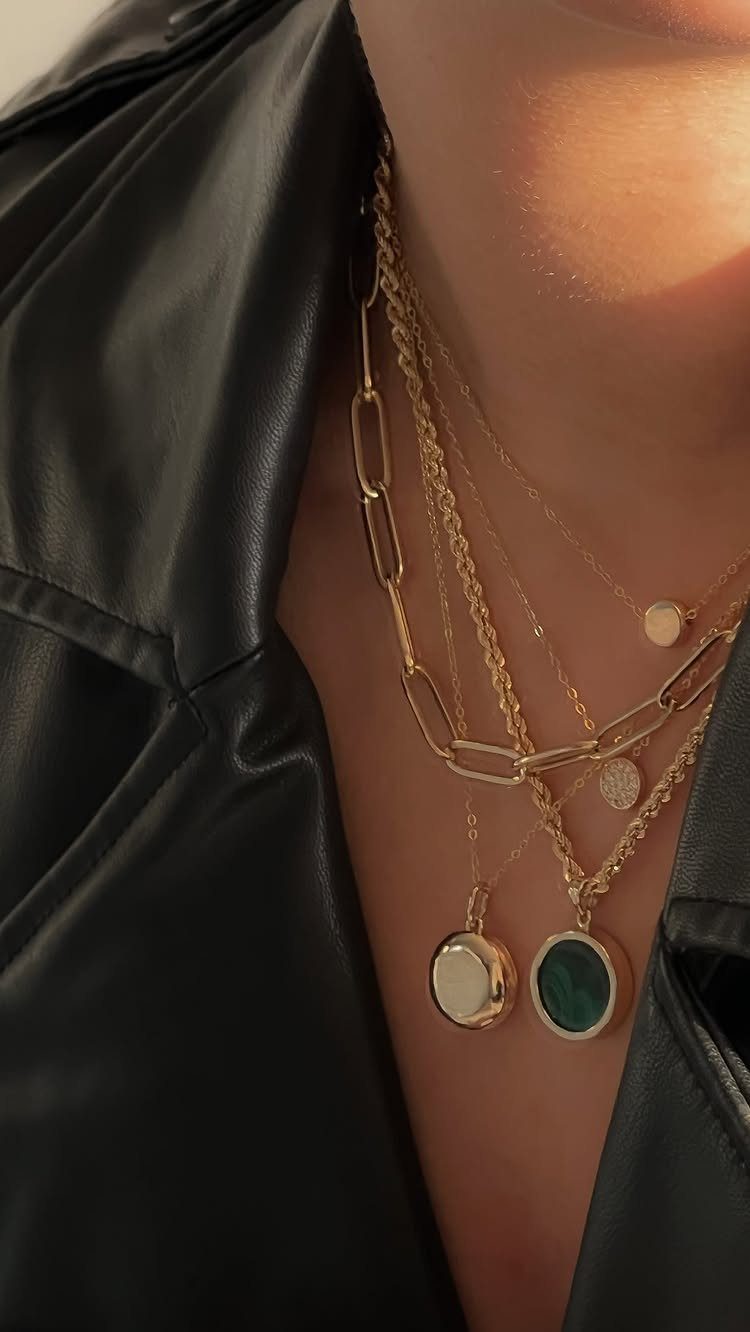
Oblong links, open and repeating, create a rhythm that feels less like traditional jewelry and more like architecture.
I would choose this for the way it modernizes anything it touches: a black leather jacket, a silk camisole, a white tee that needs one thing to make it intentional.
The elongated structure leaves natural spaces for charms, and the chain itself reads as the statement, so a pendant is optional rather than required.
Layering works here because the open links do not trap each other; two or three at staggered lengths, as above, build a look without the fight that dense chains put up.
Lightweight means all-day wearable, though the thin-wire versions can stretch if you load too many charms. I would check the link closure before buying; a soldered joint lasts, an open wire loop does not.

Cuban Link Design: This Cuban link chain for men features closely connected curb links in a slim 3.5 mm width. The repeating pattern gives the neckline a defined line that works as a standalone jewelry detail.

HIGHLIGHTS: Elevate your everyday style with a wide flat curb chain necklace for women, 4mm wide with an adjustable 18" length plus 2" extender. Lightweight and waterproof, this necklace features a secure lobster clasp and offers versatile charm, perfect for layering or wearing solo.

HIGHLIGHTS: This minimalist choker necklace features a gold-plated, 1.1mm-wide box chain. It’s perfect for layering or wearing on its own! The gold necklace is finished with a gold-plated lobster clasp and measures 16 inches in length with a 3-inch extender.
10. Tennis Chain
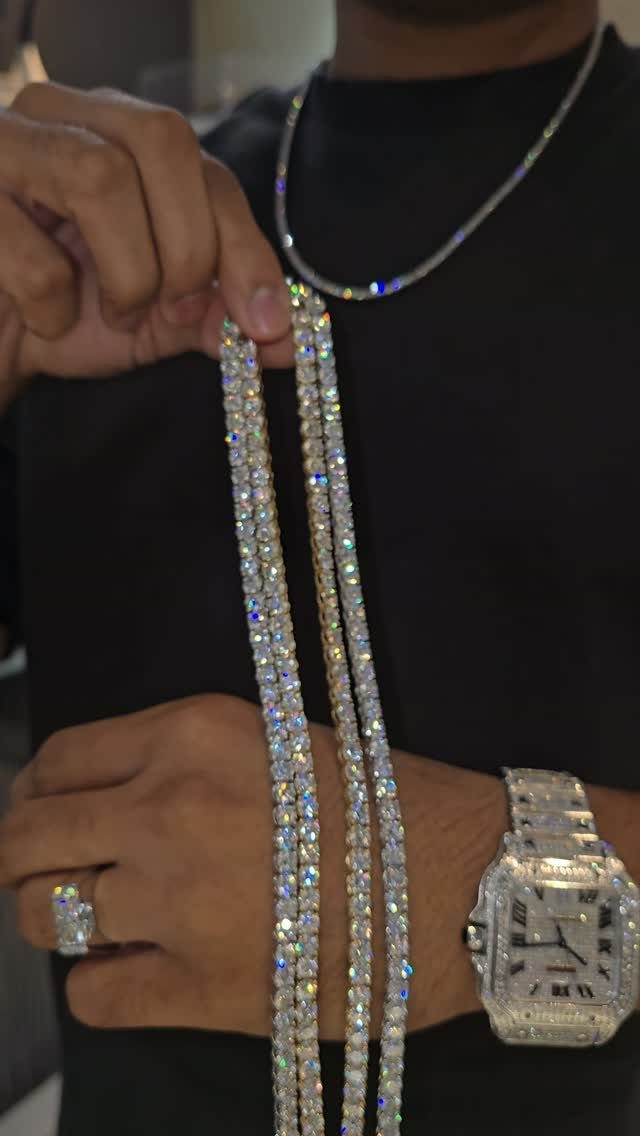
A single row of matched stones, evenly spaced, creates a line of light that reads as expensive discipline rather than excess.
The 4 mm width is the conservative choice; it sits under a collar without announcing itself and pairs with a watch or bracelet without competing.
Tennis chains are sized by the width of their links in millimeters, not by how much gold they carry, since the stones are what catch the light.
An 18–22 inch length covers most necklines; I would want the longer end if I planned to wear it over a shirt rather than against skin.
The setting matters more than on plain chains. A prong that loosens means a stone gone, and at this density, one gap ruins the line.
I have mine checked yearly. For formal occasions, this is the chain that substitutes for a tie or completes a black dress; for daily wear, it is more maintenance than I prefer.

Size: Swivel snap hooks length 1.26 inch(32mm) in length, tail ring Inside width: 0.39inch(10mm), Total 50pcs, Color: Golden, Sizes will easily match with your regular needs.

[PACKAGE CONTENT]: Package includes 6 pieces of gold filled straight lobster claw clasps and 12 pieces of open jump rings in 2 sizes, each size 6pcs. All storage in a small plastic box: 2.67x2.04x0.43inch(6.8x5.2x1.1cm).

【High-Quality Materials for Durability】This set includes 900 lobster claw clasps and jump rings, made from premium, rust-resistant metal. These accessories are built to last, with a smooth finish that ensures a secure and professional look for all your projects, whether it’s for bracelet clasps, necklace connectors, or keychain designs.
11. Belcher Chain
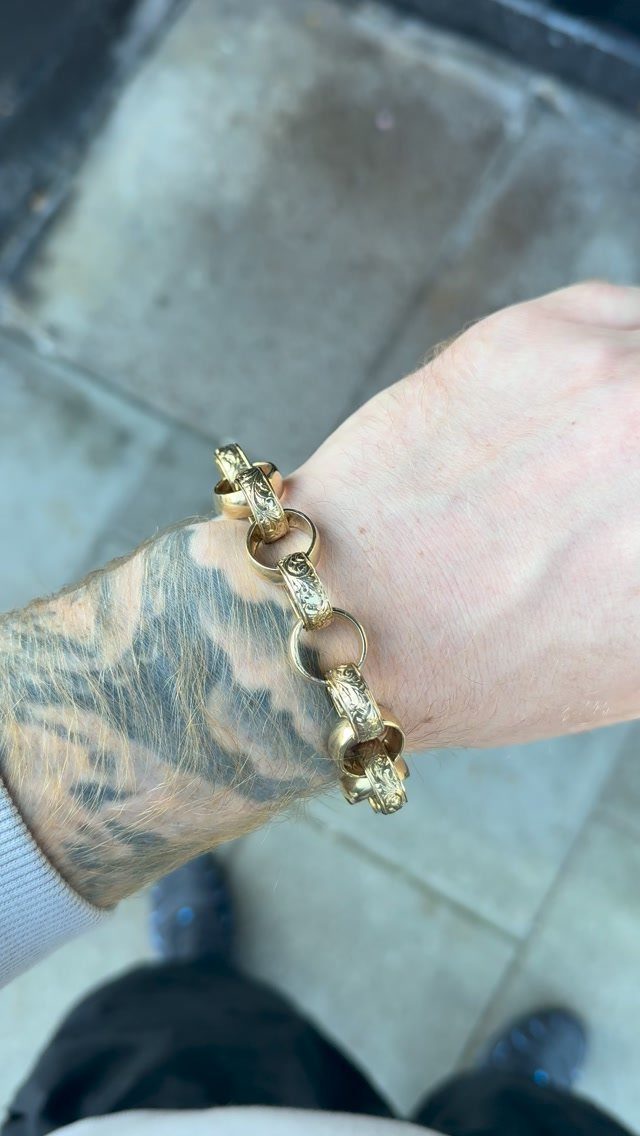
Wide D-shaped links, rounded on the outside and flat where they meet, create a chain that reads as friendly rather than fierce.
The belcher sits in the middle of heavy and delicate; you notice it, but it does not demand attention.
That balance makes it the chain I would choose for layering. Two belcher chains at different lengths, or one belcher with a finer chain and a small pendant, read as collected over time rather than bought as a set.
The open link structure means charms clip on easily, and the width keeps them facing forward instead of sliding to the back.
On a wrist, as above, the same links in bracelet weight feel substantial without clanking against a desk. The D-shape lies flatter than round links, so it does not roll or pinch.
12. Mariner Chain
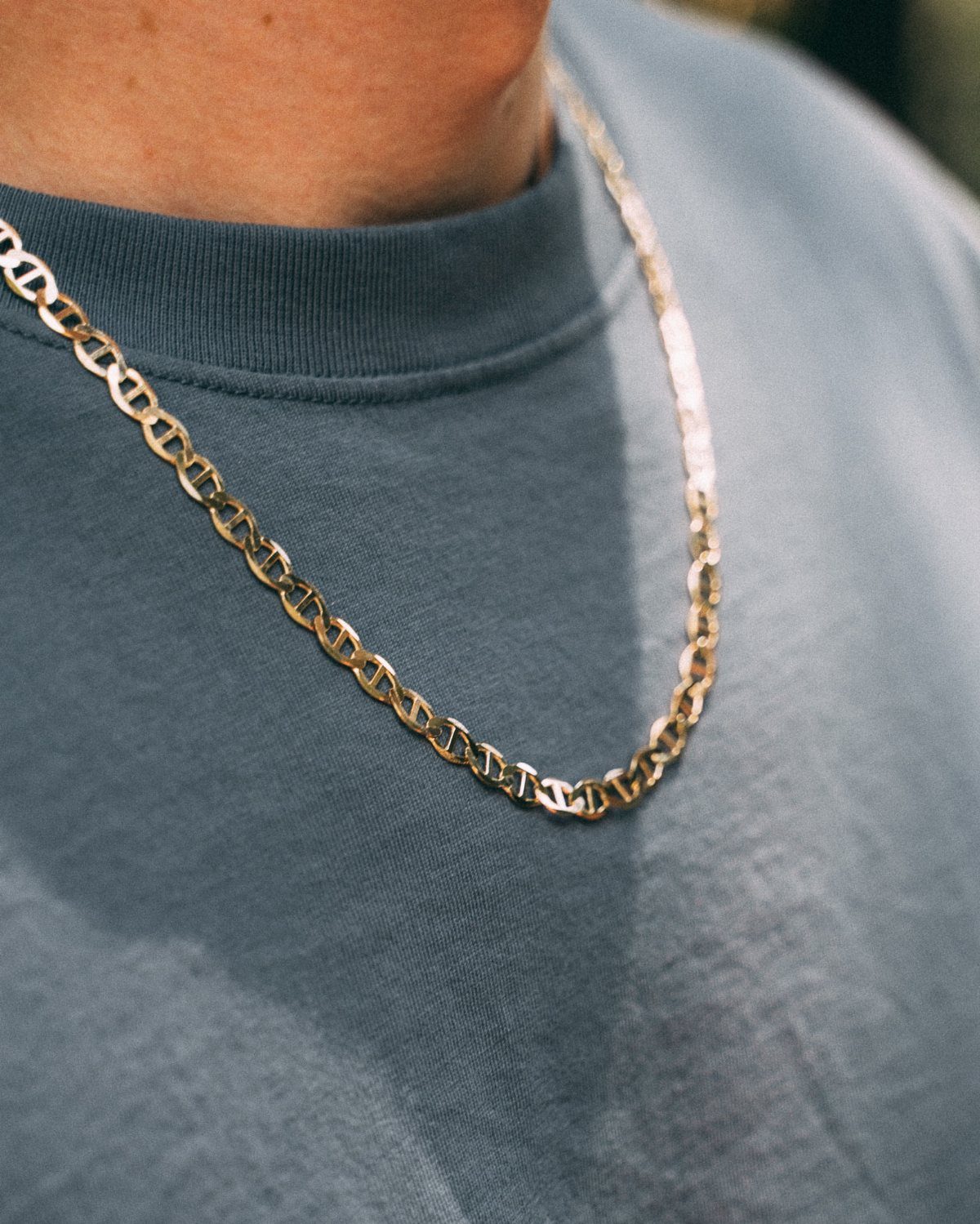
Oval links with a crossbar through the center, like a tiny anchor chain, carry a nautical history that still reads in the shape.
Against a crewneck, as above, the reference is subtle; you see a classic gold chain, not a costume.
The structure is similar to a curb chain in how it lies flat, but the crossbar adds visual interest and slight rigidity.
That means it holds its shape at collar length better than a simple curb, and the links do not fold into each other when layered.
I would wear this for its associations: steady, practical, made for weather.
The same qualities make it a good choice for someone who wants one chain to do everything, including occasional water exposure, though salt still asks for a rinse afterward.
For a wedding with a coastal setting, the reference lands without needing a theme.
13. Diamond Cut Chain
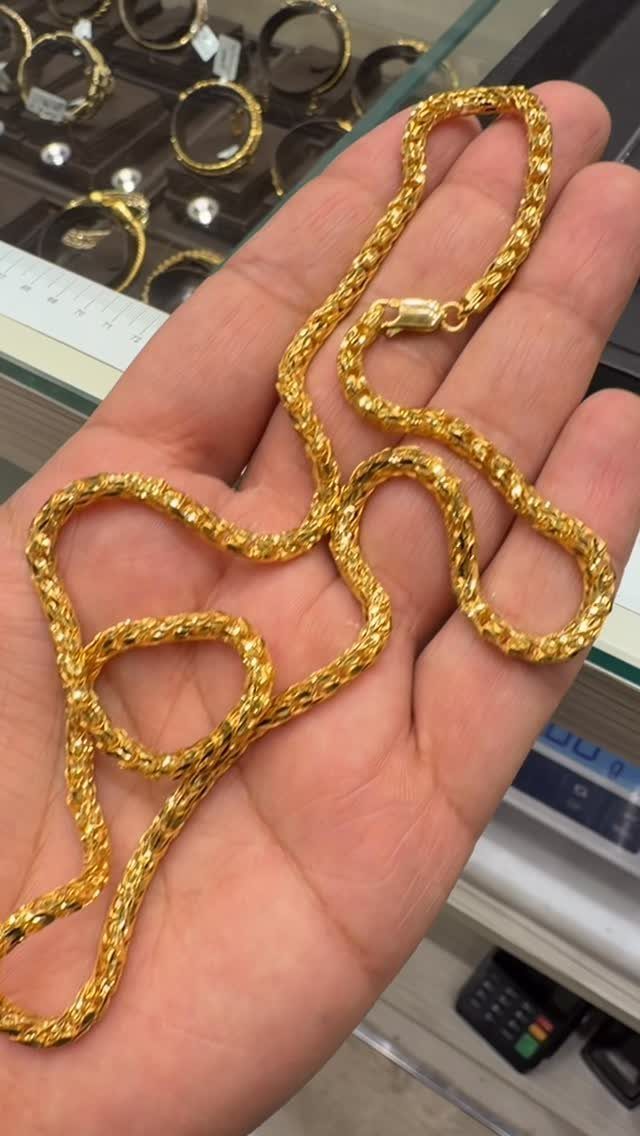
Tiny faceted corners on each link catch light like scattered mirrors, so a diamond cut chain throws more brightness than its weight suggests.
The effect is sparkle without stones, which keeps the price closer to plain gold while the look reads dressier.
A 0.75–1.1 mm width, as in the solid 14K version, is delicate enough for daily wear but still substantial enough to show the cut.
The high-polish finish also means less snagging on hair or fabric, a practical detail that matters more by the third day of a honeymoon than you might expect.
I would check that the links are solid rather than hollow; the cut corners thin the metal, and hollow links dent where solid ones would only scratch.
For a wedding party gift or a piece meant to last past the first anniversary, that durability difference is worth the extra cost.
14. Franco Chain
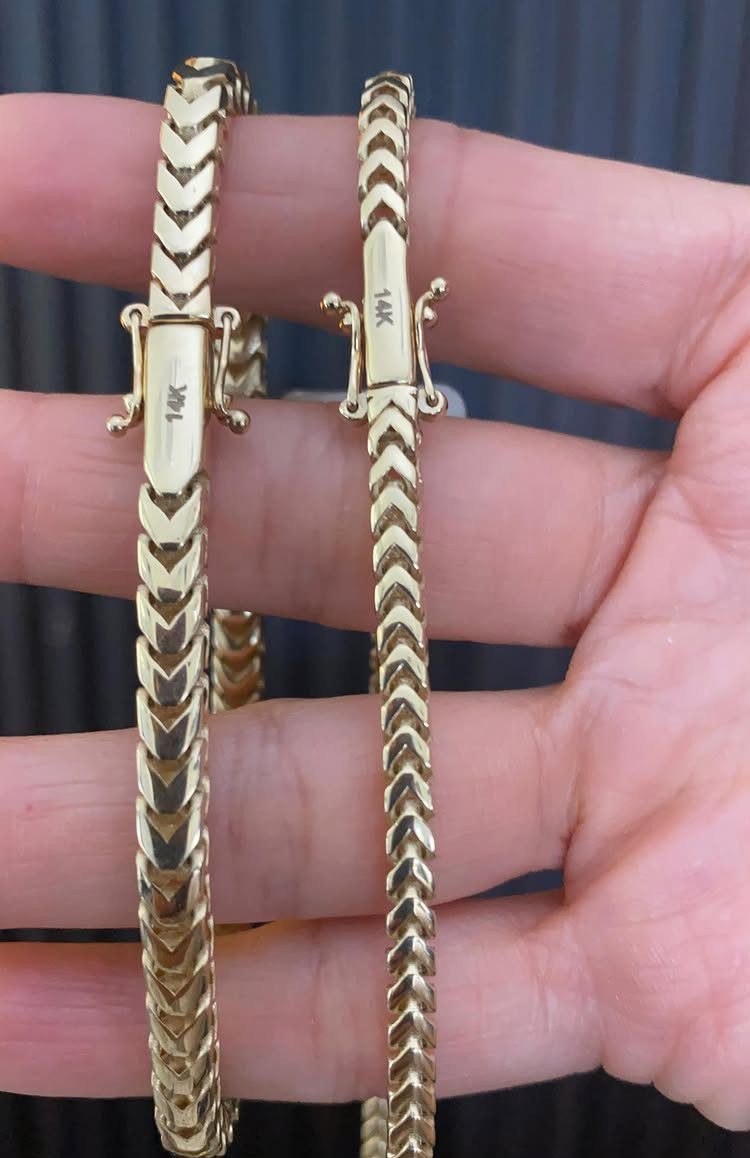
V-shaped links interlock so tightly the chain looks woven from a single ribbon of gold. The chevron pattern gives it a mechanical precision that reads as contemporary without trying too hard.
This is the chain I would choose for a heavy pendant; the structure distributes weight evenly and resists the stretching that ruins simpler links.
A 2.5 mm width carries enough presence to wear alone, and the tight weave means it does not tangle when layered with a longer, simpler chain.
The clasp needs to match the chain’s strength. A stamped 14K lobster or box clasp is the right pairing for a Franco chain; a spring ring is a weak point asking to fail.
For daily wear, I would want the maker to guarantee the link construction, since the internal weave is not visible and quality varies more than on open-link styles.
15. Wheat Chain
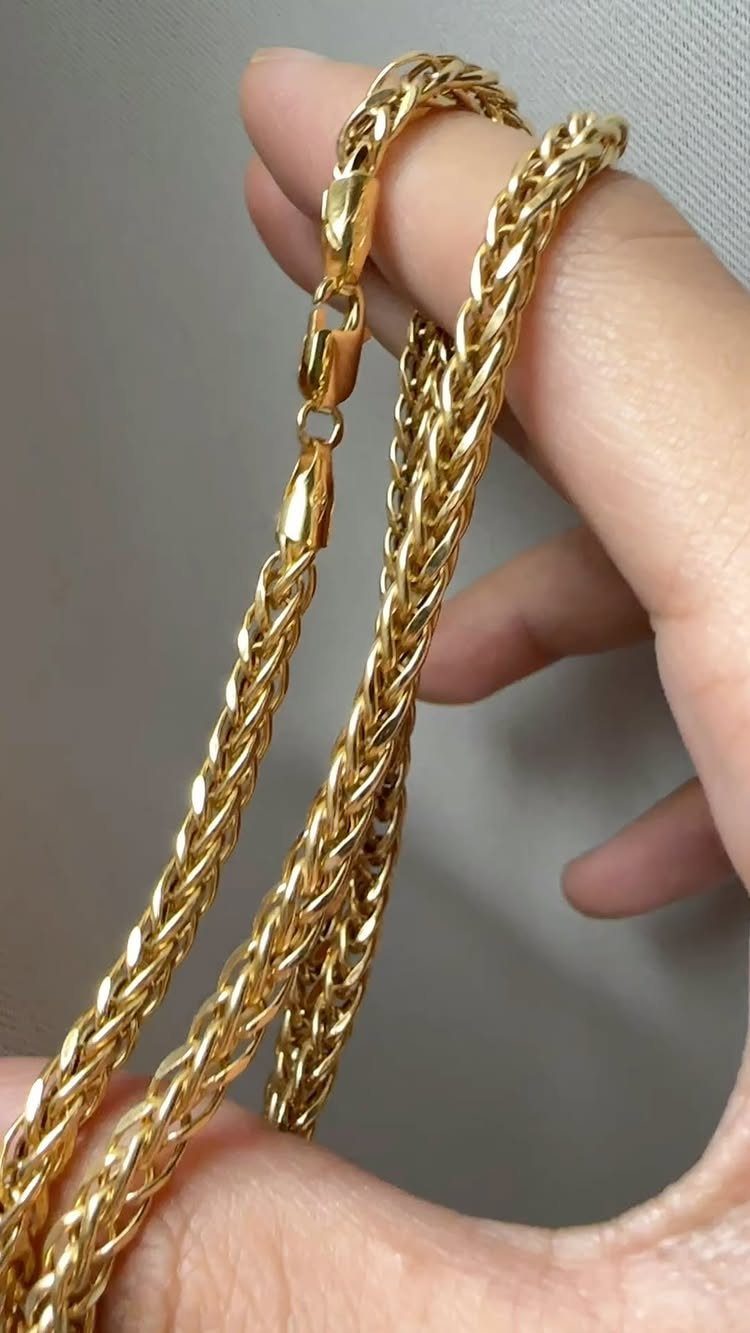
Braided strands of gold twist together into a rope that looks hand-woven and wears like armor. The texture catches light in ridges and valleys, so the chain reads richer than a simple braid without adding weight.
The interwoven structure makes this one of the stronger styles for its thickness, though that same braiding limits how sharply it bends.
I would not choose it for a pendant that swings freely; the stiffness keeps it shaped, and a heavy charm stresses the links where they cross. For a fixed position, a slide pendant or a worn-alone chain, it works.
A thick wheat chain, as above, carries visual weight that suits squared necklines or open collars where it has room to lie flat.
For daily wear, I would look at a medium width; the thick versions photograph well but sleep less comfortably against skin. Rinse after salt water; the braided gaps trap residue where a simple curb would shed it.
Choosing the Right Chain
Purpose shapes every other choice. A chain for daily wear needs to survive desks, workouts, and sleep; a wedding piece only needs to look right through the ceremony and reception and photograph clean.
I would buy for the harder use case if the budget only allows one.
Length sets where the eye lands. A 16-inch chain sits at the collarbone and draws attention to the face; 22 inches falls to the chest and works over a shirt.
The list’s adjustable 16–18 inch cable chain hits right at the collarbone, which is where I like a pendant to sit for everyday wear.
Thickness is where personal taste meets body scale. Narrow chains, 2–3 mm, disappear on larger frames; 6 mm and up read as deliberate on almost everyone.
Style is the last filter.
The list’s chains sort into patterns that do the talking, like Figaro or Cuban link, and surfaces that stay quiet, like snake or cable. Match that to how much else is happening in the outfit.
Caring for Gold Chains
Mild soap and warm water, applied with a soft cloth, removes the skin oils that dull every chain type.
The rope chain’s ridges and the wheat chain’s braiding both trap oil where simple links shed it, so those need slightly more attention.
Storage separates chains that tangle.
The herringbone and snake chains kink internally and rarely recover; I hang mine or lay them flat, never coil them. Curb and paperclip chains layer without fighting, so they can share a space more easily.
Chemicals soften gold and stress clasps. Chlorine in pools, perfumes, and household cleaners all belong on the list of things to avoid.
Yearly checks for the tennis chain’s stone settings are the maintenance habit I would keep, even for chains I wear less often.
Gold Purity Considerations
10K gold is alloyed heavy for hardness, with less than half pure gold in the mix.
It scratches less and costs less, but the color runs pale; I would choose it for a chain that takes abuse, like a daily Franco or curb, where appearance matters less than survival.
14K gold is the practical middle, with more pure gold than 10K but enough alloy to take daily wear without bending out of shape. The color reads as gold without the softness that drives up maintenance.
18K gold, at 75% pure, carries a deeper yellow and a higher price. It scratches more easily, so I would reserve it for occasion pieces like the herringbone or Byzantine chains that do not see daily friction.
22K and 24K are softer still; 22K has a traditional look, but I would not choose it for any chain that moves against skin or clothing. The wedding context in the list favors 14K and 18K for exactly that reason.
Frequently Asked Questions
What is the most popular chain style?
Cuban links dominate the US market right now, and the reason is right there in the construction: those thick oval links lock so tight the whole thing reads almost like a solid band rather than individual pieces.
Its weight and presence made it famous in Miami and it has stayed dominant since.
Are gold chains stylish?
Gold chains have held their place across centuries and cultures because they finish an outfit without requiring much thought. A single thin chain reads as pure and intentional; multiple chains at different lengths build a collected look.
What are the different types of gold necklace chains?
The main styles covered here include Figaro, rope, Cuban link, curb, snake, cable, herringbone, Byzantine, paperclip, tennis, belcher, mariner, diamond cut, Franco, and wheat chains.
Each differs in link shape, surface, and how it catches light or holds a pendant. Cable and box chains are the simplest and most versatile; herringbone and snake chains create mirror surfaces but kink if bent sharply.
What are the best gold chains for everyday wear?
Cable, box, and fine curb chains rank highest for daily wear because their interlocked links sit flat, hold pendants, and resist kinking.
Rope, Figaro, and wheat chains hold up to daily wear, though their woven structure collects skin oil and dust in the crevices, and the raised surfaces wear through plating faster than flatter styles.
Skip herringbone, snake, and Singapore for daily use; their flat or tight constructions dent and kink, often beyond repair.