A bow on a wedding dress can sit at the back, the waist, the shoulder, the neckline, or scattered down the skirt, and the difference between a simple sash and a full Maggie Sottero Aubrielle is the difference between accessory and architecture.
Which placement flatters your frame and survives sitting, dancing, and a full recessional is the only question that matters.
Satin versions that hold their shape through hours of movement are worth the hunt; the floppy ones collapse into decoration by the first toast.
1. Back Bows
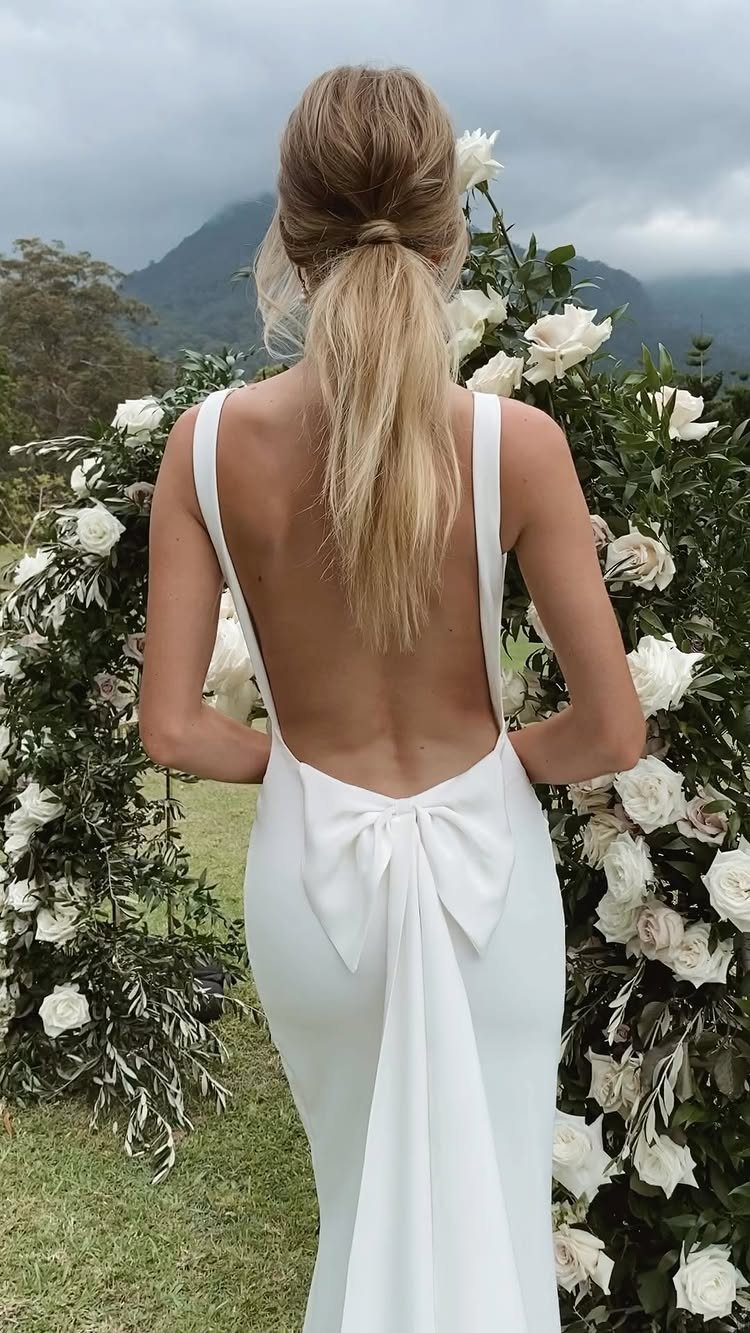
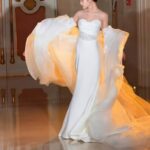
A bow at the back turns your exit into the main event. A low bow where the cathedral train begins means every step down the aisle unwraps a little more drama.
Viktor & Rolf built a whole version from this logic: bows that grow as they descend, each one larger than the last, until the train itself becomes the ribbon’s end.
A full runway piece is not required to get the effect. A single substantial bow at the lower back does the same work on a simpler gown.
This suits the bride who wants her front clean, her ceremony minimal, and her surprise saved for the recessional. Sitting and dancing are the real test; check how the bow compresses before you commit.

Fabric - Made of skin-friendly, comfortable satin fabric, hand-stitched, suitable for most dresses. The satin fabric color of the corset back kit will be different due to different monitors, satin bow the color of the product may be a little inconsistent, but the whole product is consistent with the picture

The long tail is around 59 inches (150cm).
2. Shoulder Bows
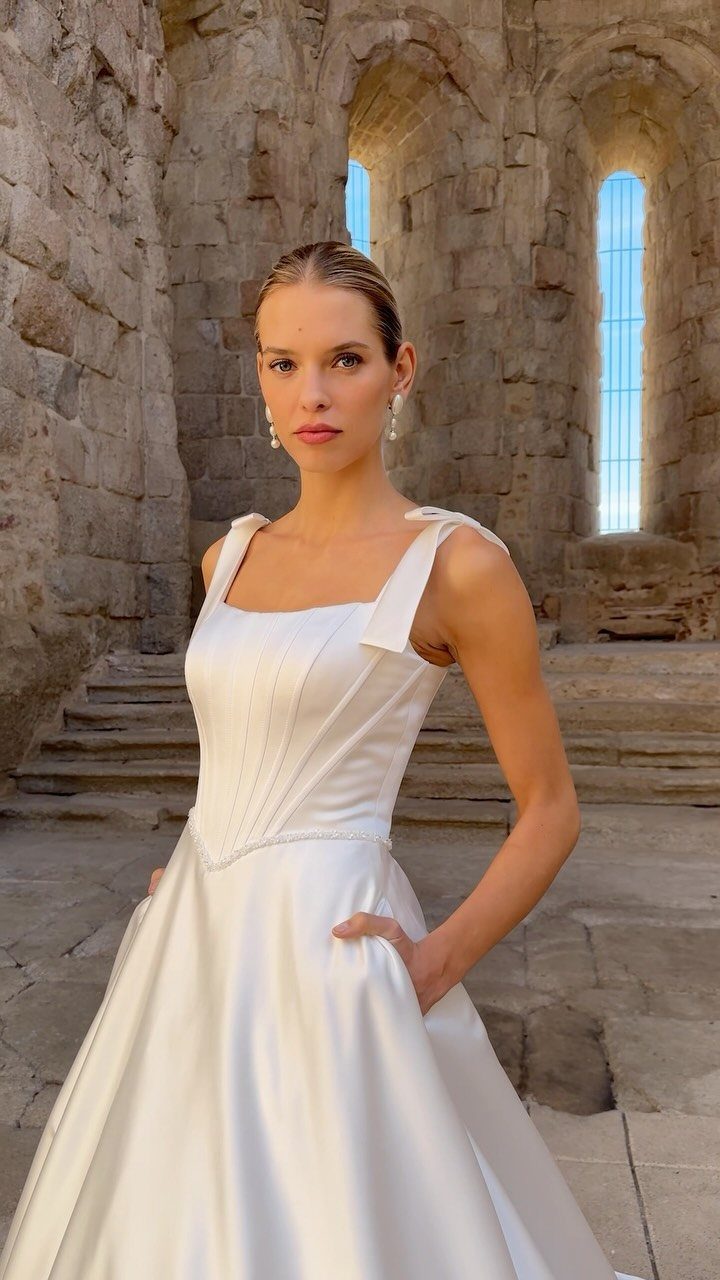
Tied straps do what jewelry cannot: they finish the dress and frame the face in one gesture. Satin bows at the shoulder line, right where it meets the collarbone, turn a structural necessity into the whole mood.
Mac Duggal’s one-shoulder version puts a single oversized bow on the strap itself, balanced by a thigh-high slit on the bare side. Two takes on the same idea, as the maker notes: one symmetrical and girlish, one deliberately off-center.
For your own search, shoulder bows work best on clean bodices where they have room to read as deliberate, not apologetic. Off-the-shoulder and straight straps both take them; cap sleeves, less so, where the bow competes with the fabric.
Keep the rest simple. These are the flourish, not the foundation.

COMFY FABRIC: The Maxi Dress Is Made Of High-Quality Polyester And Elastane Fabric, Soft And Breathable, Comfortable To Wear, And Friendly To The Skin. Fabric Has Some Give For Comfort

Size Tips: Crafted from high-stretch crepe fabric that offers flexibility and comfort across different body types. Please refer to the size chart before ordering to select your best fit

Tips: S=US 4-6, M=US 8-10, L=US 12-14, XL=US 16-18, XXL=US 20. The Ditsy Floral Maxi Dress Use Lightweight And Soft Polyester, Friendly To Skin And Giving You Light And Cozy Wearing Experience. This One Shoulder Boho Dress Perfect For Summer
3. Neckline Bows
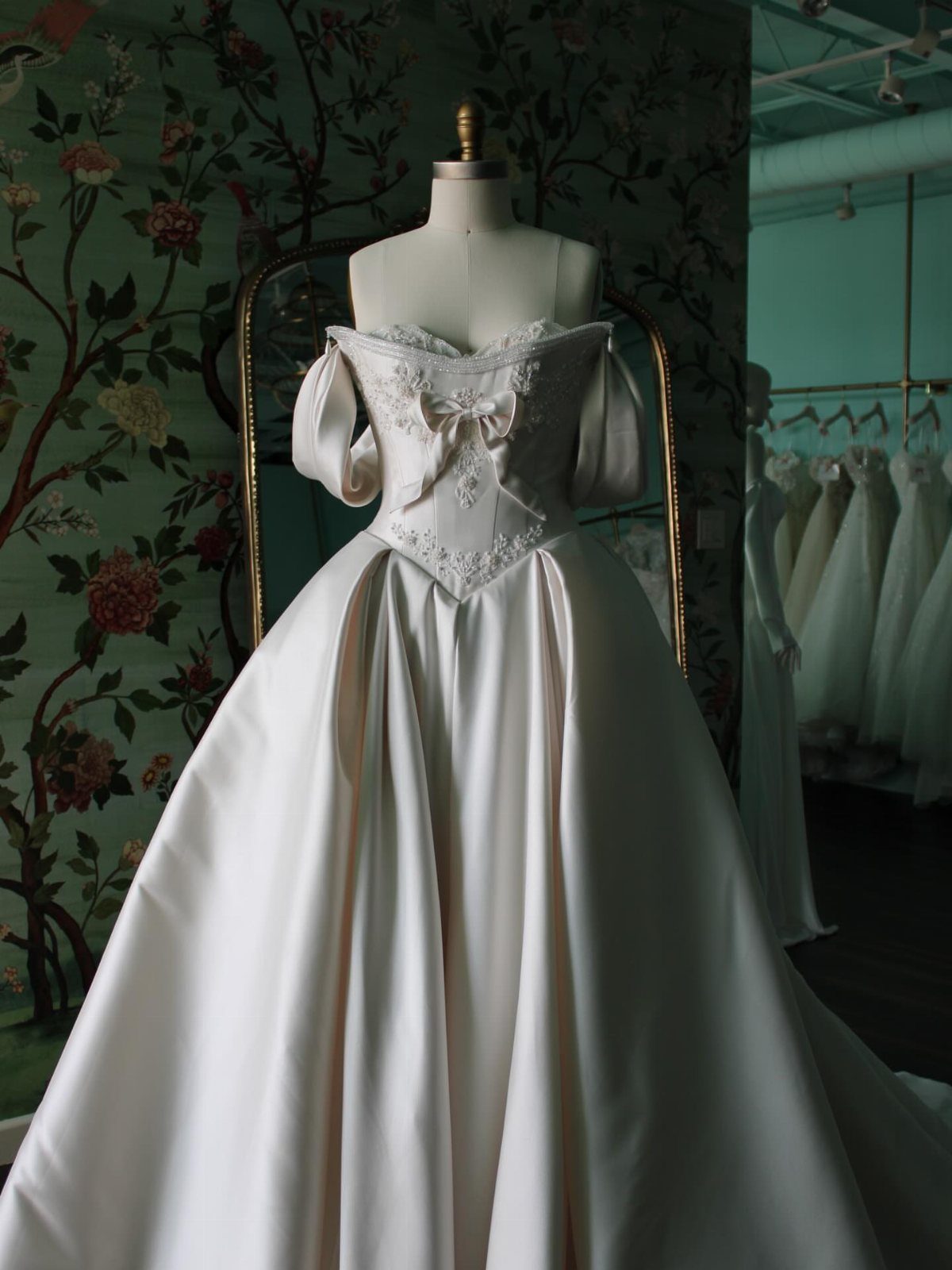
A bow at the throat reads Victorian in a way nothing else quite manages. An off-the-shoulder bodice carries a small centered bow, more cameo than costume.
Maggie Sottero’s designers use this placement sparingly, usually on high or covered necklines where the bow breaks up the expanse.
Rebecca Ingram’s Payson ties its bow in back instead, at the top of a closed neckline, which gives the same era but turned around.
For a front-facing bow, check proportion against your frame: too small and it disappears, too large and it wears you.
Satin holds its shape; tulle or organza soften into something more suggestion than statement. The vintage feel is strongest with a matte fabric and a covered button or two beneath.

Features: puff sleeves, Empire waist

Authentic Regency-Era Elegance – Channel Regency-inspired charm with this vintage Empire waist dress: the high-waisted silhouette + square neckline + back V-neck ruffled trim capture 19th-century grace, perfect for tea parties, regency-themed events, or romantic garden dates.

DESIGN FEATURES: Elegant Victorian-style Lolita dress with intricate lace trim, delicate ruffles, and decorative bow details throughout the bodice and skirt
4. Wedding Dresses with Oversized Bows
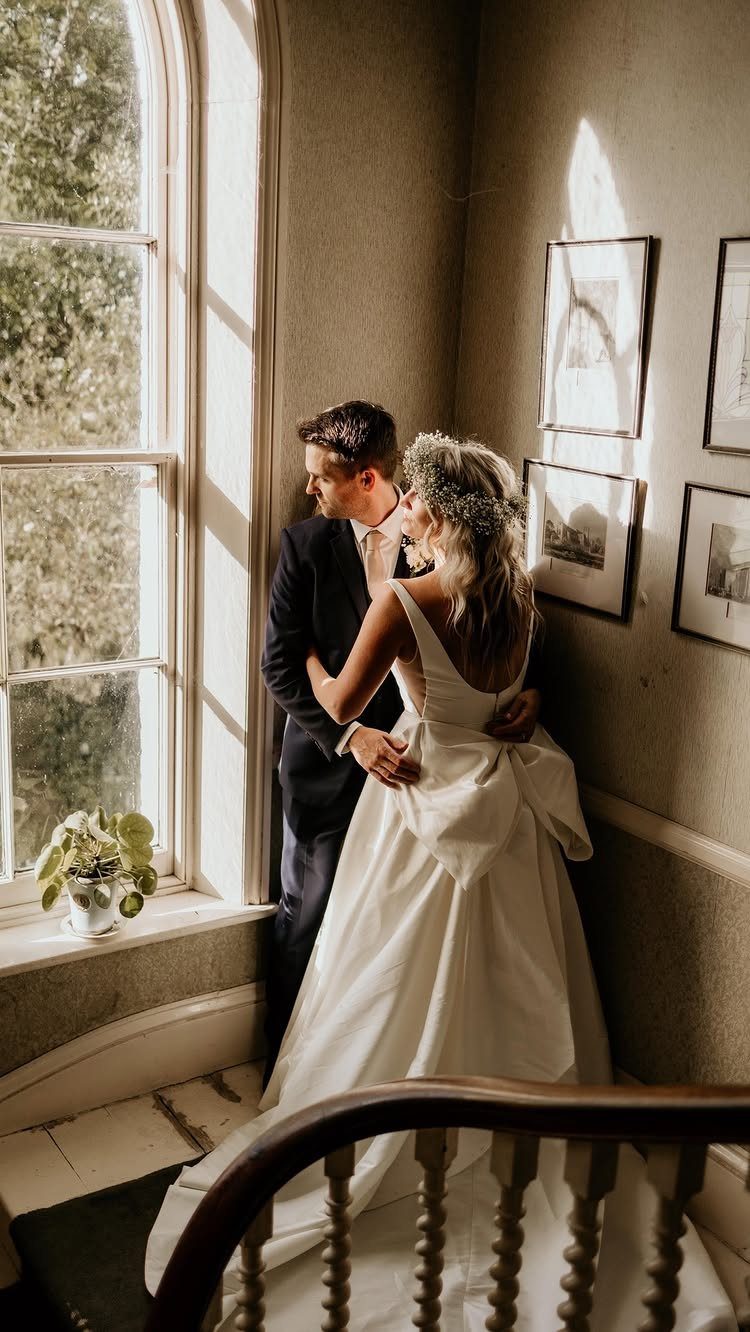
Scale is the whole point. A bow that spans nearly the full width of the back, its loops structural enough to read as architecture, not accident.
Maggie Sottero has built multiple collections on this premise. Aubrielle layers ruched satin under a back bow so large the whole gown reads as gift-wrapped; Paris offers removable sleeve-like bows that convert the dress between ceremony and reception.
For a subtler take, Valeska places oversized bows lower, at the hip or train, where they move with you rather than competing.
The cost of this much fabric and structure runs high, as you would expect.
If the budget is tight, consider a detachable oversize bow accessory rather than a built-in version; Rebecca Ingram’s Heyda uses its tie-up back detail as a compromise between the two.

Perfect for Special Occasions: These elegant princess shoes are the ideal choice for a wedding/party, ensuring your little one looks stunning at any formal event.

ELEGANT DESIGN: Beautiful baby girl dress featuring a ruched bodice with smocked detailing, charming bow tie shoulder straps, and a luxurious layered tulle skirt that creates a magical princess-worthy silhouette

Elegant Bow-Heel Sandals for Women: Designed with a chic square toe, open-toe silhouette, and delicate bow detail, these chunky heels for women add a feminine and romantic touch to any outfit.
5. Bow Wedding Dress Trends
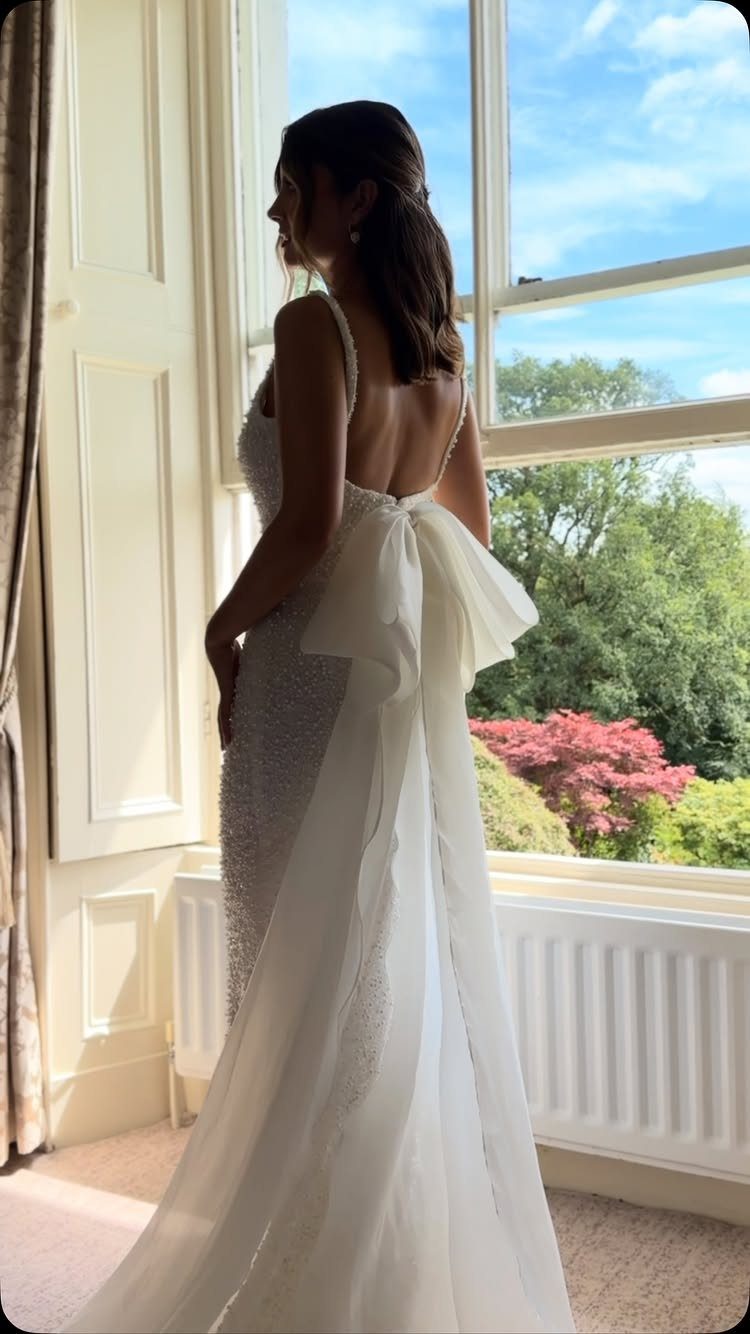
The bow on this dress is not an accent; it is the thesis. What reads as embellishment from a distance resolves, up close, into the central design decision that everything else supports.
Current bridal collections treat bows as movable: back, waist, shoulder, neckline, train, all fair game. The effect shifts dramatically by placement.
Back bows read dramatic and photographic. Waist or sash bows define silhouette and add romance.
Shoulder bows turn ethereal. Neckline bows go vintage.
Train bows formalize. Even a single small bow, placed unexpectedly, changes how the whole dress registers.
For a bride working with a modest budget, this modularity is useful.
A clean sheath with a purchased sash becomes a bow dress for little extra. The trend’s breadth means you can participate without the full couture commitment.

Elegant Detachable Bow for Dresses: Instantly Transform Your Look – Elevate your outfit with this elegant detachable satin bow train for dress. Designed for wedding dresses, bridal gowns, evening dresses, prom dresses, and other formal wear, this Large removable bow creates a graceful statement without permanent alterations, giving your look timeless sophistication

Glossy Satin Bow & Sheer Tulle Train Design: This stunning detachable accessory features an oversized, voluminous satin bow with a smooth glossy finish, paired with an extra-long flowing tulle train. The combination of premium satin and lightweight sheer tulle creates an elegant, ethereal look that adds romantic drama to any formal outfit
Elegant Large Satin Bow with Flowing Tulle Tail:This stunning detachable bow features a wide 15.35-inch satin bow paired with a graceful 47.24-inch tulle train. The long flowing tail creates a dramatic, romantic silhouette. Perfect for bridal gowns, prom dresses, or formal evening wear where elegance and visual impact are essential.
6. Bow Wedding Dress Styles
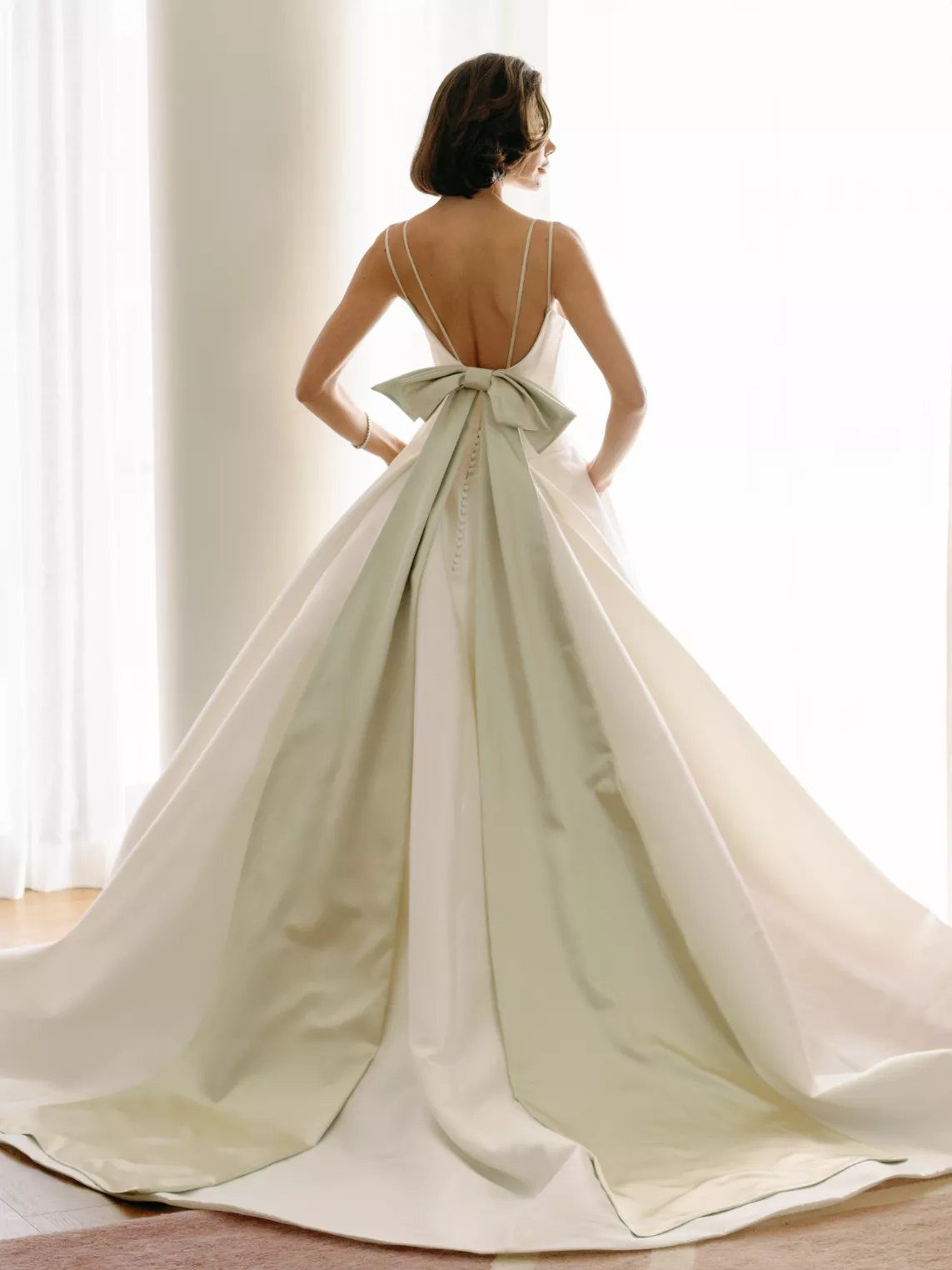
Color against white changes everything. A sage green silk bow, wide as a stole, pinned at the waist and flowing into the train like something borrowed and deliberate.
That particular version, the visible one, is a statement of contrast: the gown stays traditional while the accessory brings in a palette.
You could reverse the logic and keep the bow white, letting shape alone do the work, or go deeper into color with blush, black, or gold.
The maker’s archive suggests this placement, the waist-and-train bow, works across silhouettes: sheath, A-line, ballgown. Fabric weight decides whether the bow reads as architecture or afterthought.
Heavy satin holds its architecture; lighter materials collapse into decoration. A substantial drape reads seasonally right for fall or winter in a way lighter fabrics do not.

3 types of tails: satin ribbon tail, irregular tulle tail, and 53" long tulle tail.

Material: 95% polyester, 5% spandex. Smooth satin fabric with a soft sheen and a slight stretch for comfort. Lightweight and flowy, designed to drape beautifully for special occasions.

Premium Satin Material: Crafted from high-quality satin, this removable bridal belt features a soft, lustrous finish with excellent drape. The floor-length tails flow naturally, creating an elegant and graceful look with every step
7. Waist Bows
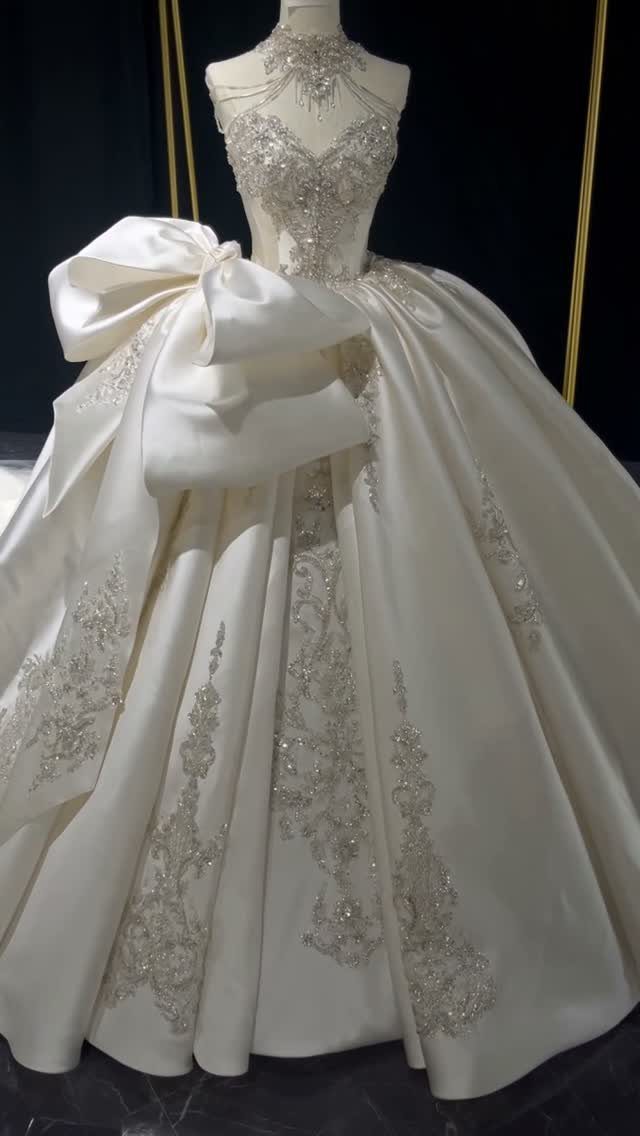
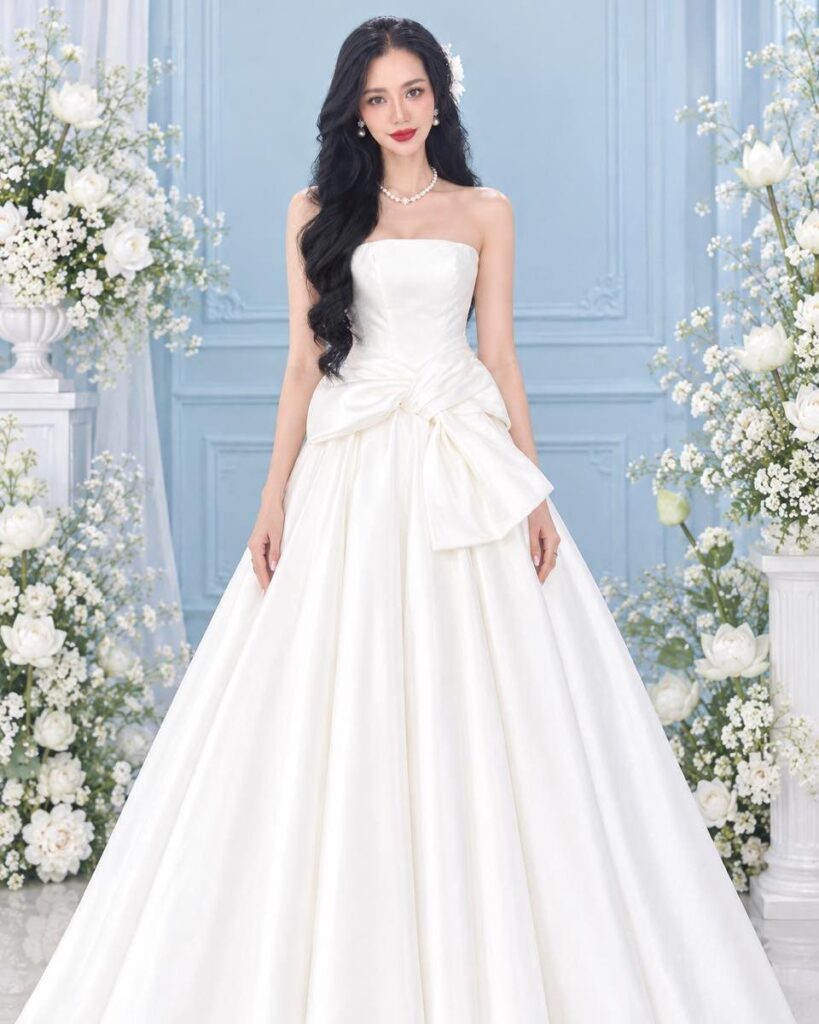
A bow at the waist redraws the silhouette in one motion. It sits where the eye already goes, turning a natural break into a deliberate event.
A waist bow works best when the maker treats it as architecture, not soft decoration; crystal and silver beadwork can hold the shape and catch the light exactly where the torso meets the skirt.
Justin Alexander’s Joelle uses a basque waist for similar effect, the point where bodice meets skirt elongated and emphasized. Heavy fabric and structure are required; a floppy waist bow collapses into a sash.
This is high-impact work that rewards attention to detail more than it demands a large line item.
A clean A-line and a purchased structured bow achieve the same re-proportioning. Check that the bow does not obscure the line when you sit; a basque point or centered knot both handle this better than a full wrap.
COMFY FABRIC: The Maxi Dress Is Made Of High-Quality Polyester And Elastane Fabric, Soft And Breathable, Comfortable To Wear, And Friendly To The Skin. Fabric Has Some Give For Comfort

This formal long dress features an asymmetrical neckline, one shoulder design, and single shoulder bow detail that create a graceful and feminine silhouette. Designed with a fitted bodice, defined waist, and flowy a line skirt, this women sexy cocktail dress delivers an elegant appearance with balanced proportions and timeless style.
Tips: S=US 4-6, M=US 8-10, L=US 12-14, XL=US 16-18, XXL=US 20. The Ditsy Floral Maxi Dress Use Lightweight And Soft Polyester, Friendly To Skin And Giving You Light And Cozy Wearing Experience. This One Shoulder Boho Dress Perfect For Summer
8. Skirt Bow Details
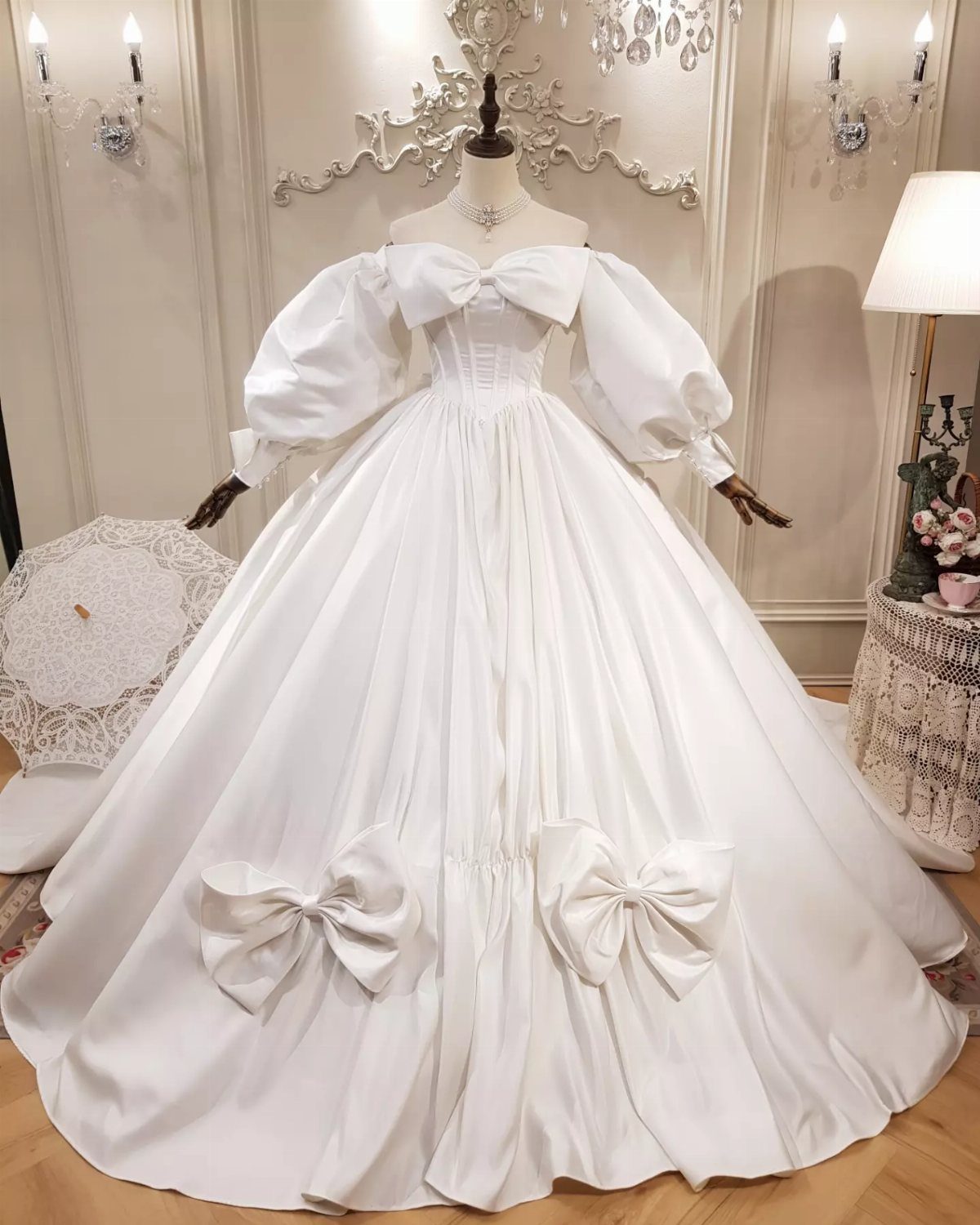
Bows placed down the skirt turn movement into punctuation. Each step sets them swaying, so the dress reads one way standing still and another in motion.
A version that keeps the bow to one side, paired with a slim flared skirt and a single sophisticated tie, reads as intentional rather than added on.
Maggie Sottero’s Valeska scatters them through a mermaid train, visual interest where the silhouette narrows. Both approaches share a rule: the bow must be intentional in its placement, not scattered like confetti.
Satin holds the shape for this; tulle bows on a satin skirt compete rather than coordinate. For a budget option, consider one substantial skirt bow rather than several, placed where your natural movement shows it off.
Multiple bows on one gown follow the same logic as a single bold placement: each one needs a reason for being where it is.


Fabric - Made of skin-friendly, comfortable satin fabric, hand-stitched, suitable for most dresses. The satin fabric color of the corset back kit will be different due to different monitors, satin bow the color of the product may be a little inconsistent, but the whole product is consistent with the picture

9. Bodice Bow Wedding Dresses
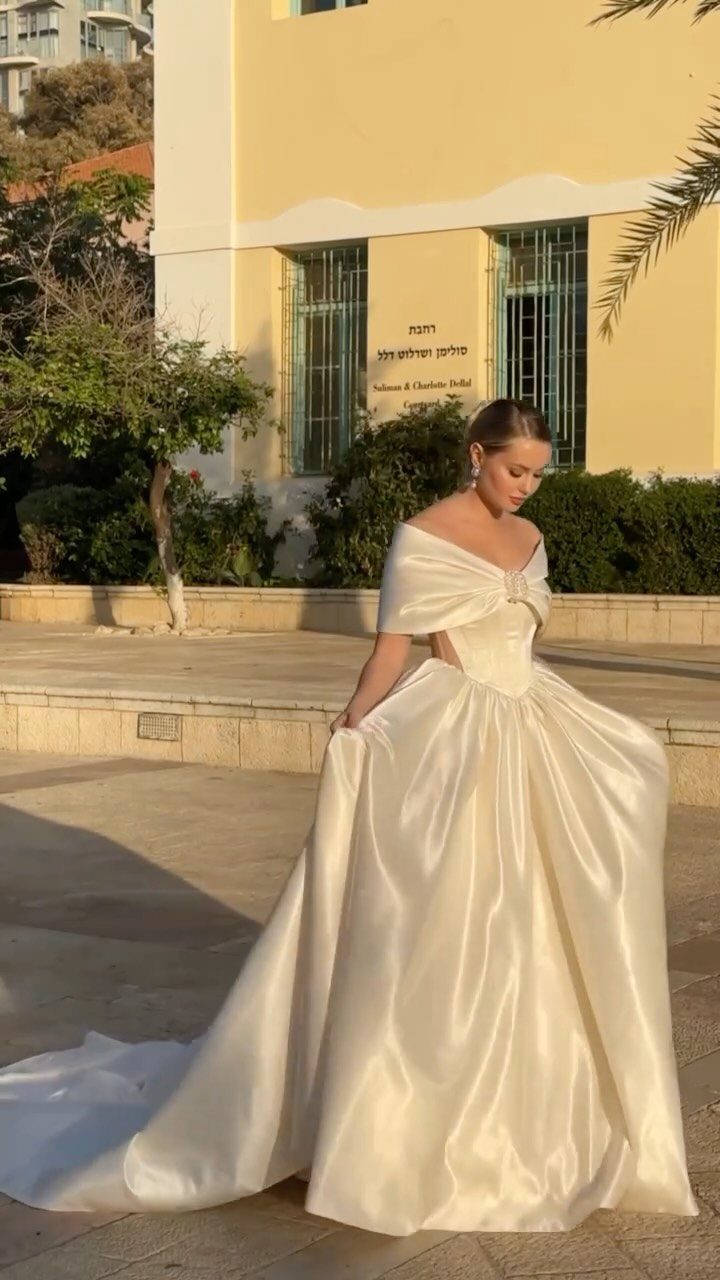
A bow built across the bodice is worn like jewelry you cannot remove. It sits at the collarbone, the sternum, the fullest point of the bust, turning the upper body into a single sculpted gesture.
Milla Nova’s glitter version goes further, silver catching light from every angle with a detachable train added overhead.
An off-the-shoulder drape can soften the same idea, with the bow becoming the bodice itself rather than sitting on top of it. Justin Alexander’s corset construction, hand-finished with Old Hollywood reference, suggests how this structure is built to hold.
The trade is mobility. A bow across the chest limits arm movement and can gap when you lean.
Check this at your first fitting, not your last. For brides between sizes, order to the larger; a bow bodice cannot be let out the way seams can.

【Satin Bow Back Homecoming Dresses】:Short satin homecoming dresses with bow back 2026 ,mini square neck prom dress, a line cocktail party gowns, spaghetti straps HOCO dresses, elegant birthday dress, short mini graduation dress, simple modest summer dress, backless cocktail dress. Exquisite design let your looks elegant and charming.

ALL DAY COMFORT: The padded insole and plush lining keep your feet comfortable from morning errands to evening events, while the cushioned footbed absorbs impact with every step.

Perfect for Special Occasions: These elegant princess shoes are the ideal choice for a wedding/party, ensuring your little one looks stunning at any formal event.
Accessorizing with Bows
A detachable bow is the practical solution for a bride who wants two looks and one dress budget.
Maggie Sottero builds many of its bowed silhouettes this way: the gown stays clean, the bow pins or ties on, and the reception swap takes minutes in the bridal suite.
The same accessory logic applies beyond the bow itself. Veils add layering that can read traditional for the ceremony and come off for dancing.
Jackets and sleeves handle coverage and temperature without a second outfit. Trains and overskirts, some with their own bow details, build drama for the aisle that disappears before the first toast.
I would handle the order of operations carefully: buy the dress first, then match the accessory scale to what is already there.
A bow too small for the skirt’s volume looks like an afterthought; one too large overwhelms a minimal silhouette. The stylist at the appointment can pin samples in place so you see the full effect before committing.
HIGH QUALITY : Crafted with high-quality, smooth satin for the structured bow and lightweight, sheer tulle for the train. The fabric drapes beautifully, adding volume and a romantic, whimsical touch without weighing you down.

Fabric - Made of skin-friendly, comfortable satin fabric, hand-stitched, suitable for most dresses. The satin fabric color of the corset back kit will be different due to different monitors, satin bow the color of the product may be a little inconsistent, but the whole product is consistent with the picture

Elegant Large Satin Bow with Flowing Tulle Tail:This stunning detachable bow features a wide 15.35-inch satin bow paired with a graceful 47.24-inch tulle train. The long flowing tail creates a dramatic, romantic silhouette. Perfect for bridal gowns, prom dresses, or formal evening wear where elegance and visual impact are essential.
Versatility of Bows
The same bow reads entirely different depending on what surrounds it. The context decides which effect you get.
A clean base silhouette, bought for less, accepts a bold accessory without visual competition. The sheath with a purchased sash participates in the trend for a fraction of the cost of built-in structure.
A relaxed A-line with a waist bow reads bohemian; the same bow on a structured trumpet reads formal. The bow does not change; the gown teaches it how to behave.
For a bride deciding between subtle and bold, the question is not which bow but which wedding. A small sleeve accent suits a garden afternoon.
A train-spanning statement needs the space and lighting of a ballroom or cathedral to register properly. Match the scale to the room, not just the dress.
Bow Placement
Placement is a decision about where the eye should rest. The back bow delays its full effect; the waist bow greets it immediately.
The shoulder bow frames the face in photographs. The neckline bow draws attention upward, which flatters some figures and shortens others.
Sitting changes every placement.
A back bow compresses against the chair and may need smoothing when you stand. A waist bow can fold awkwardly at the lap.
The shoulder bow stays visible but may shift with arm movement. Test this at the fitting, not in imagination: sit in the sample, raise your arms, lean forward.
The notes from Maggie Sottero suggest shoulder bows pair naturally with off-the-shoulder designs, though cap sleeves are trickier territory where the bow can end up fighting the fabric for attention.
Off-the-shoulder, with its bare expanse, gives the bow room to read as deliberate. The neckline bow, especially on a high neck, needs the vertical space to breathe; a plunging bodice would swallow it.
Frequently Asked Questions
Can you add a bow to a wedding dress?
Yes, many designers sell detachable bow accessories that pin or tie onto a clean gown.
Maggie Sottero often designs with detachable bows, so the same dress that felt dramatic at the altar becomes lighter on the dance floor without a trip to the tailor.
A stylist can pin samples at your appointment to test scale against the skirt’s volume before you buy.
What are the hottest wedding dresses right now?
Wedding dresses with bows are a major current trend, treated as movable centerpieces rather than small accents. Designers are placing them at the back, waist, shoulder, neckline, and train, with each location producing a different effect.
The breadth of the trend means a bride can participate with something as simple as a clean sheath and a purchased sash.