Forest theme centerpieces can be as simple as a wood slice and some moss or as involved as a full enchanted tablescape with velvet linen and sculptural florals.
The deciding factor is whether your venue already has stone walls or trees visible through windows, or whether you are working with a plain ballroom where every atmosphere element has to be built from scratch.
Battery fairy lights in a bell jar with preserved moss is the version that works in both places.
1. Glass Jar with Fairy Lights
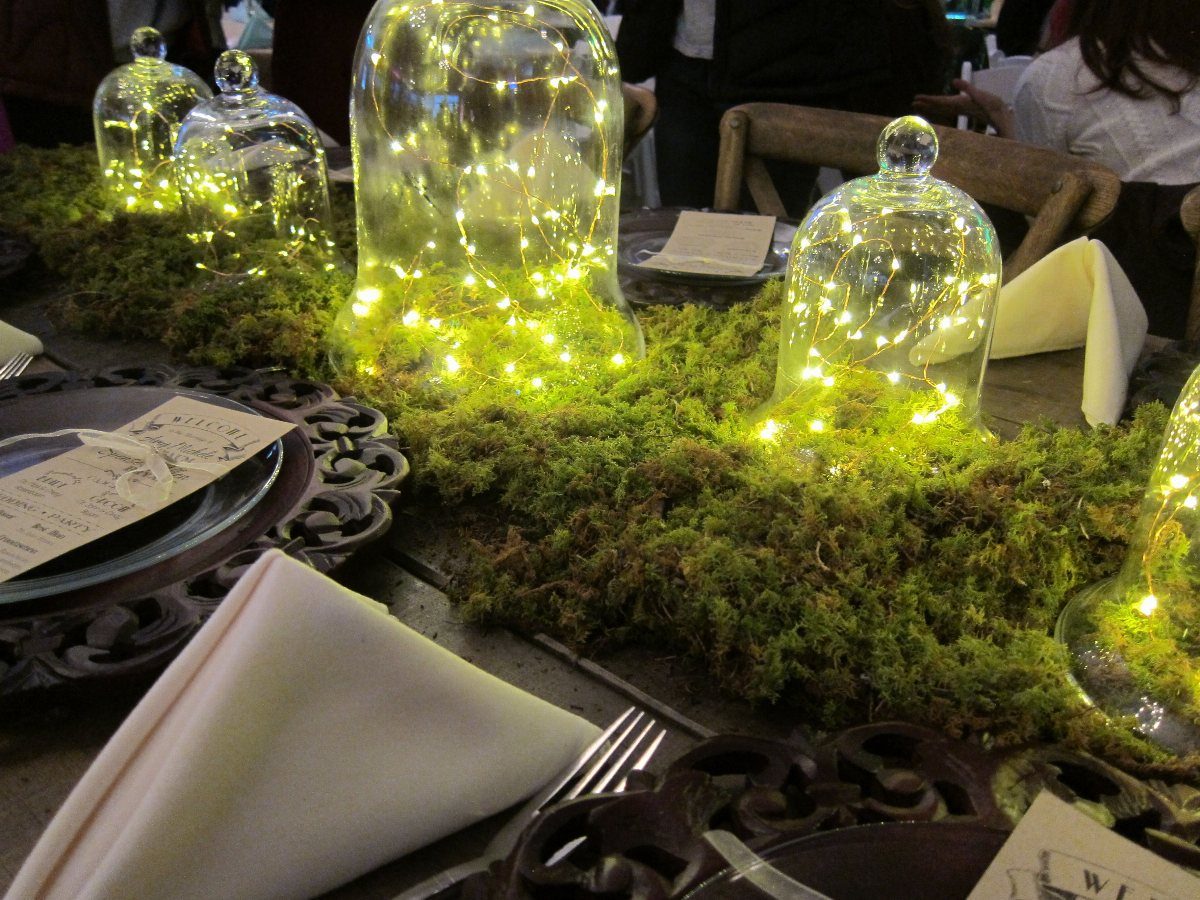
Warm light under glass turns any table into something guests pause over. I like the bell jar version because it keeps the glow contained and upright; no one knocks a tea light into the moss.
Start with a clear jar or cloche, a strand of battery fairy lights, and a handful of preserved moss.
Coil the lights loosely so the bulbs sit at different heights rather than lining up like a runway. Tuck the battery pack under the moss or hide it behind the jar.
The moss base matters more than people think.
Fresh moss browns in a warm room; preserved holds color through the night. Frosted glass jars with fairy silhouettes read as snow for a winter wedding without any actual melt risk.

【Perfect match】- The package comes with 15Pcs selected wood place card holders and 30Pcs kraft place cards. Each place card holders measure appr. 1.2" in height and 1.4" in diameter, while each kraft cards measures appr. 3.5" in length and 2.1" in width. The place card holders perfectly match the kraft cards, so you don't need to pay extra efforts to search for the best style-matching cards.

Lush & Vibrant Realistic Look (Enhanced Green Moss Aesthetics)Transform your space with a vibrant green moss texture that rivals the real moss. Unlike flat felt alternatives, our moss runner features a dense, 3D nylon pile that captures the fluffy essence of sheet moss. Perfect for mushroom decor lovers and those seeking an enchanted forest vibe, it stays evergreen without fading—the ultimate artificial moss for crafts and professional event styling

NATURAL & REFRESHING: Our Green Moss Table Runners bring the earthy charm and spring appeal to your decoration and crafting projects. Perfect for indoor or outdoor use, these runners add a whimsical touch to any table, making them perfect for holidays, weddings, or special occasions.
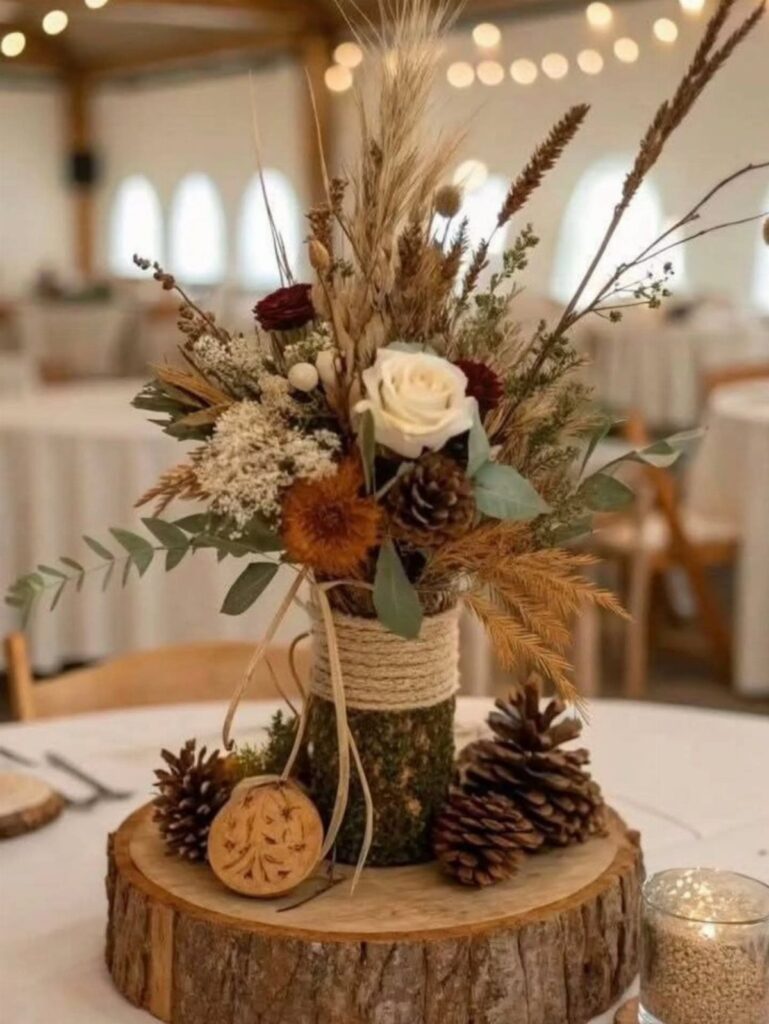
2. Wood Slice Base Centerpiece
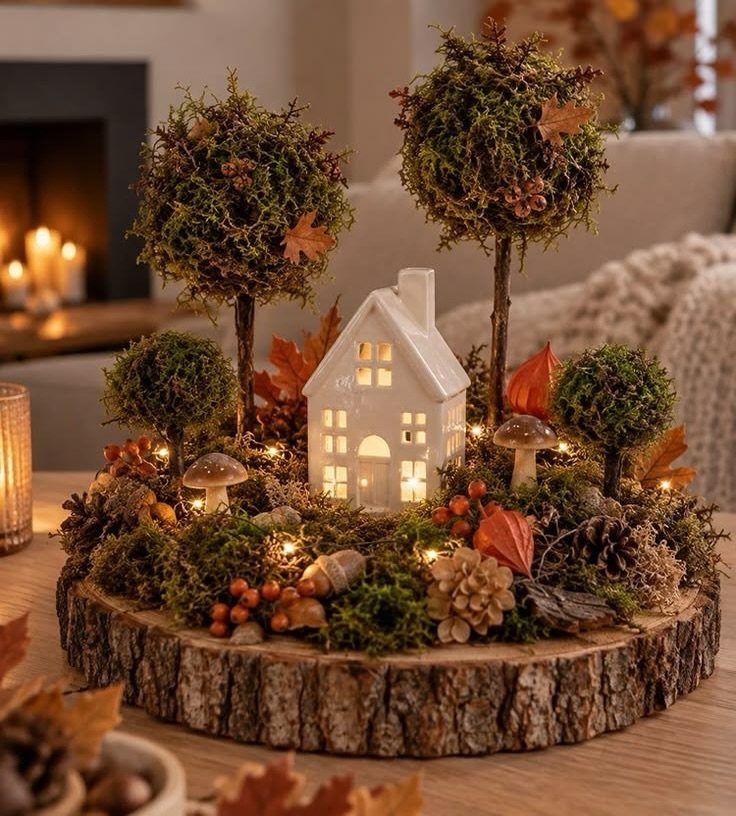
A cross-section of tree trunk replaces most of what you would otherwise buy at a craft store. The rings show age, the bark edge gives texture, and the flat surface holds almost anything steady.
The visible version piles moss, miniature trees, faux mushrooms, and a lit ceramic house onto one slice, which tells you how much these bases can carry.
For a simpler take, I would stop at greenery, a few real pinecones, and one or two candles in glass votives. The wood does the heavy lifting visually.
Slices vary: hardwood like oak or walnut holds more weight and resists splitting, softwood like pine is lighter and cheaper but can crack if it dries too fast.
Ask your source when it was cut. A slice that has dried and cured indoors is more stable than one fresh from the sawmill.

REALISTIC LOOKING: This is a natural, organic gorgeous bowl filler made from hand harvested moss-Real Dried Moss. It is the beauty of nature at its best! These moss balls are way cuter than the faux moss balls out there! Large size! 3.5Inch - Set of 6 !
Long-lasting Preserved Moss!

🎍PREMIUM MOSS: Our package contains 3.52OZ moss, They are dyed with natural Non-toxic chemicals or components. The preserved plants are 100 percent environmentally friendly.
3. Moss and Candle Centerpiece
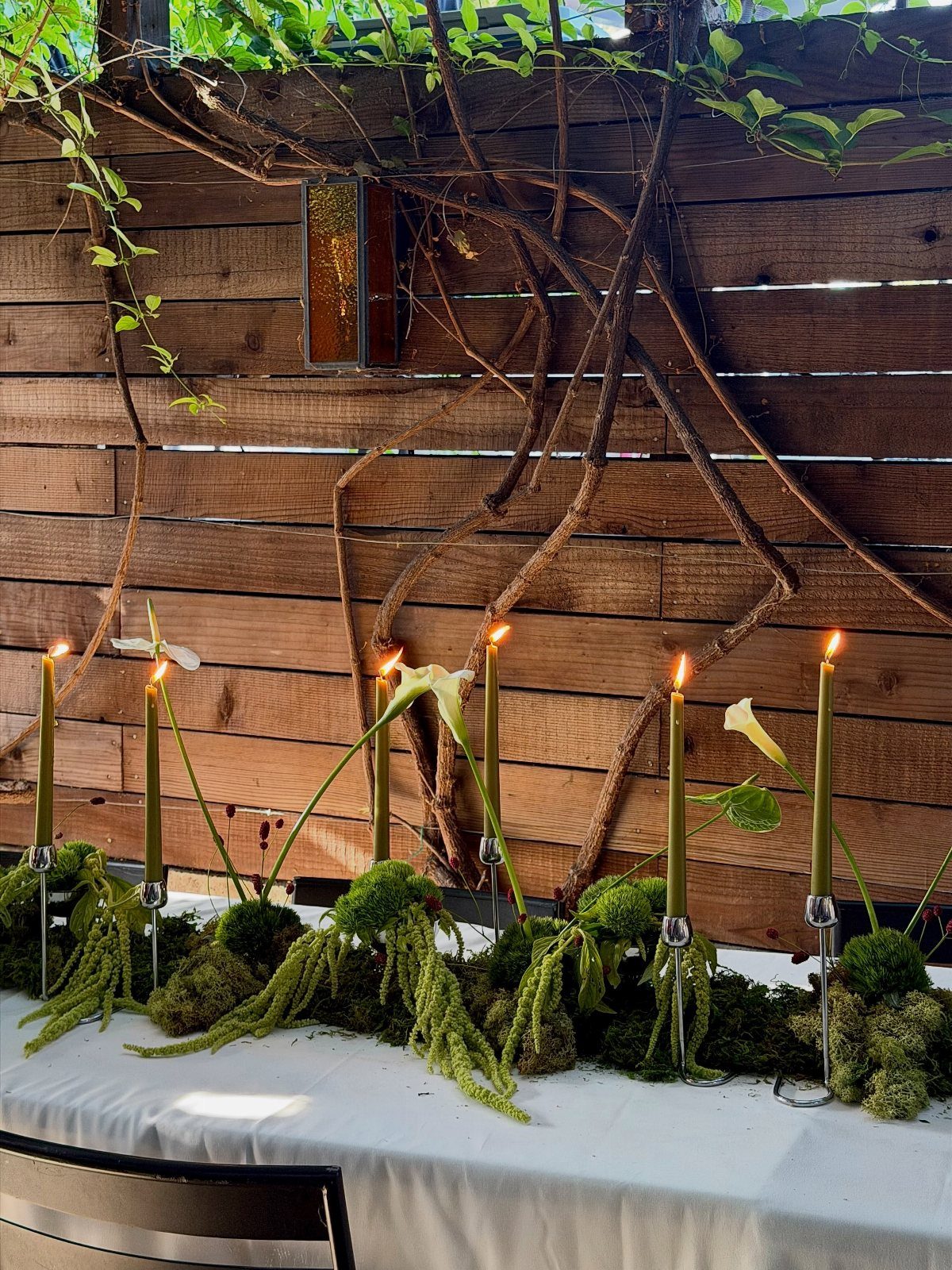
Candles sitting in moss look effortless until you try it and find the wax drips, the moss smokes, and the glass cylinders tilt on uneven wood.
The version that works puts white pillars inside clear cylinders, then nests those cylinders in moss on rustic slices. The glass solves the wax and tilt problems; the moss fills the gaps without touching flame.
Green taper candles in silver holders, like one note shows, need more attention. Tapers drip.
Moss near an open flame browns and can char. That setup suits a host who can check and replace candles mid-event, or a short dinner where no one leaves the table long.
For a wedding reception where you will be busy, pillars in glass are the safer trade. The glow is softer, the maintenance is zero, and the cylinders catch any wax that escapes.

Natural Forest Ambiance: Includes 6 rustic wood pieces and 7 oz of artificial moss, creating a lush woodland atmosphere with rich natural charm. An ideal combination for nature-inspired displays, photography, and more.

Natural Pine Wood Realistic Artificial Moss: this set includes 24 natural pine wood slices with authentic wood grain and bark edges, paired with a 7 oz bag of soft artificial moss; The wood rounds feature smooth sanded surfaces while the faux moss stays fresh-looking without watering, making them suitable for long-term indoor decorations

Woodland Table Centerpieces: you will received woodland fairy wedding decor set with 12 Pcs Rustic Wood Slices and 10.6 oz Artificial Moss; The wood centerpieces provide a natural base, while the fake green moss gives a touch of the forest; You can use the wooden rounds to create charming wedding centerpieces; Add some small fairy - themed ornaments or lights to complete the look, and transform your wedding venue into a magical woodland wonderland
4. Twig and Moss Arrangement
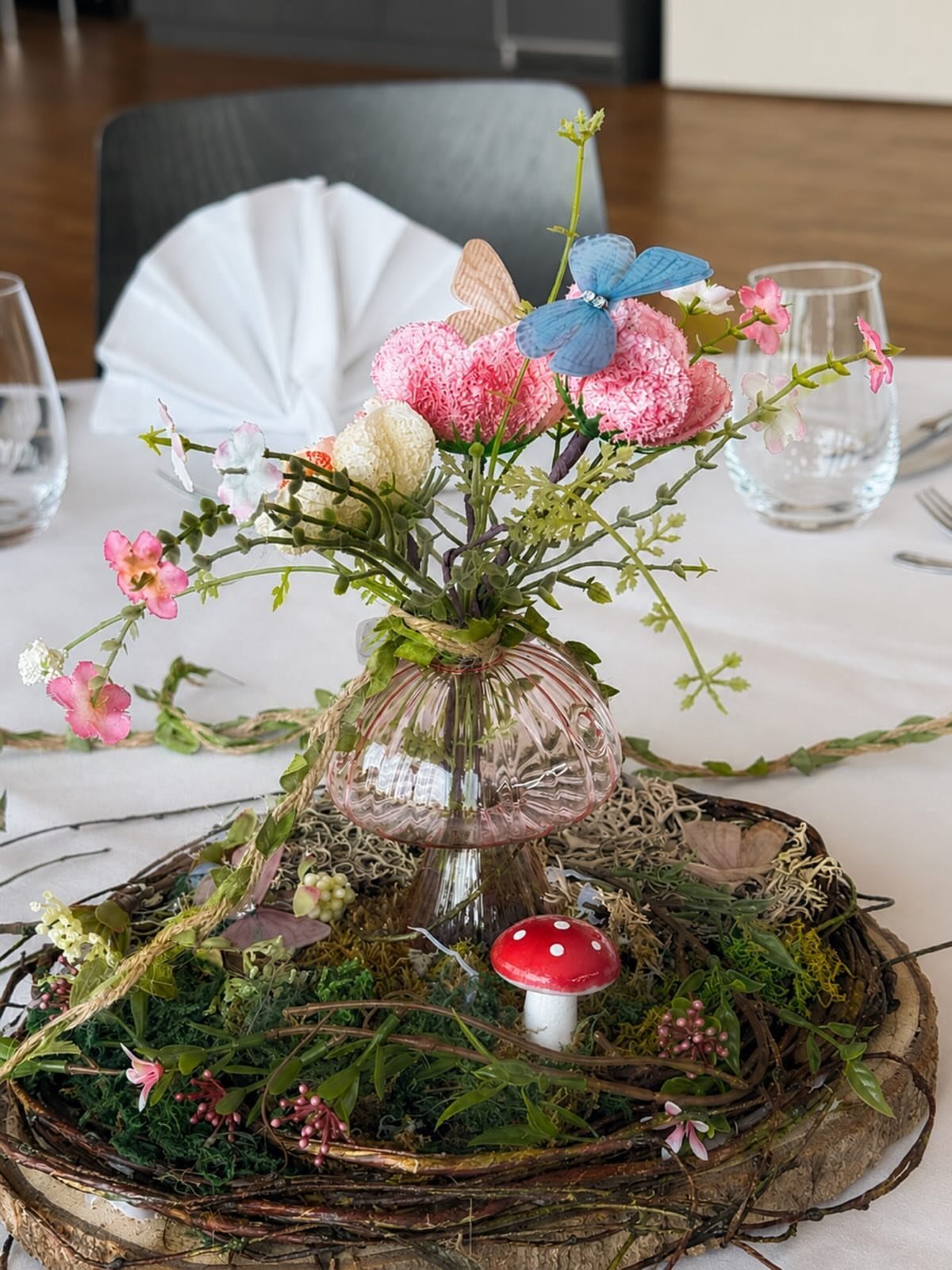
Vertical twigs give a centerpiece its own skyline. Brown branches rising around a glass jar read as forest understory, the space between ground and canopy where most woodland creatures actually live.
The visible version uses a mushroom-shaped vase and artificial flowers, which is one route. Twigs standing around a plain jar, with moss packed at the base to hide stems and mechanics, keeps the arrangement simpler and cleaner.
Preserved moss works here because it holds shape and does not need water; fresh moss wilts under hot venue lights.
Twig selection is the step that takes time. Cut branches with interesting forks or angles, not straight poles.
Soak them in warm water overnight if they are brittle; flexible twigs wedge into moss without snapping. The arrangement should look gathered, not manufactured.

【Long-Lasting Battery Life】Our small battery fairy lights come with 3 pre-installed 180mAh high-capacity LR44 batteries, totaling 540mAh. Enjoy up a long time of constant lighting, perfect for decorating various items. No need to buy extra batteries like with other brands, saving you time and money. Illuminate your mason jar, vase, crafts, parties, and more with ease(Actual battery life may vary depending on usage)

Newly Upgraded 3.3ft 20 LEDs Fairy lights: Our fairy lights battery operated consist 3.3 ft flexible copper wire and 20 super bright LEDs. As per market research, more customers prefer shorter wire length, so we kept the number of 20 LED lights but shorten the wire length to 3.3 ft, which makes it easier to DIY any shape you like without having to wrap many circles

12 Pack Battery Operated String Lights: The battery operated fairy lights is powered by 2 CR2032 batteries (included) and features 20 bright LED, making it ideal for decorating photos, crafts, trees, flowers, branches, wreaths, bedrooms, and anywhere else you want to decorate
5. Lantern Centerpieces
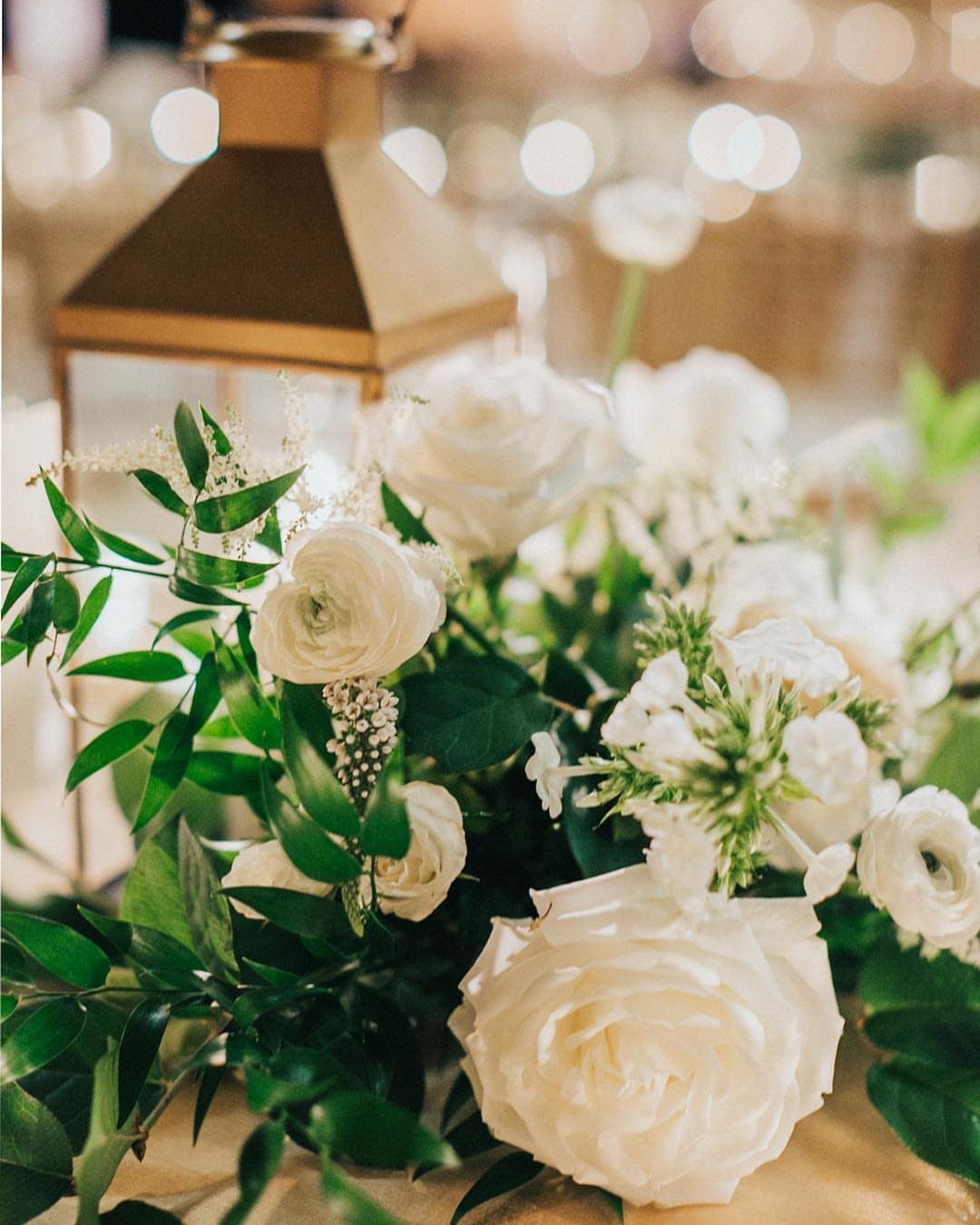
Metal lanterns with glass panels solve the wind problem that kills most outdoor candle plans. The gold finish in the visible version catches light from within and without, which is why photographers like them for evening receptions.
Pairing matters.
White roses and ranunculus sit beside the lantern, not inside it; the lantern holds its own candle. This is the right call.
Flowers inside a lantern compete for space and block light. Outside, they soften the metal edges and give the eye somewhere to travel.
Cream pillar candles inside should be slightly shorter than the glass panels so the flame shows but does not flicker against metal.
For a garden wedding, hang matching lanterns from tree branches at different heights, the way one note suggests, and keep the table versions lower so guests can see across.

Included: 1 clear glass chimney candle holder with two sides open, carefully packaged, vase filler not included

Dimension - Height: 10" | Width: 6" | Cylinder Height: 8" (accessories are not included)

Dimensions - Height: 8" | Diameter: 6" | Pack of 1
6. Enchanted Forest Theme
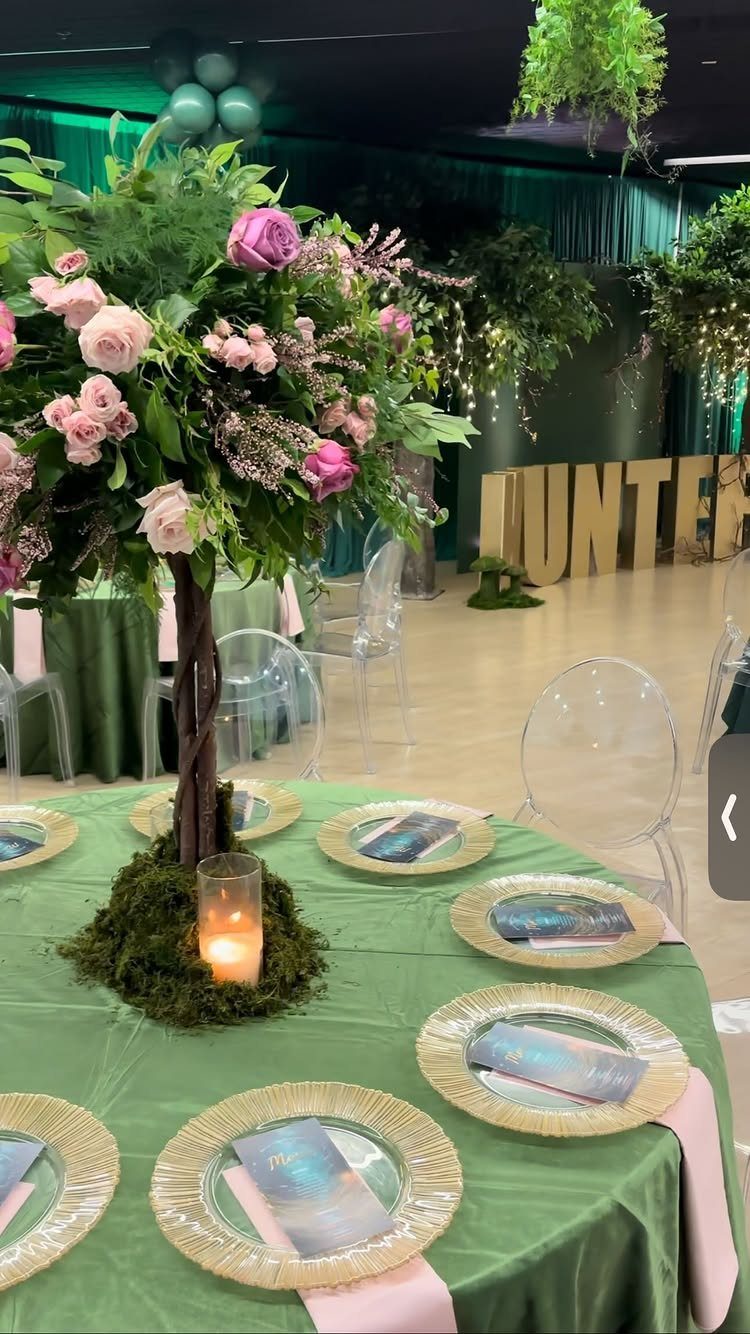
Green velvet linen and a twisted-trunk centerpiece with moss at the base signal a specific mood: forest as fairytale, not forest as camping trip. Toadstool mushrooms, ferns, and mossy stones are the details that push this into enchanted territory.
This theme asks more of the budget than rustic woodland does. Velvet rental costs more than standard polyester.
A tall floral piece with a sculptural trunk needs a florist who builds armatures, not one who only drops stems in vases. The moss base alone, if done fresh, requires refrigeration until setup.
The trade is atmosphere. Guests remember a table that feels like a set from a story they read as children.
For a couple whose venue already has stone walls or outdoor trees visible through windows, the extra layers make sense. In a plain ballroom with fluorescent overheads, the same pieces read as costume against backdrop.

All-in-One Woodland Table Centerpieces Set Design stunning wood centerpieces for tables with this complete set, including natural wood slices, soft artificial moss, and a realistic moss stone. Perfect for enchanted forest decorations, forest decor, and rustic-themed events that need a warm, natural touch.

【STUNNING BOHO VIBE】Elevates any tabletop with a romantic,rustic look.Perfect for adding a soft,flowing layer of elegant color to both festive party and daily home decors.

7. Moss Runner Centerpiece
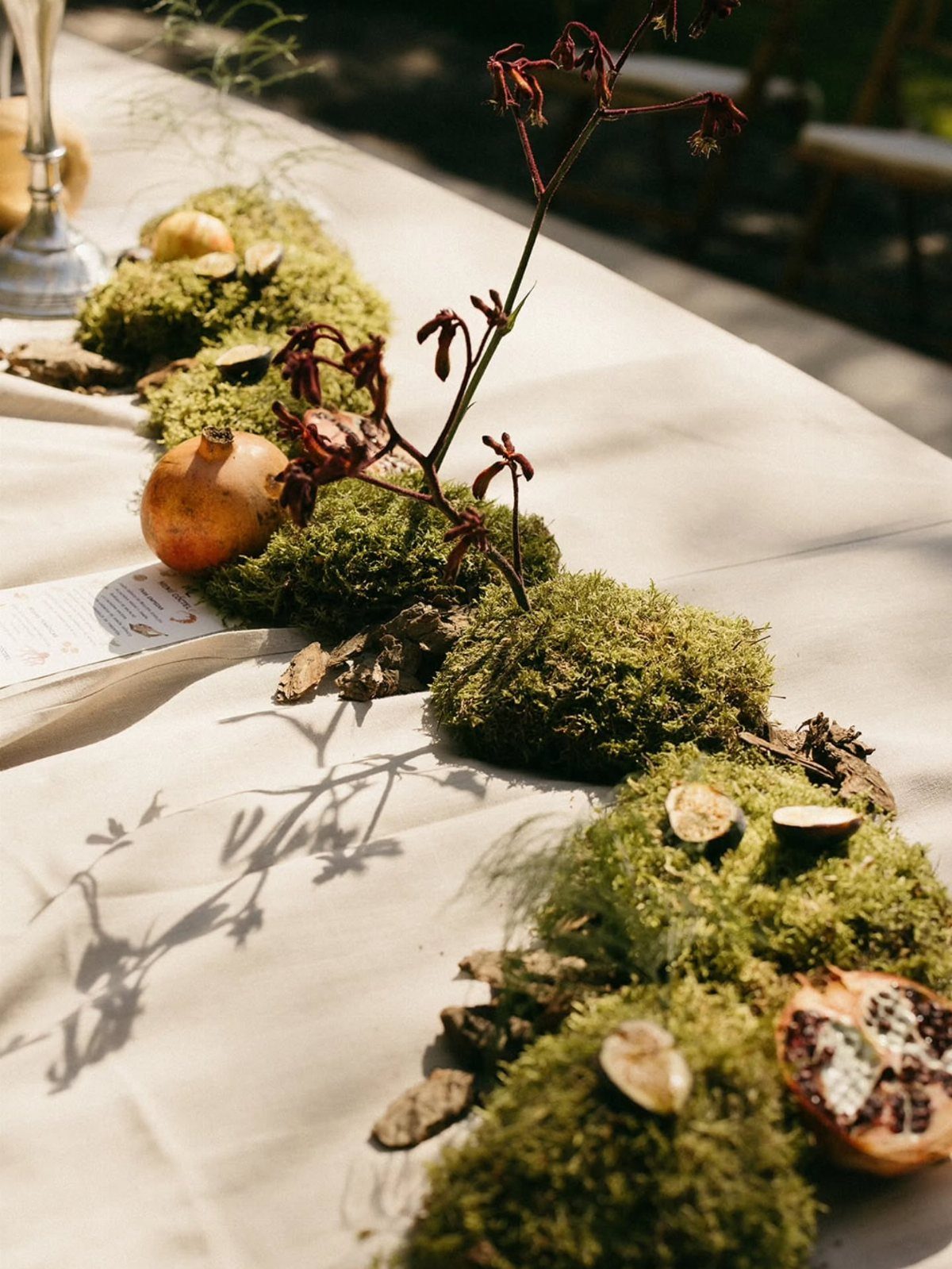
A moss runner turns the whole table into the forest floor rather than isolating decoration to individual vessels.
The visible version mixes clumps of green moss with sliced figs, pomegranates, and dark red stems, which tells you how much food and floral can weave in.
This suits hosts who want impact without building a whole set of separate pieces. One continuous runner carries a long table; candles and small vases set into the moss at intervals give height where it is needed.
The moss itself should be preserved, not fresh, or it will brown under warm venue lights and shed onto guests’ sleeves.
Dappled light across the cloth works better than direct floodlighting for this look. Overhead spots kill the mood; uplights on surrounding walls or actual canopy if outdoors do the work.

🌱 Authentic Forest Moss Beauty: Enhance potted plants and floral displays with our naturally vibrant, green SuperMoss, offering a fresh, organic aesthetic to every space

Moss Roll for Crafts : This Preserved Natural Moss runner, measuring 60 inches x 12 inches, is the perfect foundation for a variety of craft projects. Whether you're creating enchanting fairy gardens or planning a woodland-themed wedding, this moss mat for crafts will elevate your decor and ignite your creativity.

☆ Fake Moss for Potted Plants: You will receive 1 x 4OZ artificial moss (113g), providing you with a generous amount of moss for your crafting needs. Elevate your home or office decor with our artificial moss, a perfect natural touch for any holiday or occasion. No need for water, soil, and fertilizer - this indoor & outdoor moss will stay vibrant and green for years.
8. Decorative Moss Balls
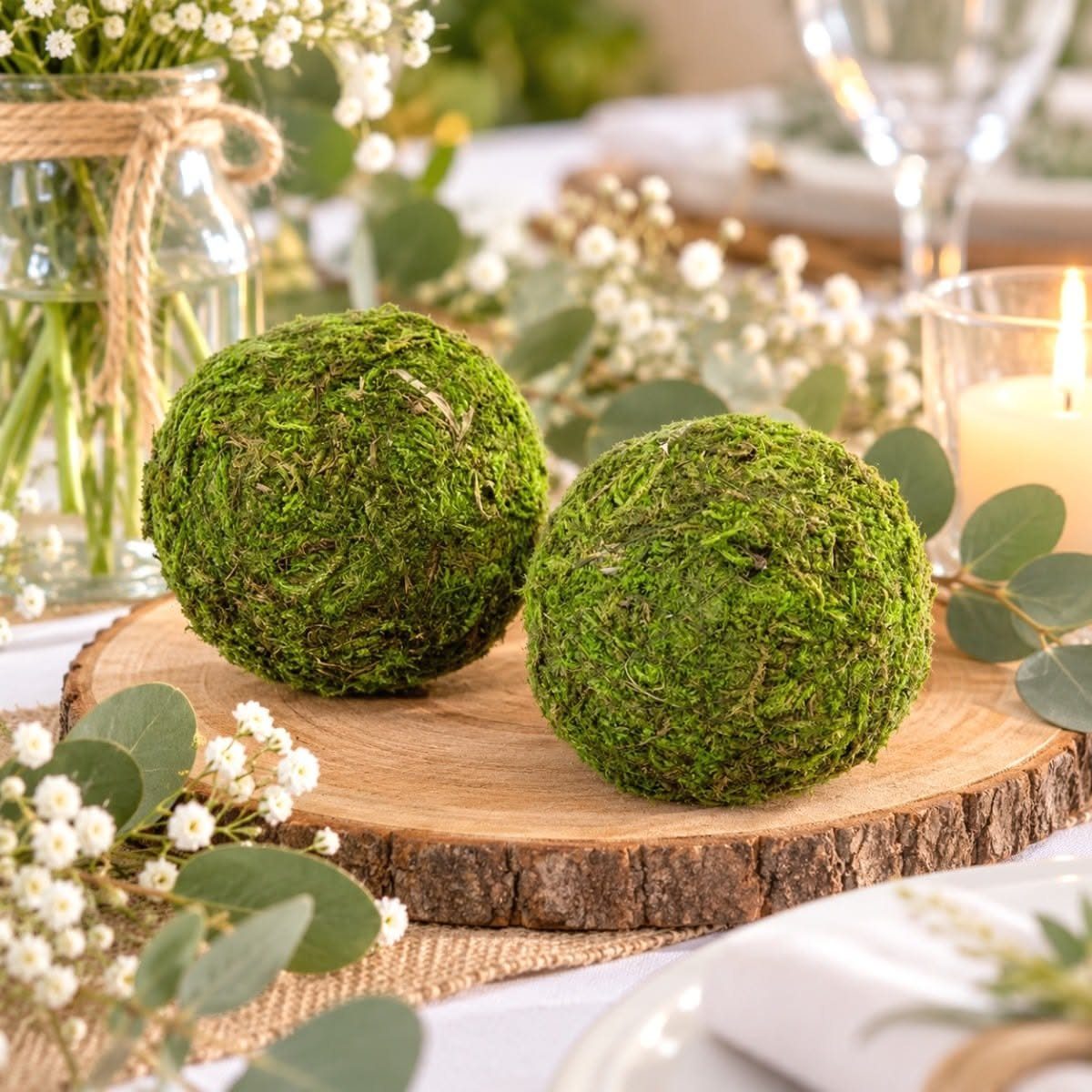
Round moss balls sit like found objects from the forest floor, portable and self-contained. The visible pair rests on a wood slice with eucalyptus, baby’s breath, and a lit candle, which shows how little else they need.
These are the filler that saves a scattered table. A set of three or five in varying sizes fills gaps between larger pieces without competing.
Preserved moss holds shape and color; the faux version, cheaper by half, reads as plastic under close light and I would skip it for events where guests sit within arm’s reach.
Wood slice bases keep them from rolling.
Without the slice, they wobble on cloth and collect condensation rings from the venue’s humidity. The slice also lifts them to candle height, which matters more than people think for sight lines across a seated table.

Complete Woodland Centerpiece Kit: Receive 6 mason jars, 6 wood slice bases, 100g moss, 12 artificial mushroom, 6 woodland animal figurines, 12 acorns and pinecones, hemp rope, and 6 LED fairy lights — all components for stunning woodland centerpieces for tables

Versatile Celebration Decor: Use the set for wedding centerpieces for tables, baby shower decor, fairy first birthday decorations, garden parties, dessert tables, welcome tables, and short-term outdoor events, with each piece easy to arrange around your celebration theme
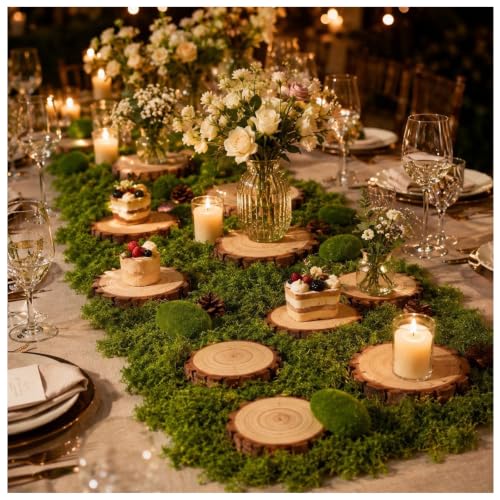
10-Piece Wood Slice Centerpiece Set Create a fuller party table display with 10 rustic wood slices, 300g faux moss, and 4 moss stones. The larger set gives you more styling space than smaller wood slice kits, making it ideal for long tables, dessert tables, and DIY centerpiece layouts.
9. Hanging Floral Jars
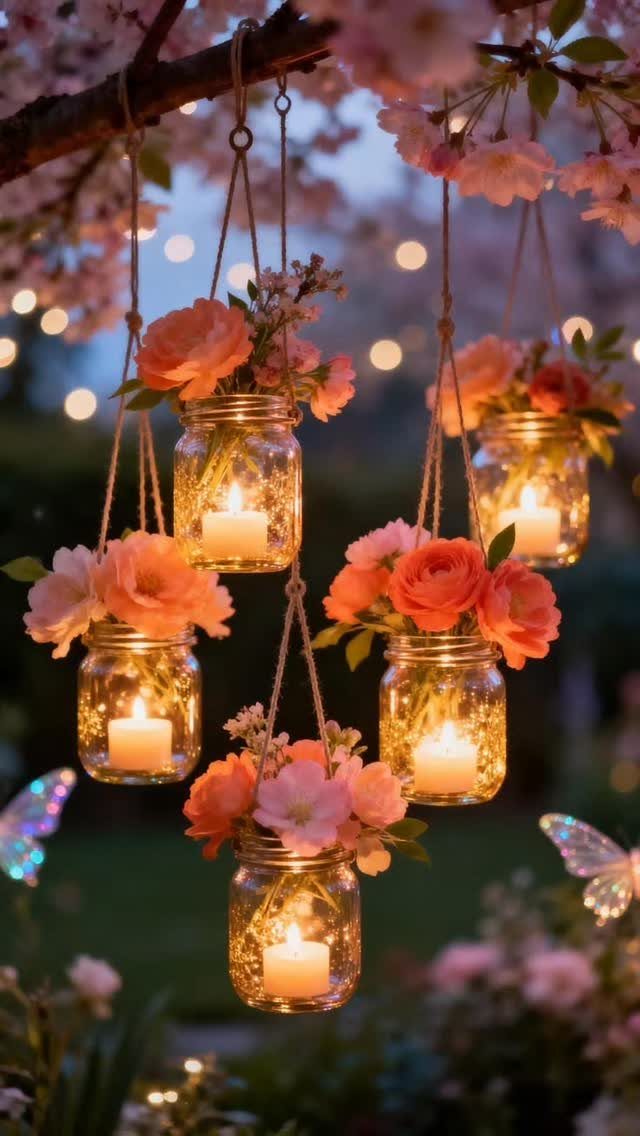
Suspended jars move the centerpiece into the air, where it does not block conversation or crowd plates. Hanging jars from a flowering branch at twilight, candles and pink blooms inside, string lights behind: the effect is depth without clutter.
Twine or wire through the jar necks carries weight; test it with water and flowers before the event, not after.
Small candles and pink blooms inside the jars need battery replacements, since real flame overhead would break fire code and keep the host watching the ceiling instead of the floor.
A metal frame wrapped in leafy vines suits indoor venues without branches to borrow. Rent the frame or build one from galvanized pipe; either way, plan the rigging with the venue coordinator, not as an afterthought the morning of.

[12 Pack LED Fairy Lights Battery Operated & Long Life Battery] (NOTE:No timer included and No remote control included) Powered by 2 CR2032 batteries (included), the 7 feet micro fairy light with 20 upgraded energy-efficient LEDs is perfect for both everyday decorations as well as holiday decor. The thin silver wiring and small-sized LED bulbs will add a delicate and cozy touch to your personal space.The twinkle lights are pre-installed with long-life batteries that provide long endurance lighting for more than 72 hours(Actual battery life may vary depending on usage)

Mason Jar Solar Lights for Outside(Jars Not Included): Made of 30 warm white bright LED beads twisted into silver wire, solar powered panel, the lid is an aluminum structure, and 12 stainless steel handles help you easily hang the assembled mason jar lights on thinner branches, fences, walls and porches, very convenient

【Fantastic Warm White Lights】: 6 separate mini fairy lights battery powered, each with 20 small lights and the brightness is high yet warm/cozy. Made of 7ft high quality Silver coated copper wire, It’s flexible, strong and durable. Perfect for your crafts project , floral arrangements plants, signs, furniture glass jars, vases, wine bottles or other decorations.
10. Floating Tea Lights in Glass Holders
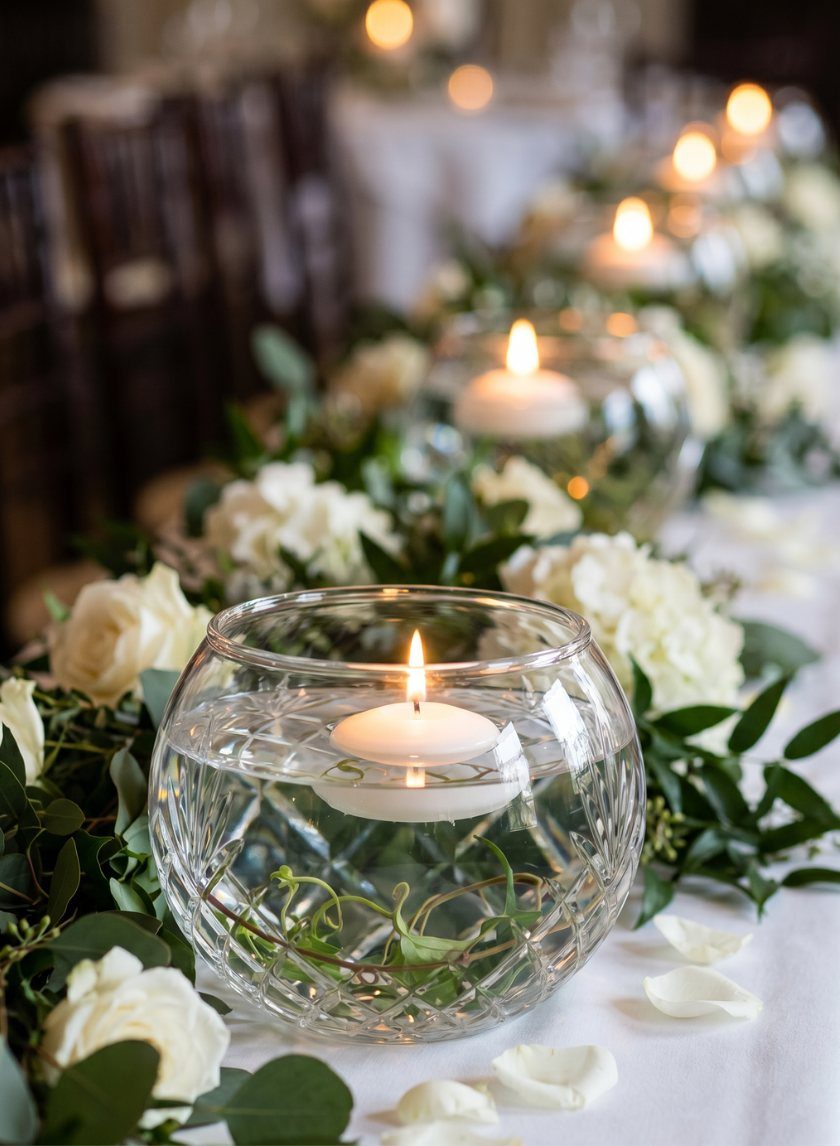
Floating candles in cut-glass bowls turn still water into a mirror for flame.
The visible runner alternates these bowls with white flowers and greenery down a long table, the water level precise enough to show the glass pattern but not so high it laps over.
Cut-glass bowls set along a runner of white flowers and greenery give height variation without stands that read as hotel banquet.
The logs must be dry or they weep sap onto cloth; seal them with clear matte polyurethane if they are fresh-cut.
Round bowls roll if the log surface is uneven. Flatten one side with a hand plane or sander, or nestle them into shallow depressions chiseled into the bark.
The glass catches and magnifies any flaw in the water: fill with distilled water the day of, not tap, or mineral haze clouds the effect by evening.

Dimensions - Height: 10" | Diameter: 5" | Pack of 1

Include: 1 piece clear glass chimney candle holder with two sides open, carefully packaged, vase filler not included

【Add a Touch of Elegance】Homjoy pillar candles come with beautifully designed glass cylinder holders, creating a sophisticated and timeless look for any occasion. Perfect for weddings, dinner parties, or home decor, these candles add a touch of elegance to your space.
11. Bark-Covered Containers
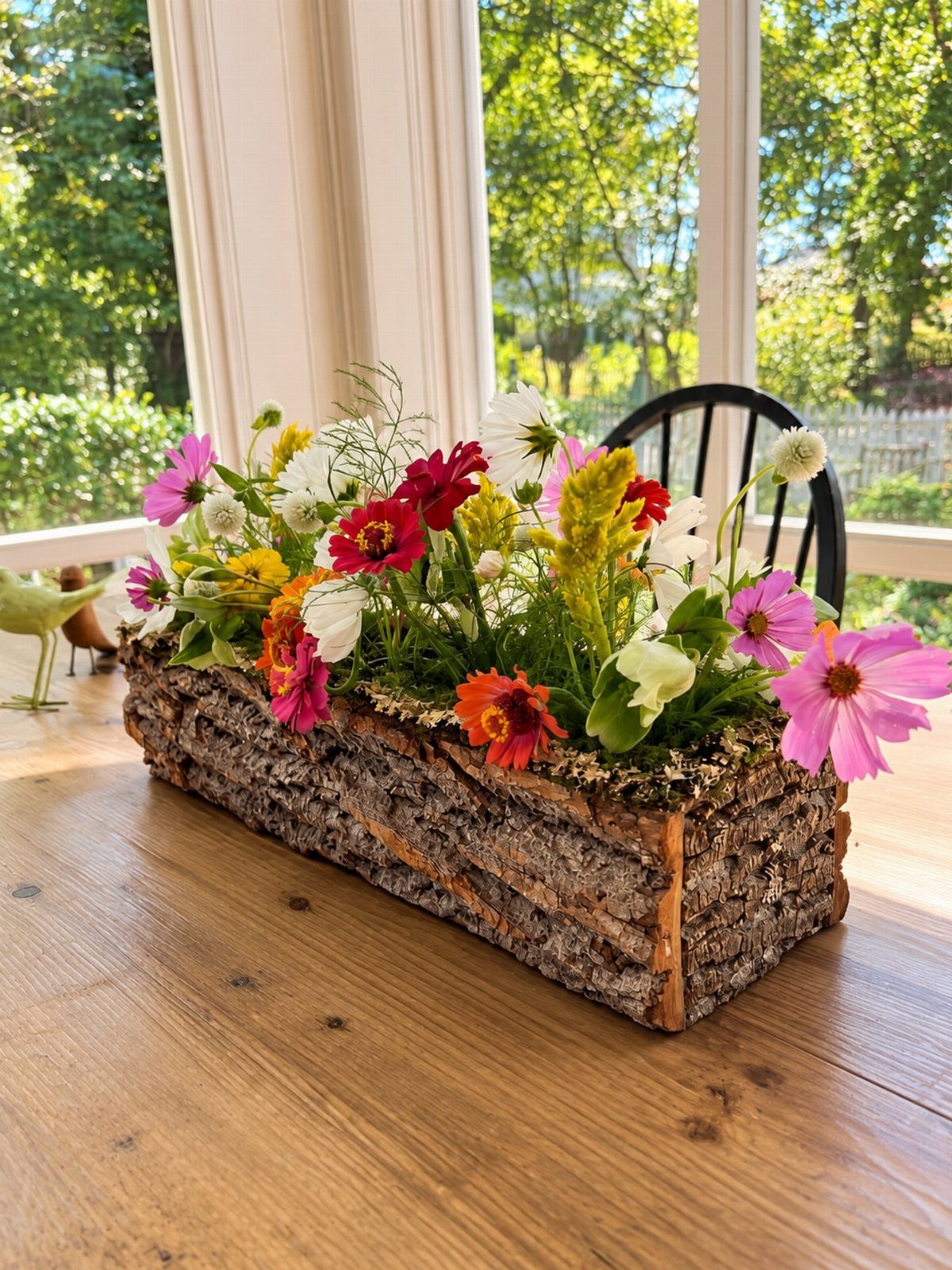
Bark-wrapped containers carry the forest inward, onto surfaces where bare wood would read as craft project.
The visible rectangular box, bark-clad and filled with wild cosmos and zinnias, sits at home on a dining table near windows; the natural light shows the bark texture without flattening it.
Cylinder or rectangle, the construction is the same: a plain inner vessel, bark sheets soaked to flexibility, and adhesive that holds through humidity changes.
Hot glue fails in warm rooms; construction adhesive or waterproof wood glue applied with clamps sets overnight and stays put.
Fresh flowers need water; the inner vessel must be waterproof and slightly taller than the bark wrap, or standing water rots the bark from inside.
For a one-evening event, floral foam works if the arrangement is built the morning of and not left to wilt.
12. Succulent and Floral Centerpiece
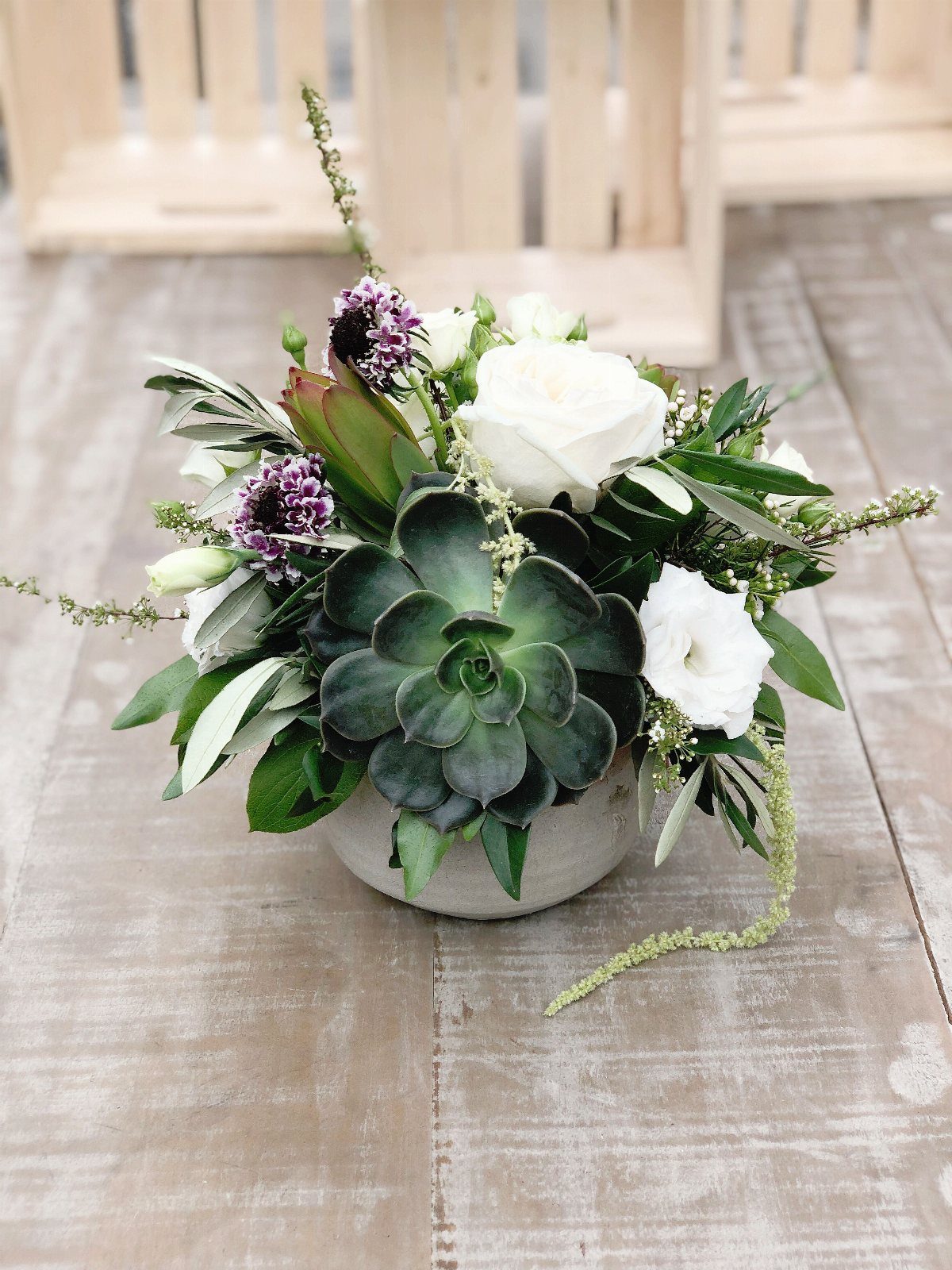
Succulents among traditional flowers solve the wilting problem that kills most table arrangements before the last toast.
The visible piece pairs a large dark green succulent with white roses and purple accents in a round pot, the succulent’s structure holding shape while roses soften around it.
Gold lanterns with succulents and candles shift this toward evening formality.
The lantern’s metal conducts heat; succulents near a candle flame dry and pucker. Keep them to the outer ring or choose LED candles, which also solve the wax drip that roses resent.
Soil shows in a clear vessel. Moss pressed around the pot rim, or a liner of bark sheet, hides mechanics without the weight of a full second container.
Succulents root shallow; a thin layer of fast-draining cactus mix is enough, topped with pebbles that read as stream bed.
13. Tabletop Centerpieces Featuring Woodland Animals
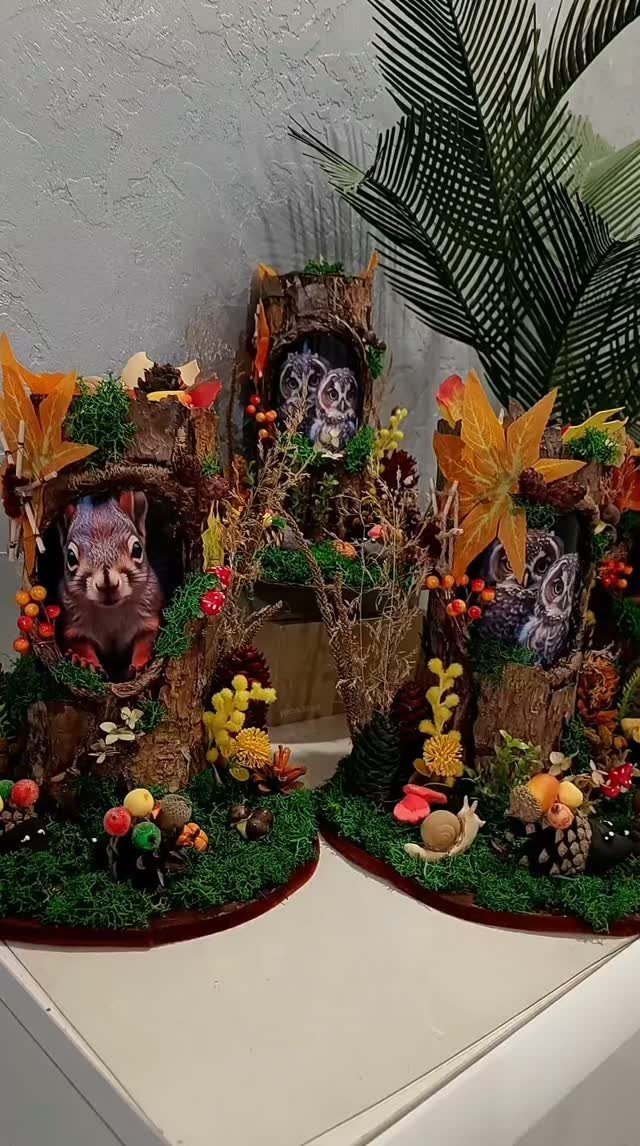
Small animal figures tucked into hollow logs turn a moss arrangement into something guests lean in to examine. Squirrel and owl shapes read as storybook forest rather than taxidermy; faux versions keep the mood light and avoid any guest’s discomfort.
The construction in the visible version uses fake hollow logs as vessels, with mushrooms, snails, and autumn foliage packed around the figures.
Preserved moss holds the base together without water; artificial foliage means the whole piece can be built days ahead.
This style suits couples who want whimsy without full fairy-tale cost. The figures and logs store flat after the wedding, unlike floral centerpieces that compost on Monday.
One limit: too many animals per table reads as children’s party, not wedding. One or two per log, spaced across the table, keeps it adult.
Natural Elements
Wood, moss, and flowers are the 3 materials that make a forest centerpiece read as forest rather than generic rustic. Each carries a specific job.
Wood supplies structure and age.
Slices with bark edges show growth rings that no factory duplicates. If you are using fresh branches, ask the florist or supplier when they were harvested so you know how long they will hold.
Moss fills gaps and softens edges.
Pack it around stems, under battery packs, between candles and glass. It hides mechanics without demanding water.
Flowers do the color work. Wild cosmos and zinnias read as meadow-gathered; white roses and ranunculus shift toward evening formality.
The pairing matters more than the blooms themselves. Succulents with traditional flowers so something stays crisp while petals soften.
DIY Tips for Centerpieces
Battery fairy lights beat real flame for anything under glass or hung overhead. Fire code aside, a host checking candles mid-event is not enjoying their wedding.
Distilled water in glass bowls, filled the day of.
Fill the vessels and hang the test arrangement with water and flowers in it well before the wedding, not the morning of.
Artificial foliage lets you build centerpieces ahead of time without worrying about wilting.
Event Types
These centerpieces suit any gathering where guests sit down to eat and the host wants atmosphere without a full production budget.
Weddings are the obvious fit. Wood slices and moss runners work for a backyard potluck or a full ballroom because the same materials read rustic or refined depending on scale.
A single lantern and greenery cluster per table costs less than a tall floral armature; the runner approach covers more table with fewer separate pieces.
Baby showers gain from the same materials without the evening formality.
Lighter colors, smaller vessels, and the woodland animal figures read as gentle rather than storybook-dark. The pieces store flat afterward, unlike composted floral arrangements.
Themed birthday parties or anniversary dinners work too. The construction is identical; only the scale and figure count change.
Color Schemes
Start with green evergreen branches and brown pinecones, then add white flowers or candles to keep the palette grounded in the forest floor. The specific shades matter more than the category names.
White and cream do the light work. Cream pillar candles inside gold lanterns catch both internal flame and external room light.
Earth tones come from the materials themselves: oak and walnut rings, bark texture, dried twig brown. These are not added colors; they are the wood and moss showing what they are.
The shift is subtle, a cool note against warm green and brown.
Deep burgundy and hunter green suit autumn or evening events where light is low and the color reads as depth, not celebration.