A minimalist wedding gown can run from a simple sheath in crepe to a structured ballgown in mikado, and the deciding factor is where you need the drama to live: in the fabric’s movement or in the silhouette’s architecture.
The dresses below move between silk stretch satin for a city-hall signing and mikado with internal boning that holds a strapless line through hours of standing.
One detail that separates these from other clean styles is the cowl neckline, which uses the fabric’s own drape as its only ornament.
1. Silk Crepe Wedding Dress
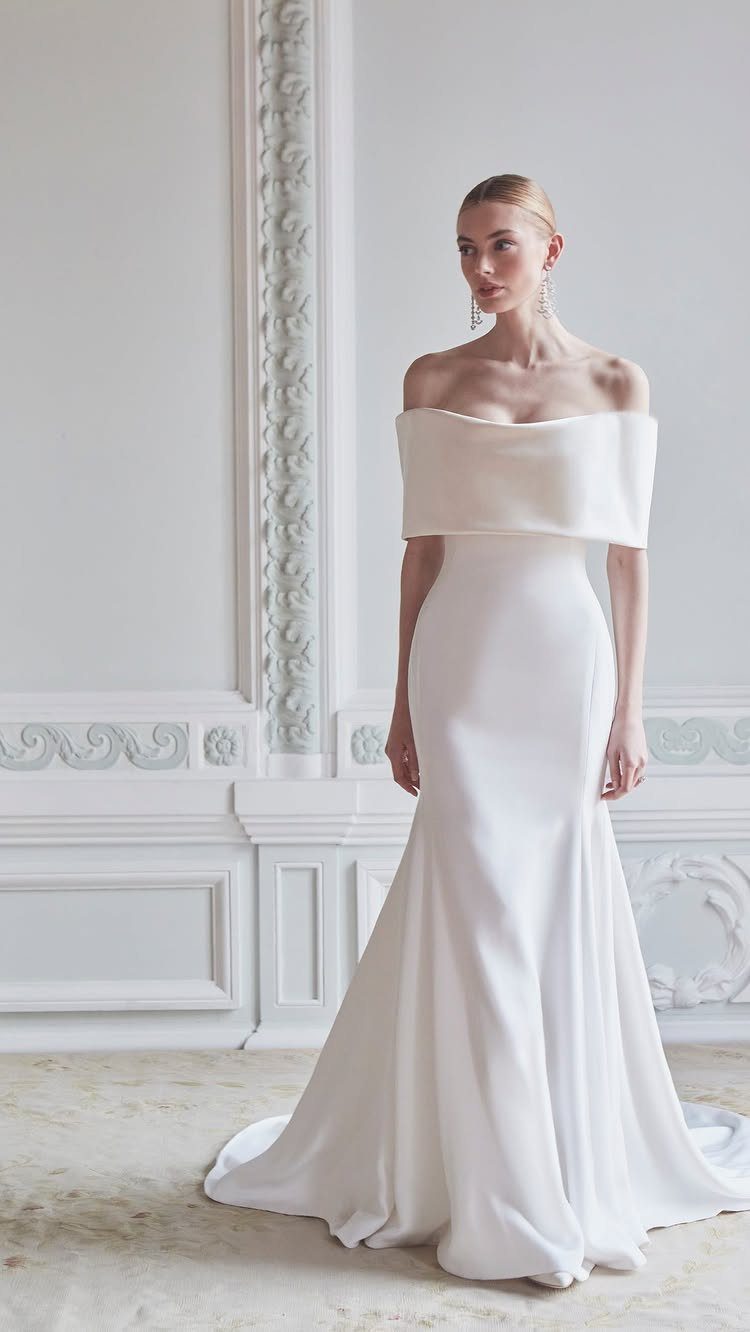
A silk crepe wedding dress hangs differently than polyester ever could, falling in a clean line from shoulder to hem without fighting itself.
The crepe catches light softly instead of shining, which matters more than I expected in afternoon ceremony photos where satin can flash back hard.
This fabric rewards tailoring.
Women with fuller figures especially need the bodice fitted precisely, since crepe shows every drag and pull. I would budget for alterations above the dress price itself.
Round and square necklines both read cleanly in crepe. When embellishment stays quiet, the fabric becomes the whole statement.
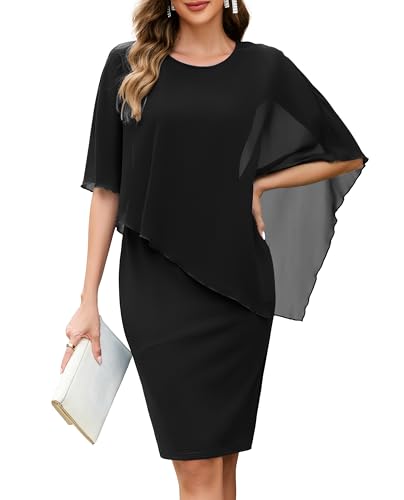
PREMIUM COMFORT & FIT: Crafted from stretchy,breathable fabric with soft texture against skin.The bodycon midi silhouette hugs curves comfortably while the flowy cape provides airflow.Features a modest crew neck and flexible fabric that moves with you-no constriction or discomfort.

With the arrival of this tuxedo dress, your next iconic look awaits
2. Silk Long Sleeves Wedding Dress
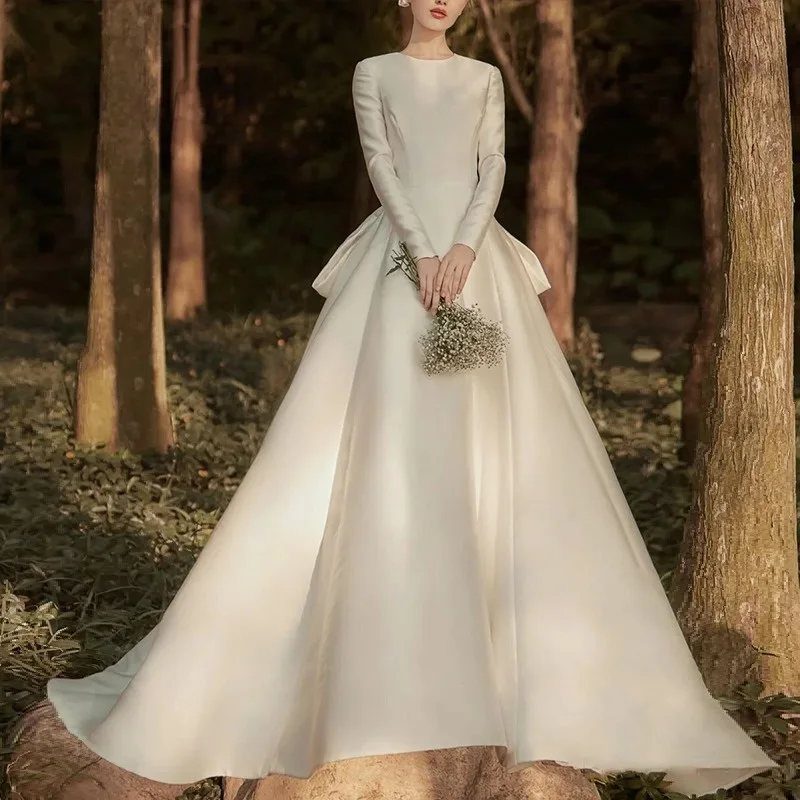
Long sleeves in silk carry a formality that bare arms cannot quite match. The fabric matters here: real silk breathes, so a June outdoor ceremony in bishop sleeves stays possible without the heat-trap cheaper materials create.
I tried a satin version first and the shine overwhelmed the sleeve line.
Switching to matte silk let the sleeve shape, not the fabric, do the work. A silk long-sleeve dress is the steadier choice if you want coverage that still reads simple rather than fussy.
For a winter wedding, this weight works against a coat. Summer brides might ask about silk georgette, lighter and still within the same idea.

Flattering Off Shoulder & Draped Cowl Neck – Designed to highlight your collarbone and shoulders, this off shoulder maxi dress features an elegant draped cowl neck that cascades softly. The fold-over neckline adds a romantic, Grecian-inspired touch, making it a truly sophisticated draped neck maxi dress for any upscale event.

Features:This stunning evening gown features a sleek,body-hugging silhouette designed to accentuate your natural curves.The dress showcases a daring high side slit that adds a touch of allure and allows for easy movement while walking or dancing.A standout feature is the dramatic open back with elegant crisscross spaghetti straps that tie securely at the waist.The front bodice is structured to provide support and a flattering shape,while the floor-length skirt flows gracefully behind you.

1.Features: High Quality Silk Satin Material and Off the Shoulder Details ,100% Hand Made,Light Weight Comfortable,Softer,Breathable,Fully lined and Built-in Bra and Easier to Wash, making it the perfect choice for spring weddings, evening parties, and wedding guest occasions.
3. Mikado Wedding Dresses
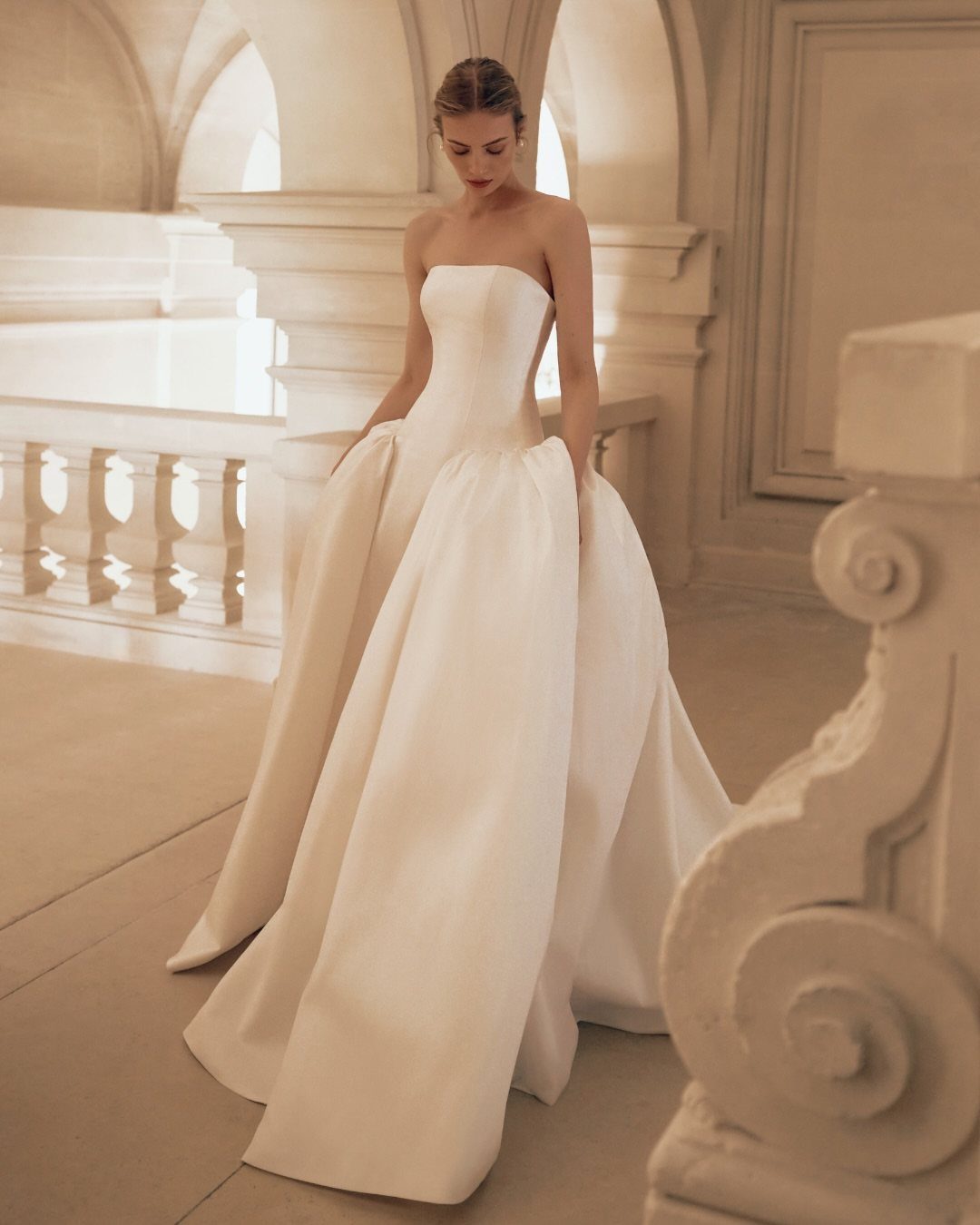
Mikado holds its shape like nothing else, which is why a strapless bodice in this fabric stays up without constant tugging. The slight rustle when you walk gives away the material before the eye catches the heavier weave.
Mikado gets its vintage feel from structure alone, not from added detail. Before trying one, decide whether you want the drama in the skirt or whether a column shape in the same fabric would feel more like you.
The visible version goes full ballgown; a slimmer mikado exists and costs less to alter.

SIZE CHART: Womens Elegant Long Sleeve Satin Mini Dress Made Of Selected 100% Polyester Material, Light Weight And Comfortable. Formal High Neck Satin Short Dresses For Women With Non-Stretch Fabric, Silky Smooth To Wear And Looks Striking, Flattering And Textured.

Material: Fabric has some stretch, very comfortable to touch and wear

Material: Made of Sheen Satin Fabric, Soft to Touch, Non-Stretchy and Unlined.
4. Timeless Elegance
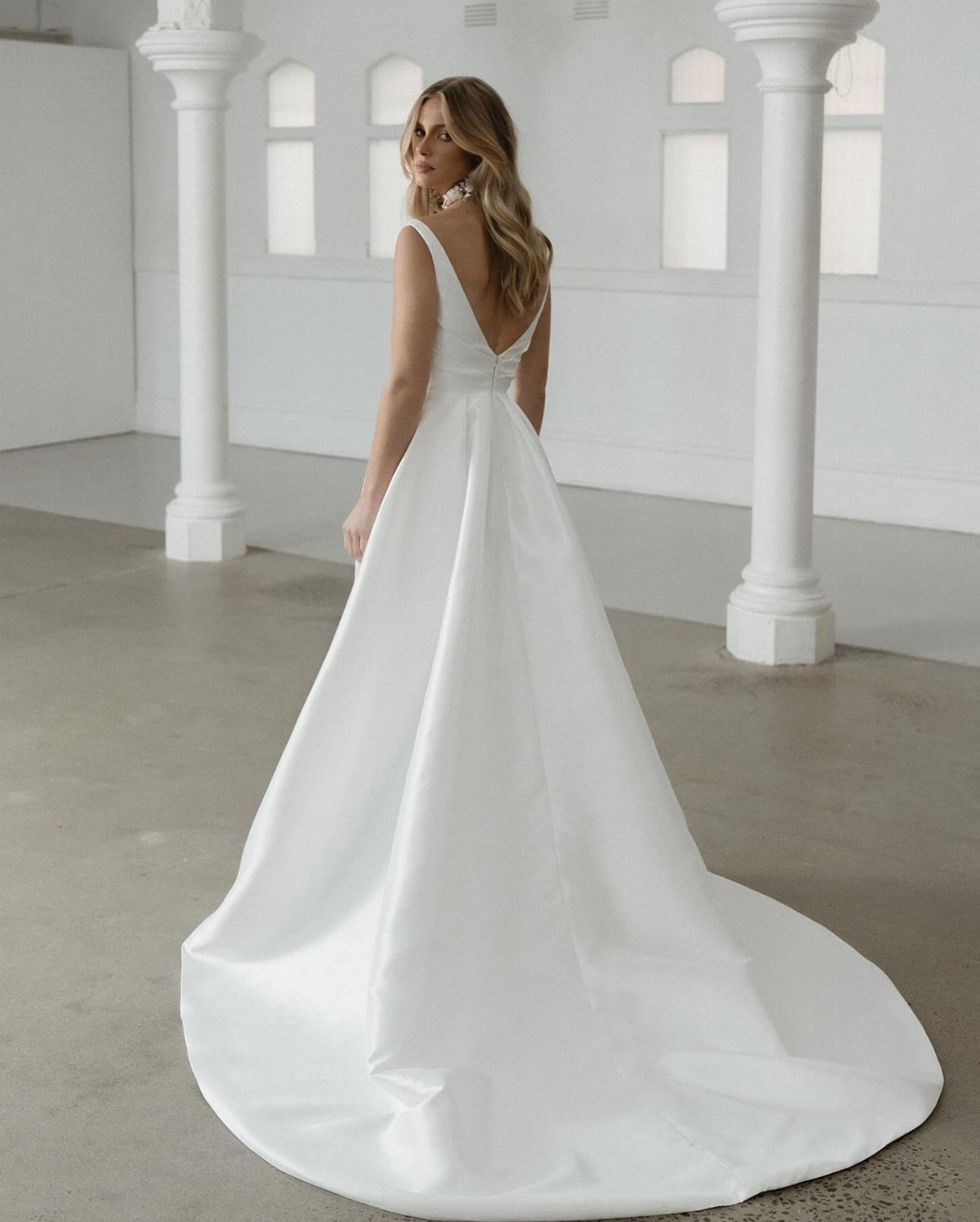
Some dresses date themselves with a neckline or a sleeve length.
A-line satin with a clean bodice and a simple train does not, which is why the resale market favors them and why a courthouse ceremony looks as right as a ballroom one.
The sleeveless cut with a long train keeps the silhouette clean while the drama stays in the movement.
I would shorten that train for anything outdoors, where satin drags water and leaf matter. The cut itself works on every figure type I have seen it tried on; the tailoring, not the size range, determines whether it flatters.

ELEGANT DESIGN: Stunning A-line wedding dress featuring a sweetheart neckline and beautifully detailed bodice with intricate embellishments

ELEGANT SILHOUETTE: Features a classic A-line ball gown silhouette with a voluminous tulle skirt that flows gracefully to the floor.

A strapless top and long, slit satin skirt completes this figure-flattering dress, elegant and gorgeous
5. Minimalist Ball Gown
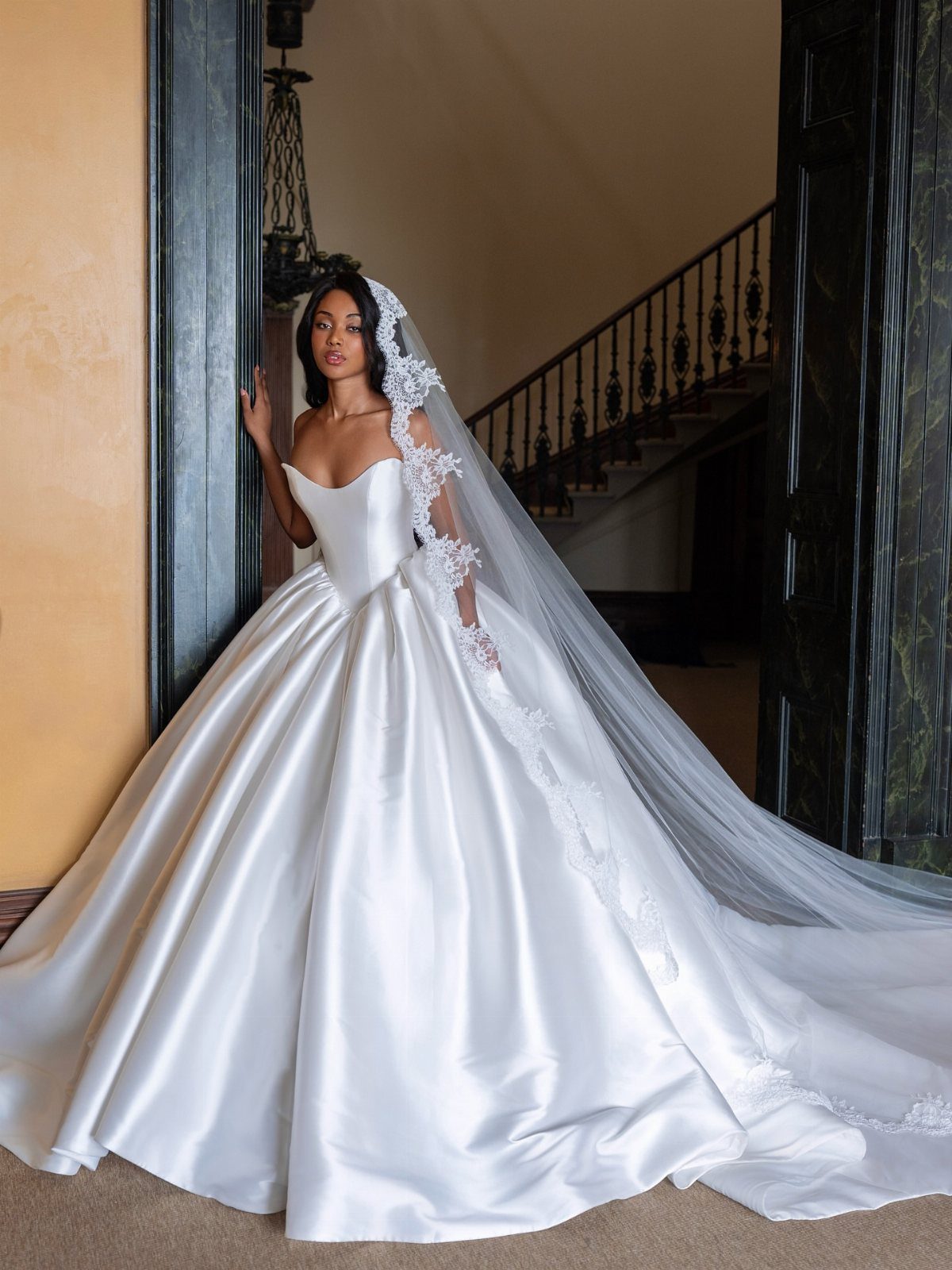
A ball gown reads as minimalist only when every element earns its place: the waistline exact, the skirt volume coming from fabric weight rather than petticoat engineering. Mikado or structured satin achieves this; organza layers do not.
Clean design pairs fine with a lace veil, though I would skip the veil and let the gown hold the whole look. The dress carries enough presence alone, and competing textures dilute the point.
For the entrance this silhouette promises, keep jewelry small and hair controlled. The trade is effort in restraint for impact in silhouette.
6. Silk Stretch Evening Dress
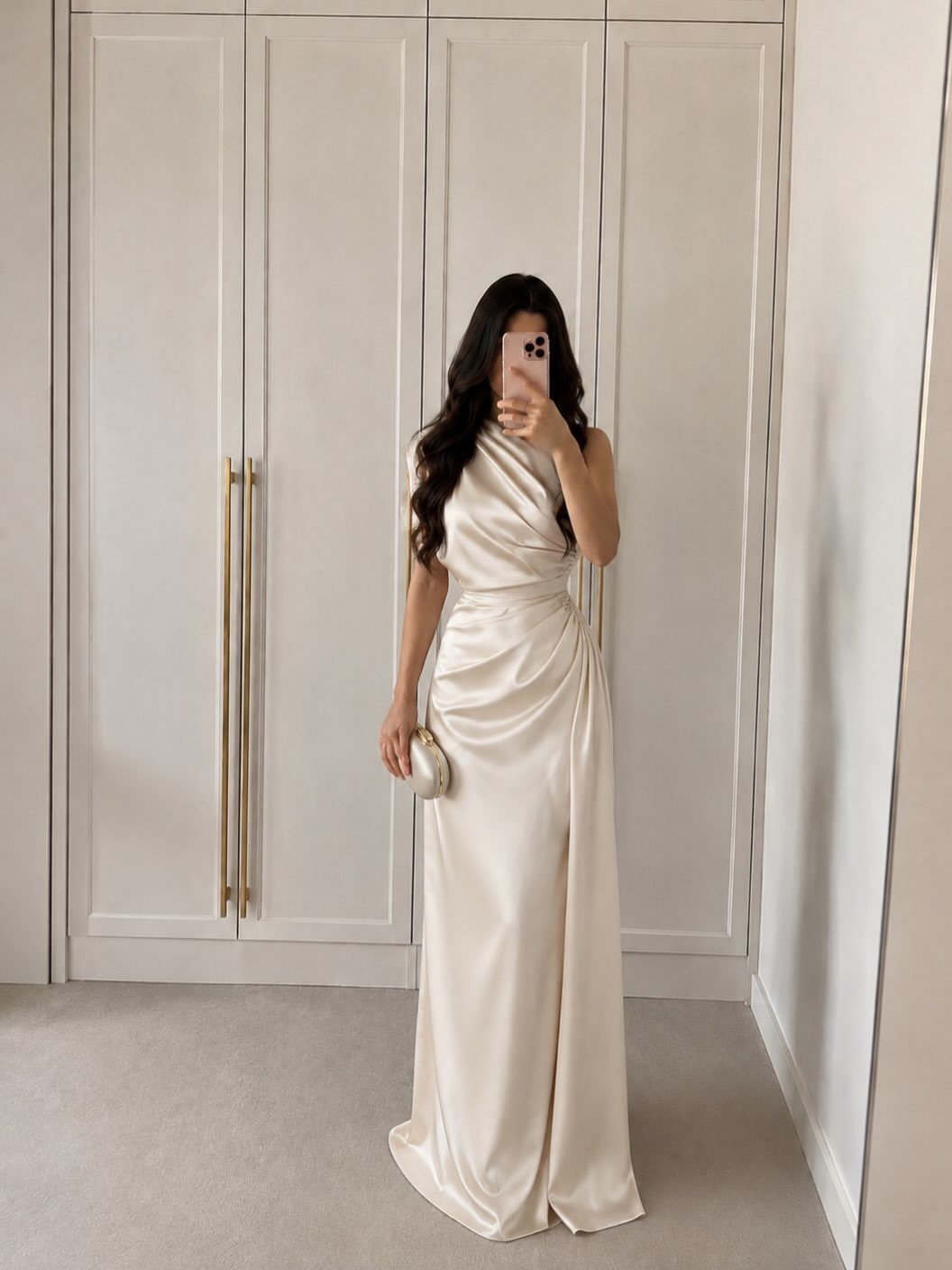
Stretch silk satin moves with the body instead of against it, which matters more in a long evening than the ceremony itself.
This is a reception dress or a city-hall choice more than a grand-church one.
Before buying, test the stretch percentage; too little and the drape stiffens, too much and the bodice loses shape by dancing hour. A slim clutch works here; I would skip a necklace and let the asymmetry handle the interest.
7. Sheath Dress
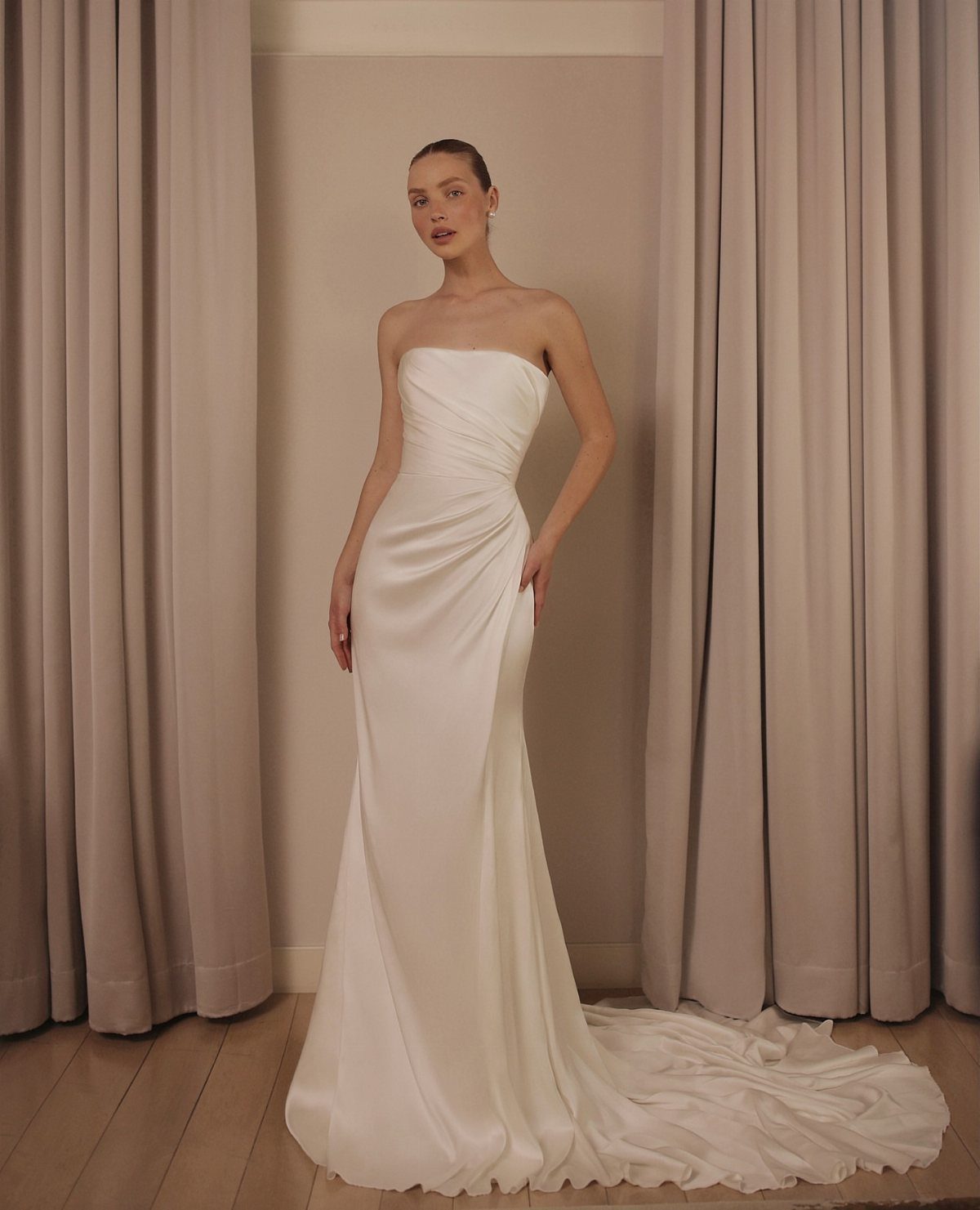
A sheath dress follows the body from collarbone to hem without flare or interruption, which is why petite brides reach for it first. The elongated line adds height where other silhouettes swallow it.
Crepe and silk both work here, though silk catches light more forgivingly on camera. The fabric shows every line underneath, so underwear choice becomes tailoring of its own; seamless is not optional.
I would check the train length against your venue floor. A sheath with a train reads ceremony, but dragging silk through grass turns the hemline green by cocktail hour.
8. Structured Bodice Wedding Gown
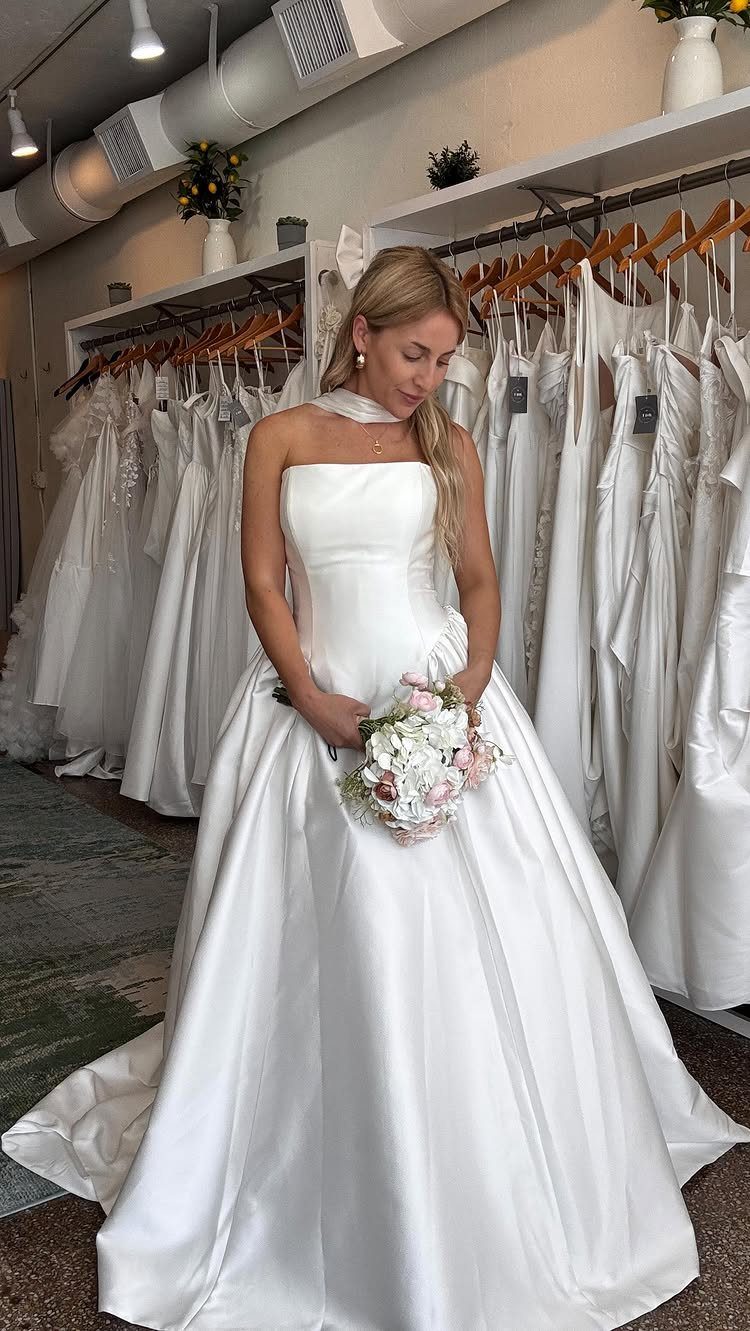
Structured bodices borrow from 60s couture, holding their shape through internal engineering rather than embellishment. The asymmetrical cuts that sometimes appear here update the reference without losing the discipline.
Satin with body, not drape, serves this best; soft crepe would collapse against the architecture. The strapless version in duchesse satin shortens the idea for city hall or a late-night reception change.
This silhouette demands precise waist placement. Try sitting before you buy; a bodice that stands proud while standing can dig at a dinner table.

★☆Material Type☆★ Satin Matermial, Polyester, Sexy and Cute to wear

Plus size casual clothing for women; slimming dresses for curvaceous ladies; Fuchsia Magenta Pink plus sized maxi dresses and gowns; womans sexy larger sizing dresses; full figure comfortable dresses; flattering maxi's with three quarter sleeves
9. Draped Neckline Sleeveless Gown
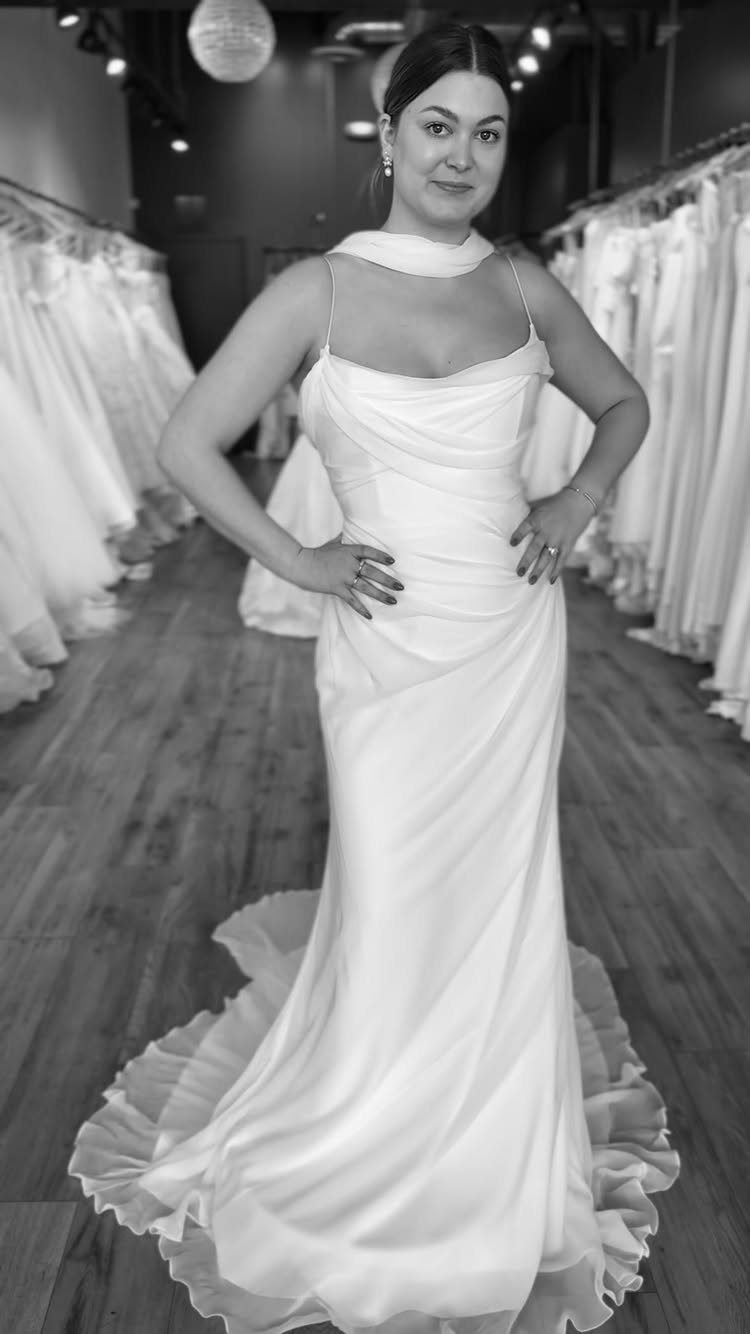
Cowl necklines move like water and require almost nothing else. The drape itself is the event, which is the point of keeping the rest stripped back.
Spaghetti straps carry the weight here, so check their anchoring at the shoulder; a slipping cowl becomes a wardrobe malfunction faster than a straight neckline would.
Jewelry stays minimal by necessity, since the neckline competes with any competing curve near the face.
A back drape is the variation to ask about if the front feels too bare. Same fabric, same movement, different exit down the aisle.

The formal and prom dress is a classic, elegant, and breathtaking gown. This strapless corset bodice features a bust drape with pearl and sequin trim. The bodice has a corset design with boning and lace up back. The mikado skirt is a full circle gown with leg slit and pockets for the ultimate glam look!

Features:Gothic black lace wedding dresses for bride; a-line appliques bridal gown; vintage strapless wedding gown; victorian dresses with ruffles; women's black wedding ball gown
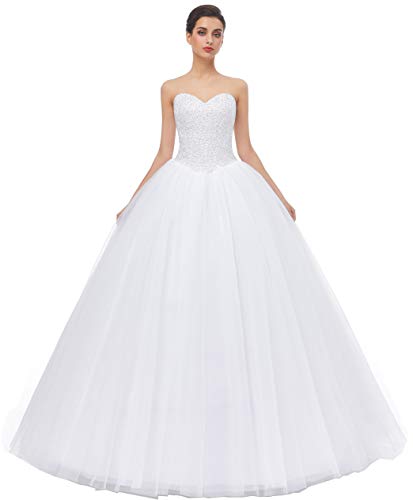
DESIGN: Elegant strapless ball gown silhouette featuring a romantic sweetheart neckline and voluminous tulle skirt perfect for a fairytale wedding
10. Sleeveless Halter Neck Gown
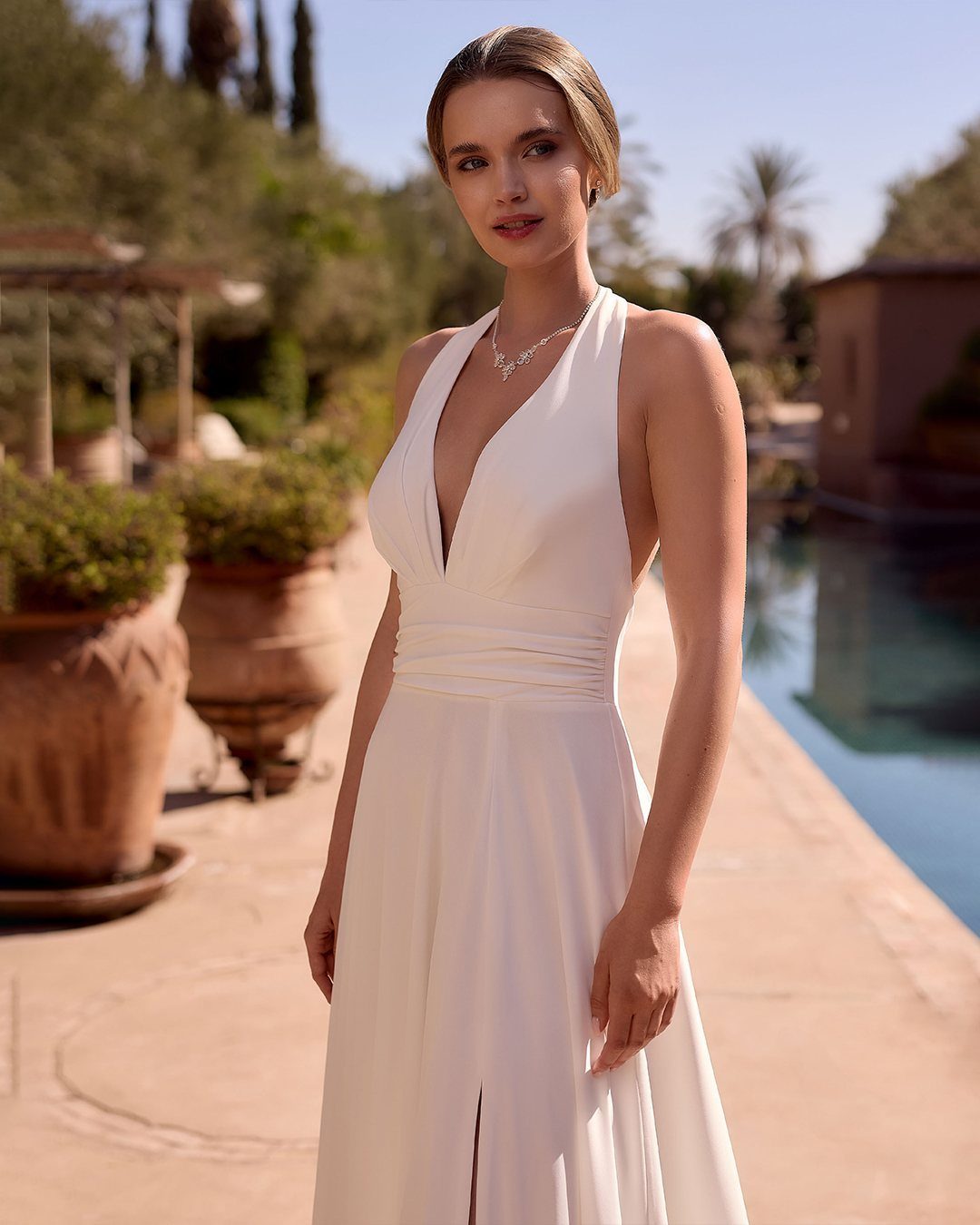
Halter necklines draw the eye upward to the shoulder and jaw, which is their function more than the coverage they provide.
The plunging front in the visible version is held by the neck alone, so bodice construction matters more than it appears.
Pleated waist detail adds interest without breaking the minimalist brief. Outdoors, this reads clean and warm-weather appropriate; indoors, I would check whether the V depth feels right under artificial light, which flattens shadows that natural sun keeps flattering.

Flexible design: to fit various dress styles, ensuring each gown looks its best,corset boning plastic,clear plastic corset Precision craftsmanship: ensures stable support,...
11. Simple Sleeveless Satin Gown
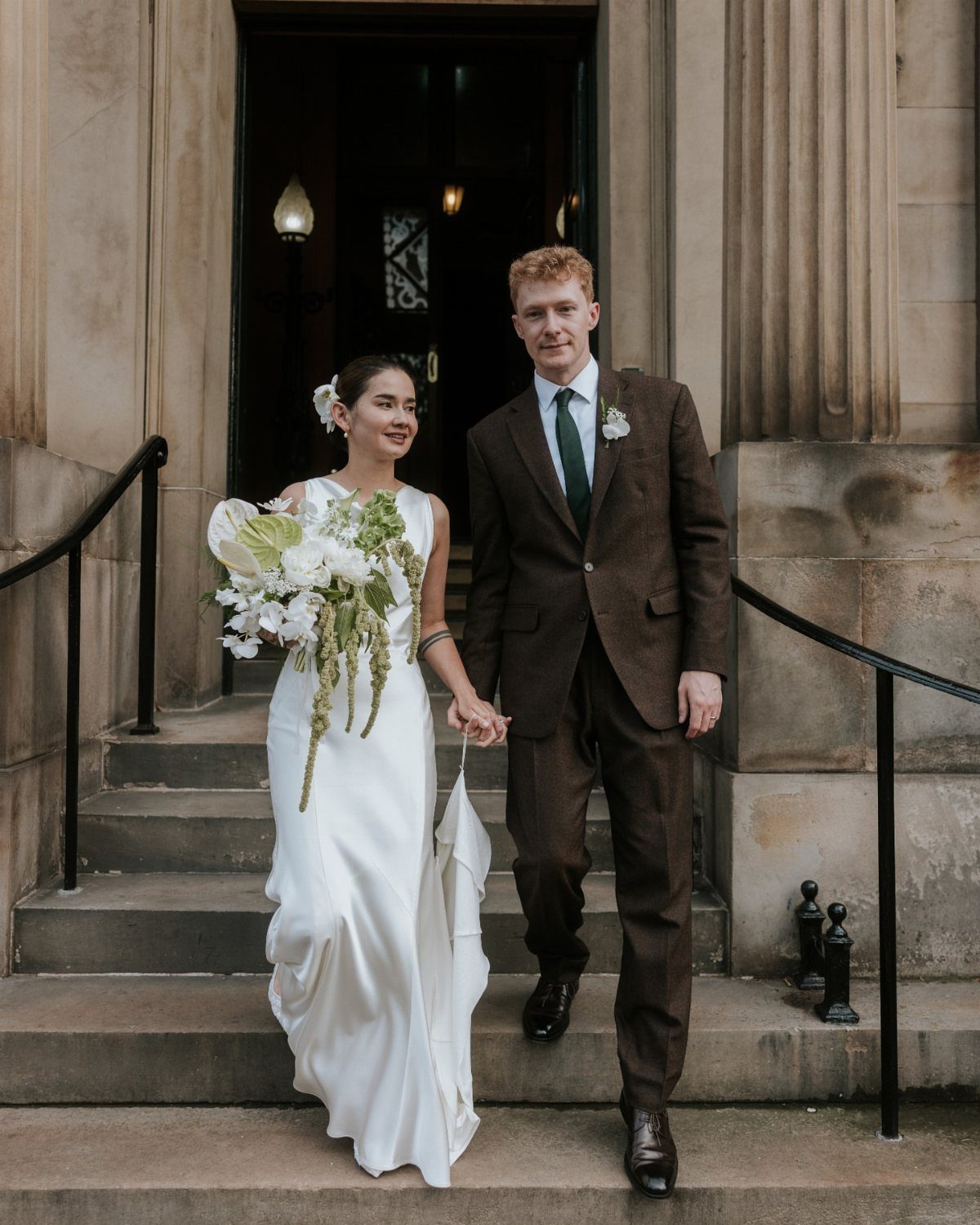
Satin in a sleeveless column is the dress that needs no excuse. It works for the bride who wants to look finished without looking dressed for a theme, and the fabric’s own movement supplies the interest.
Warm neutrals pair with this gown better than silver or stark black; think brown, cream, or camel in the wedding party. Hammered satin is the quieter option if standard satin feels too liquid under reception lights.
This is the silhouette to alter closest to the day; weight shifts show plainly when nothing distracts from the line.
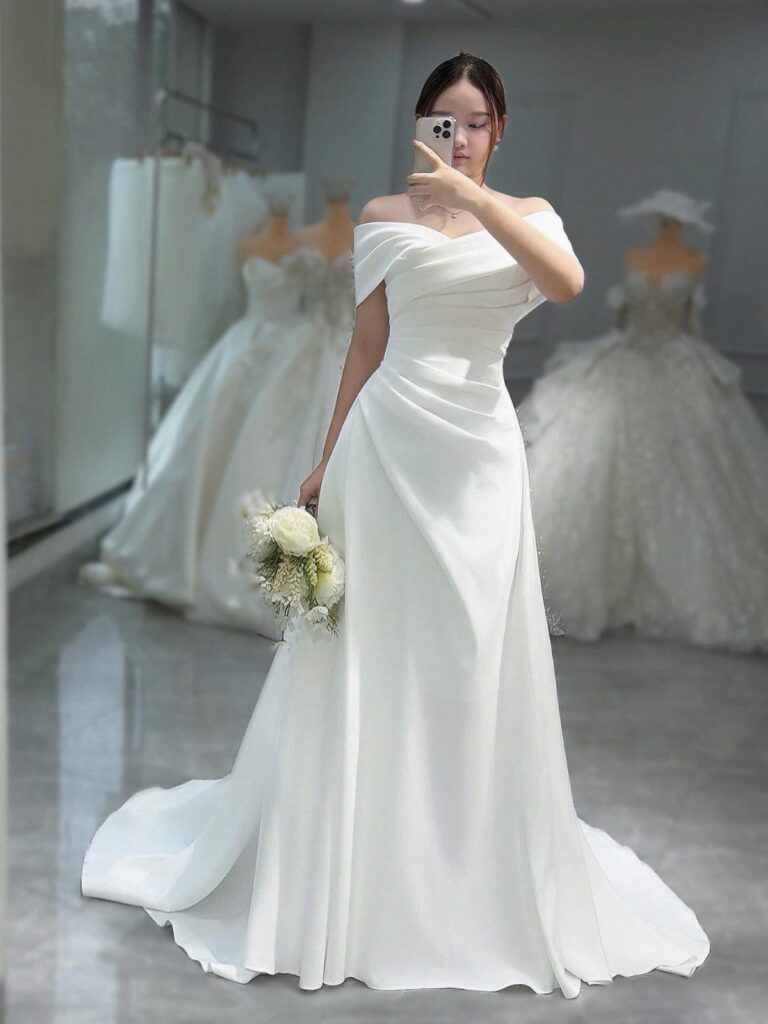
12. Off the Shoulder Minimalist Gown
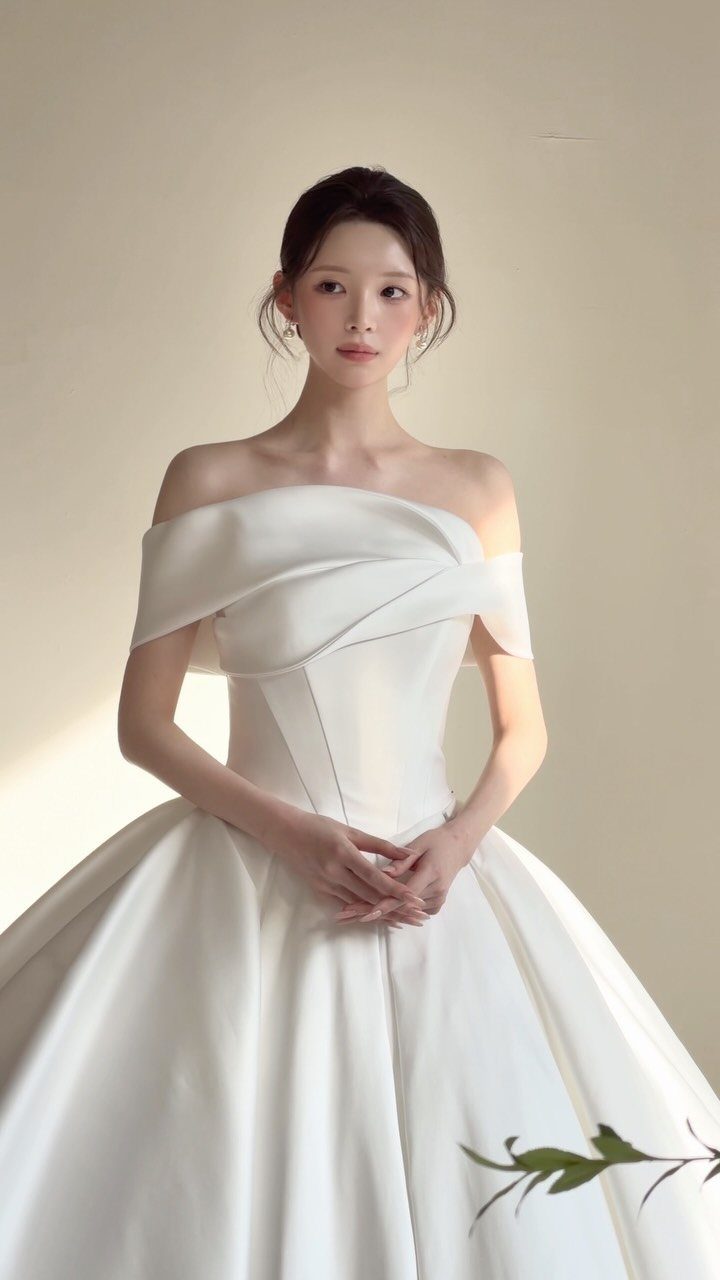
Off-the-shoulder bands expose the collarbone while the gown does the formal work, a balance that reads romantic without drifting into costume. Satin here needs weight to hold the line; lighter fabrics collapse at the neckline gap.
The visible version runs to ballgown volume, though a slimmer skirt in the same neckline would suit a smaller venue or a second look.
Fabric-covered buttons down the back, as some versions carry, add a detail that photographs well from behind during the ceremony.
Check arm movement before committing; the sleeve band rides up with reach, and constant tugging undoes the calm this silhouette promises.
13. Strapless Gown with Overskirt
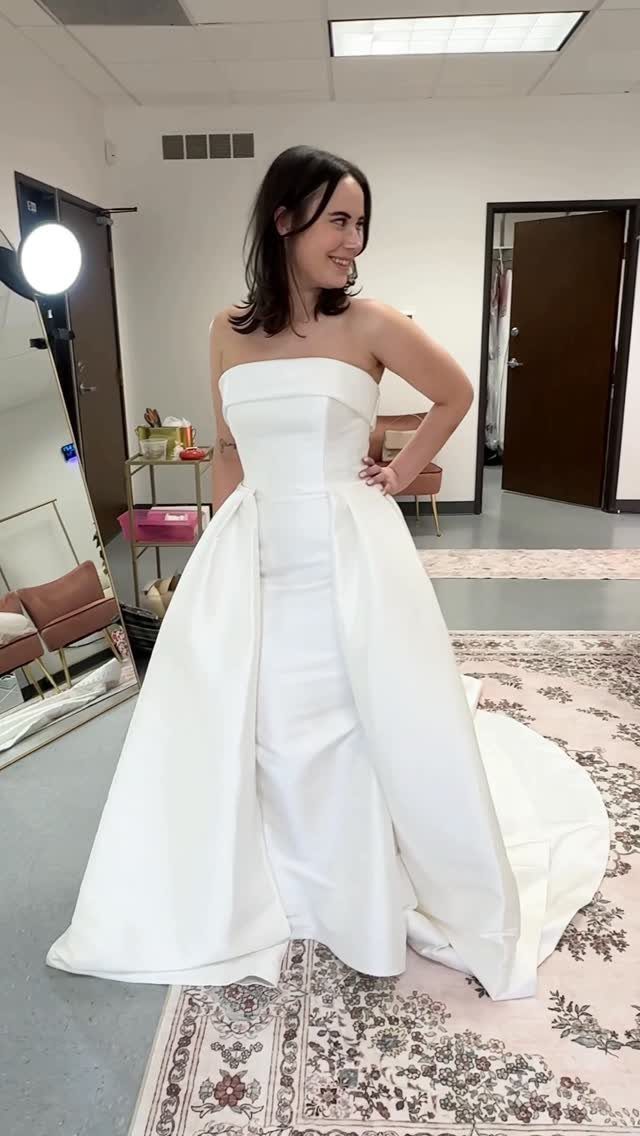
The overskirt turns one dress into two looks without a change of clothes. Ceremony volume detaches for the reception, leaving a clean sheath to dance in.
Structure matters in both pieces: the underdress needs internal support to stay up on its own, and the overskirt needs weight to hang correctly rather than float.
Ask whether the attachment points show on the sheath after removal; some systems leave marks that photography catches.
Budget for 2 alterations timelines, since the skirt and the base dress may need different adjustments.
14. Square Neck Minimalist Gown
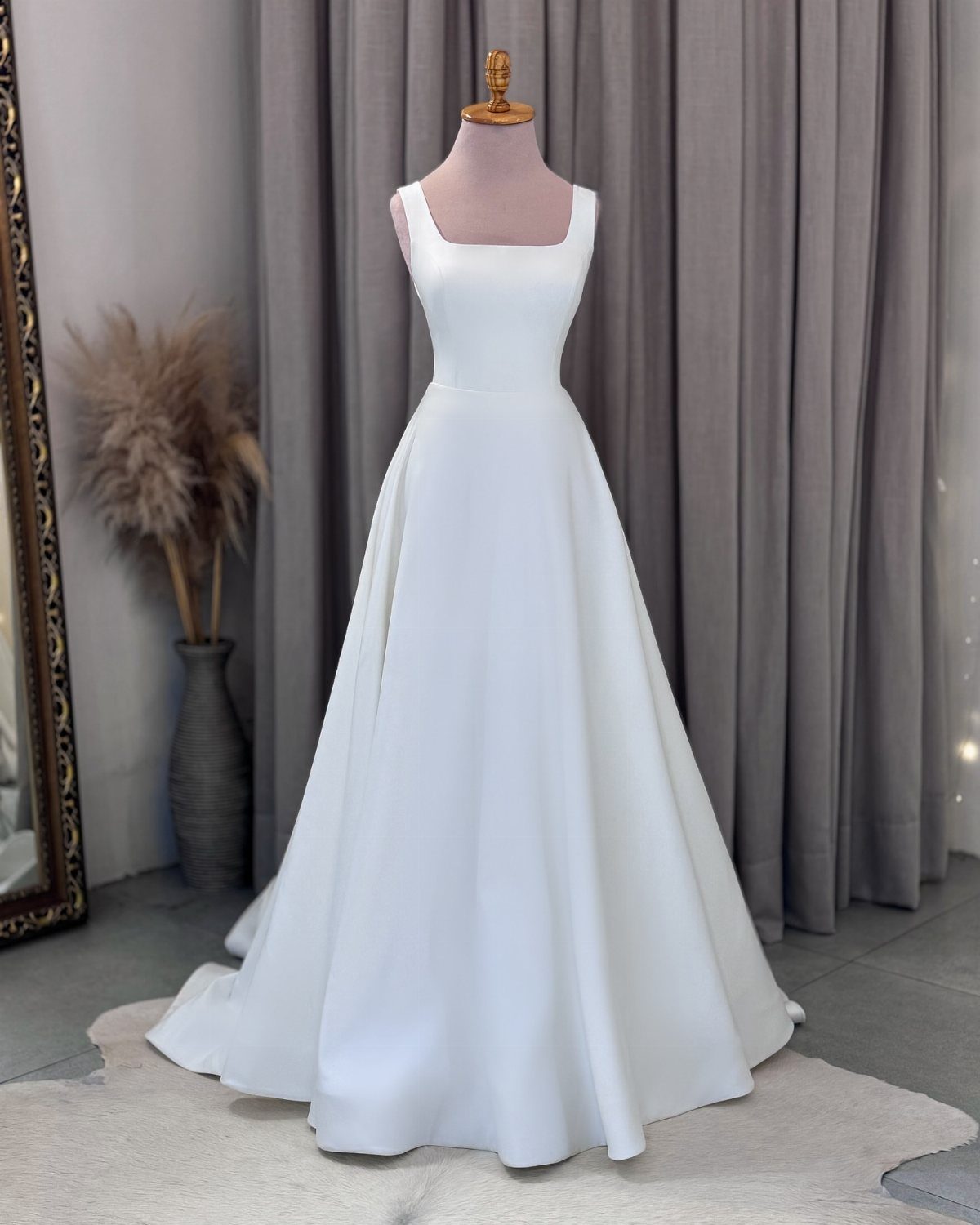
A square neckline reads modern because architecture uses the same angle; against gallery walls or concrete, it looks intentional rather than borrowed.
The line sits at the collarbone or just below, which emphasizes the decolletage and frames the face. Petite brides should check whether the square proportion overwhelms a smaller frame; a shallower depth exists in some versions.
Satin and crepe both hold the edge crisply, though satin photographs harder under direct flash. The back can mirror the front or plunge; the visible version keeps both sides equally clean.
This is the neckline to try if strapless feels too bare but high neck feels too covered.
15. Minimalist Cape Wedding Gown
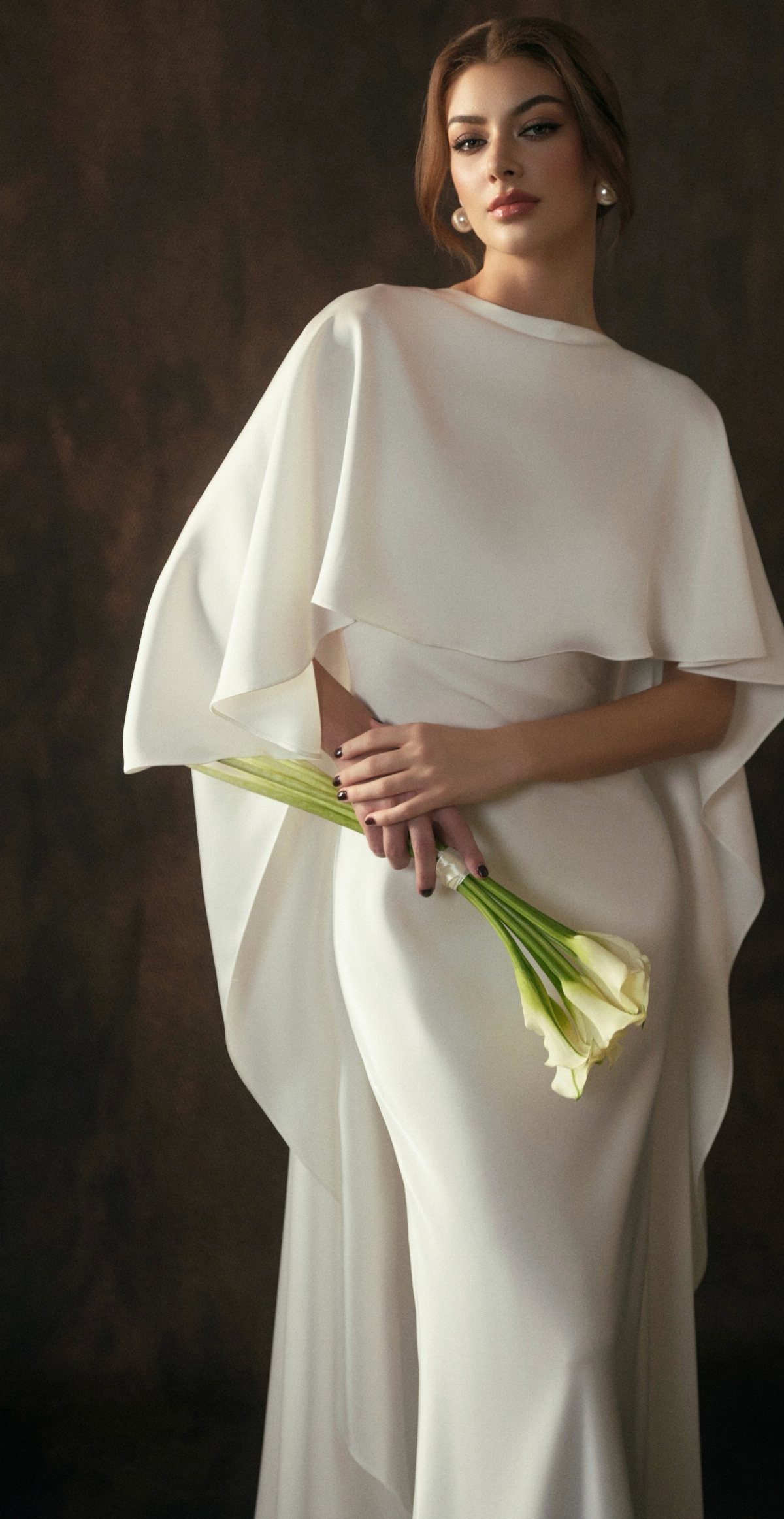
A cape replaces the veil and the train with one flowing piece attached at the neck or shoulder, which means no weight dragging at the waistline and no fussing with tulle during the ceremony.
Calla lilies, as the visible bouquet shows, pair cleanly: their vertical line echoes the cape’s own. Other flowers would compete.
The fabric needs enough body to move without collapsing; silk faille and heavy crepe work, lightweight chiffon does not. Wind is the enemy outdoors, so city courtyards and indoor spaces suit this better than open fields.
For the reception, some capes detach. Ask whether the attachment leaves a visible closure on the gown itself, since the minimalist brief suffers from covered zippers and button trails.
Choosing the Right Dress
A sheath dress works best if you are small-framed, since the straight line adds height where fuller skirts would swallow it.
A-line cuts are the safer default; they flatter across body types and shift easily from courthouse to ballroom without looking out of place.
Fabric choice matters more in minimalism than in embellished styles, because there is no lace or beading to hide behind. Hold the swatch against your skin in natural light before deciding.
Neckline depth should be checked under artificial light if your venue is indoors.
Accessorizing Minimalist Gowns
A clean cathedral veil reads as intentional against a plain gown without adding competing texture. The same goes for single bold earrings or a shoe in an unexpected color: one element carries the personality while the cut stays clean.
Concentrated details work better than scattered ones.
A dropped waist, exposed corsetry, or one sculptural bow gives the eye somewhere to land. 2 such elements risk clutter; none risks forgettable.
Detachable pieces, sleeves, or an overskirt let you change the look between ceremony and reception without a full outfit change.
Timeless Appeal of Minimalism
Clean lines age better than trend-driven necklines or sleeve lengths.
Restrained glamour has outlasted cycles of excess before. The Narciso Rodriguez design that resurfaced in recent years proved the point: spare construction keeps its hold where ornamented contemporaries look anchored to their decade.
A minimalist cut is the safer choice if you want wedding photos you will still recognize as yourself at anniversary twenty.
Modern Bridal Trends
The shift toward simpler gowns matches a broader move in bridal fashion away from status signaling through volume and embellishment. Where heavy decoration once read as expense, understatement now carries the same confidence.
Minimalist dresses function as blank canvas, which matters when you are dressing a wedding party in varying neutrals or adding one personal accessory.
Sustainability enters here too. A dress with no timestamped detail can be worn again, sold, or kept without the embarrassment of obvious era.
A minimalist gown moves across ceremony styles without looking borrowed from the wrong wedding, which is practical in a way that has nothing to do with philosophy.
The aesthetic of a minimalist wedding gown will withstand the test of time; the hope is, when you review the photographs of your big day in years to come, the dress will still be as relevant as it was when you tried it on.
— Vogue
Frequently Asked Questions
What is a minimalist wedding dress?
A minimalist wedding dress strips away the extra: the silhouette stays simple, the fabric lies flat, and any ornament is barely there or gone entirely.
You notice the shape and the drape, not a trick of lace or beading, and that means the cut has to be right because there is nowhere for a flaw to hide.
I picture a column or sheath in crepe that falls straight, or a soft A-line in mikado with one sharp shoulder or a neckline that holds its own.
Is there such a thing as a timeless wedding dress?
Yes, clean lines age better than trend-driven necklines or sleeve lengths. Without a telltale sleeve or neckline that screams 2017 or 2023, the dress stays wearable for an anniversary dinner, resells faster, or sits in storage without the cringe.
What are the hottest wedding dresses right now?
The gowns that keep surfacing in my feeds run simpler, quieter, less interested in proving budget through volume.
Confidence now shows up as restraint; the bride who needs no train to make her entrance reads as sure of herself as the one who once wore fifty pounds of tulle.
I am seeing more neutral tones, ivory drifting into oat or stone, and pieces that detach, sleeves or an overskirt you lose before the first dance so the same dress does 2 jobs.